Out hunting at dusk
This week: Out hunting at dusk; Routine maintenance;

We have had another good week of weather this week. There was a useful 4mm of rain on Wednesday which has reduced the need for irrigation during the week.
Temperatures are still low for the time of year, with day time maximums only around 25°C, some five degrees below the average.
Moving my Strelitzia this week, I realised it was pot-bound. It has been in the same 50 litre pot for at least six years, so it needs to be divided.
I realised that it hasn’t flowered for two years, so needs some attention.

After I cut off the dead peripheral leaves the plant looks better, however it needs thinning.
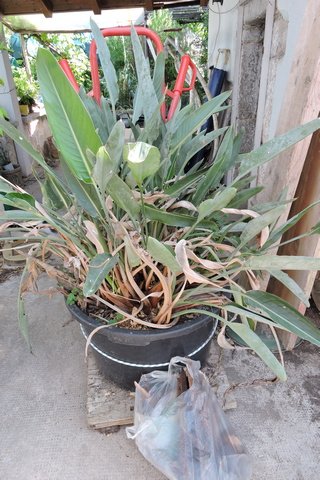
Although it is on a small pallet, to make it easy to move, I think the best place to get it out of its pot, is actually on the concrete bridge between my two main buildings.
The bridge is flat and there is space, plus it is easy to clean after I finish. This is the right time of year to split up Strelitzia, so I’ll add it to my list of jobs for next week.
The warm sunny weather means that next winter’s logs are drying nicely.
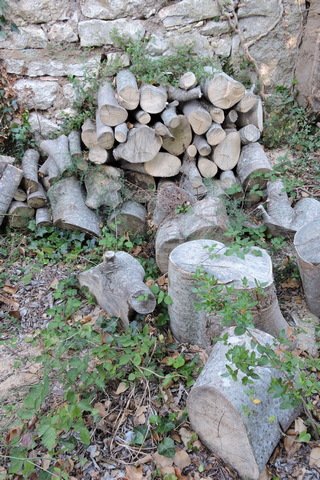
Towards the end of the month and especially before any heavy rain, I will bring the logs under cover, where they can continue to dry.
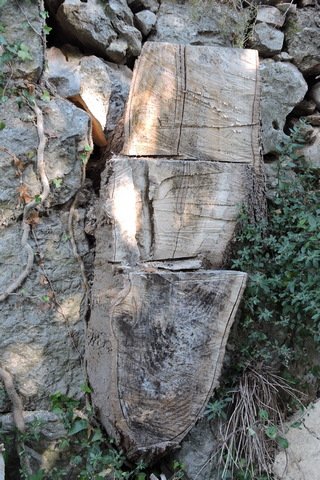
I am pleased that the Nettle tree I cut down, creating the logs, has not sprouted any new growth. I am unsure how it will ever come out of the wall though…
Out hunting at dusk
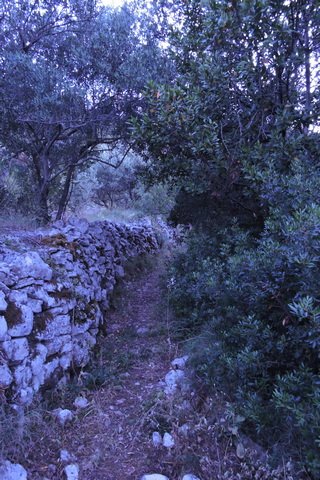
Most evenings in June, I go out into the Maquis after sunset. What am I doing? I’m hunting…
I seldom go alone though. Dusk is the felines time of day and they love our walks.
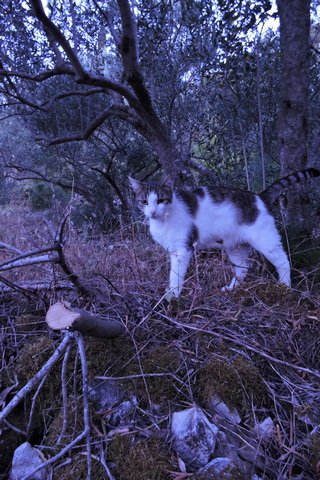
Sunset here in June is between 20:30 at the start of the month and 20:40 at the Summer Solstice, however the sky is still light until well after 21:00.
My hunting equipment is a torch and digital camera, because I am looking for Luciola italica, the Italian Firefly.
My neighbours tell me that they used to see them, but have not seen any for ten or more years. However it was when I found a distinctive female larvae in my polytunnel, that I realised I probably had them in and/or around my home.
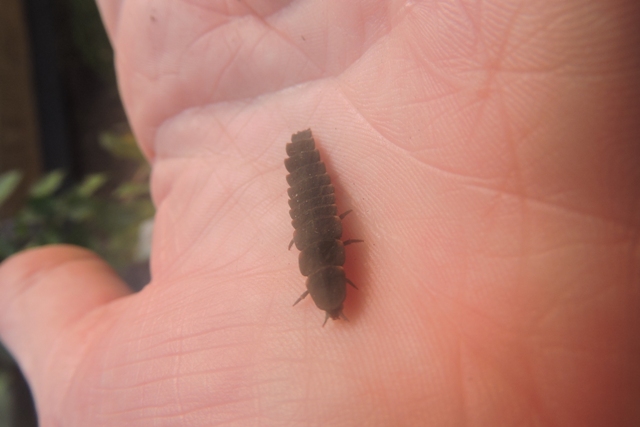
They like damp limestone, which this year abounds round my home and they feed on slugs and snails, so they are very much gardener’s friends.
It is the males who emit a pulsing yellow green light from the rear of their abdomen, but as yet I have not seen any.
They are trying to attract the winged females who are drawn to their phosphorescence.
The males are small, no more than seven or eight millimetres in length, however they are highly distinctive with a hard black brown carapace but pale golden neck.
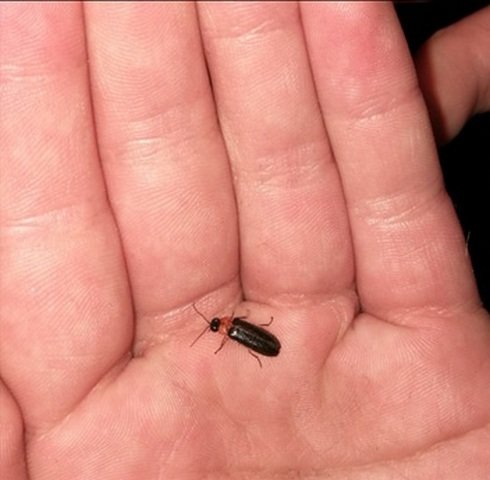
I will be out again tonight looking…
Routine maintenance
It is not whether there is routine maintenance to do on old buildings, more it is what is the priority and how long will it take.
Once again I have come up against a temporary fix I made, in anticipation of having the permission to build the link between two of my buildings.
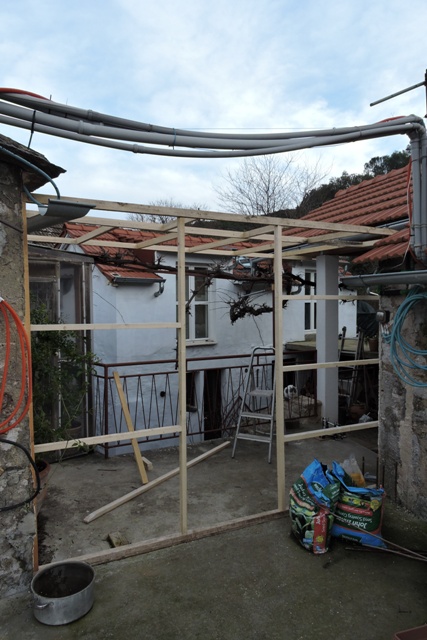
This was a temporary weather protection fix and holds up the roof over the 1st floor level bridge which links my two main buildings.
Over the winter, I noticed that rain was seeping down between the reinforced concrete bridge and the wall and was wetting my supply of dry wood below.
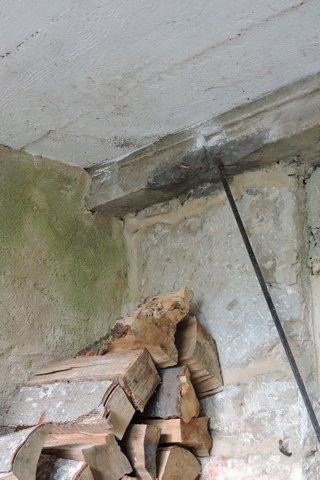
This is because water will always finds its way through the tiniest of gaps and the 1970’s built bridge was not sealed against the century old building.
With a dry sunny week I decided to move plants which have covered a bare wall, specially as a flowering Jasmine had died over the winter.
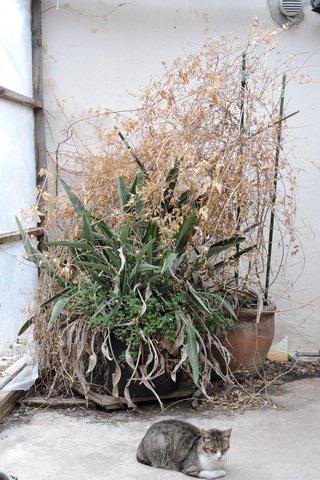
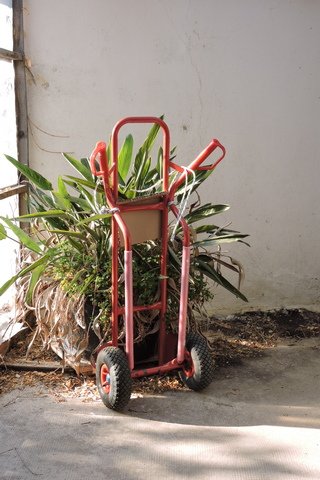
This led me to make a discovery that the timber piers which hold up the frame, which in turn holds up the plastic roof, have almost rotted away.
I had thought that I could just jack up the frame and slide out the timber piers, replacing them with new wood.
Making some supports for the frame was a very easy part of the engineering.
But as soon as I started to try and move the timber piers, they crumbled. And where the wood crumbled, it had gone rotten and was being eaten by ants.
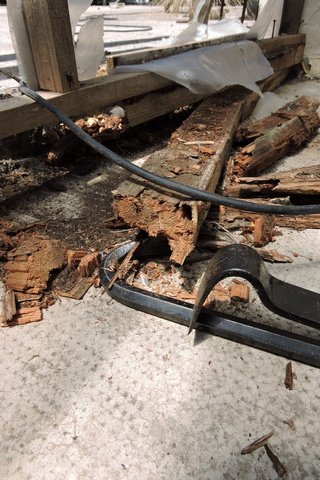
Putting the cut blocks in place has supported the frame above, but only temporarily. When I cleaned out the soft wood remains, I could see the gap where water has been getting between the old and new concrete.
However my initial thought of a silicone bead to seal it, is not going to work and the plastic rain screen will need replacing.
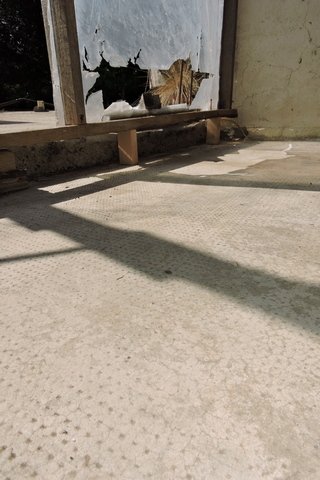
Instead I have ordered some specialist paint-on sealant. This will take a week to arrive, so rather than remove the rest of the wooden support, I decided to leave it in place until I am ready to do the job all in one go.
What I thought was going to be an easy maintenance task, actually became a much more complex project! NCG