It’s FIRE season
This week: From Bulbs to Cicadas; Why Phenology matters; More tools required;
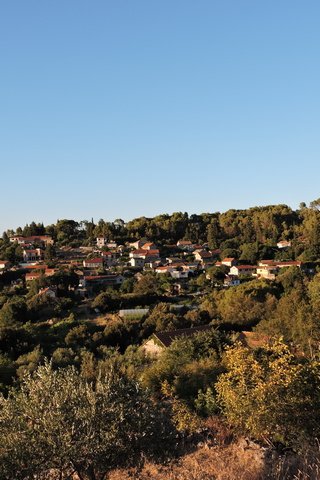
We have had another hot week, with daily maximum temperatures of 35°C, 36°C and a high of 37.3 on Wednesday. So I have been working early in the day because by 07:30 it has been over 30°C.
Night time lows have been around 24°C, with high humidity, so rather uncomfortable.
This means that I have been irrigating heavily just to keep plants and trees alive.
One afternoon I updated the heat index chart. This combines the actual shade temperature and humidity to produce a “feel” temperature and the level of danger it presents to us.
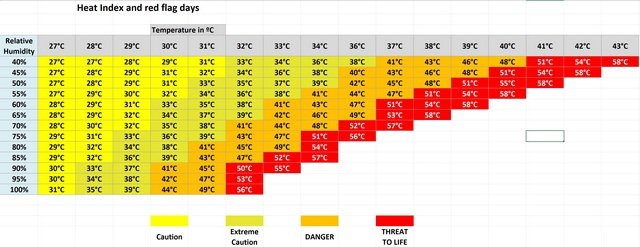
We have been in the orange “Danger” zone most days this week. I’m pleased to say that as I write this at tea-time on Saturday, there is a refreshing breeze blowing through my study window.
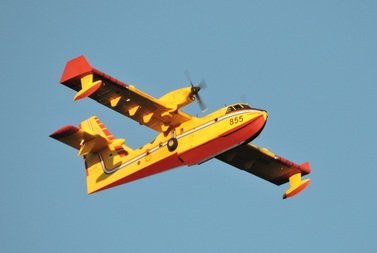
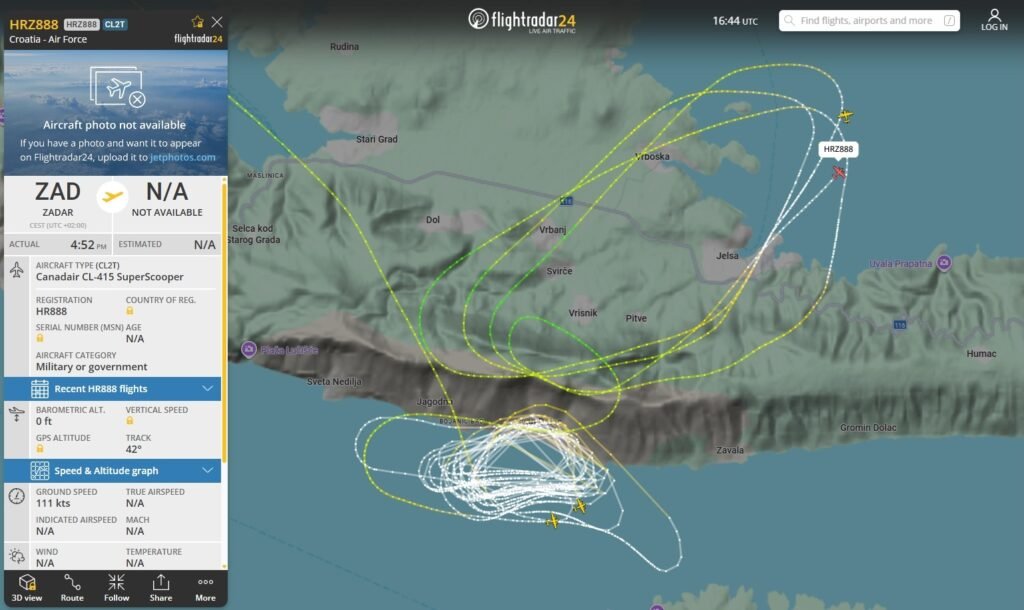
We are also in the middle of the fire season and two Canadair CL415 water bombers have just flown over, on their way to support two other aircraft fighting a fire on the south side of the island at Ivan Dolac.
From the tracks being shown on FlightRadar24, there seems to be two distinct fire seats. with the second upslope near the crest of the main island ridge. This is all a heavily forested area.
With a dense, uncared for and unmanaged forest behind my home, with dense, dry understory, fire always worries me! Strong wind and fires do not go together.
Two parcels from Temu arrived this week.
The tools which I ordered to replace the water stop cock arrived. I’m not sure how the company manages the delivery, but it is usually just seven or eight days from ordering to the parcel being delivered by Pošta.
The materials are of good quality, even up to professional standards. So for a tool which I may use once or twice a year, they are more than adequate.
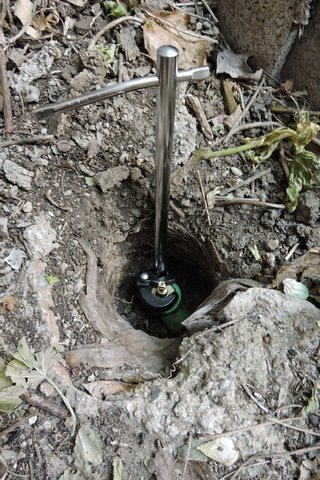
With the right tool in hand, the job of removing the stop cock which had been impossible, became easy and was completed within an hour.
Once the old stop cock was removed, I could see the problem. The rubber washer had split and come off the spline and was blocking the pipe.
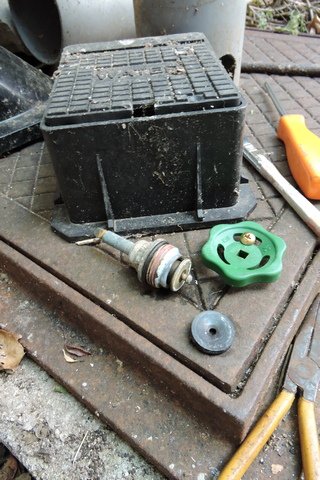
I used needle nose plyers to remove the washer then fitted the replacement stop cock. The full flow was restored to the orchard immediately, once I turned the water back on.
Also the specialist waterproofing arrived, so I started to remove the base of the frame which provides the plastic weather protection for the bridge between my two main buildings.
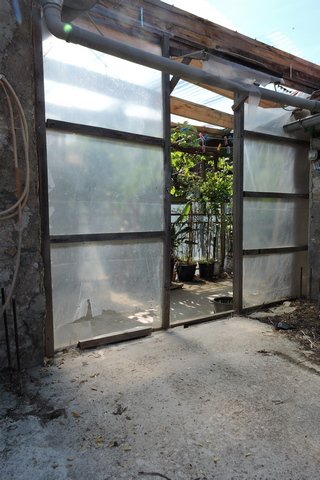
I realised that I don’t need to replace all the plastic, just the bottom panels which have perished in our strong sunshine.
I cut some more 105 mm blocks to support the frame and then started to remove it.
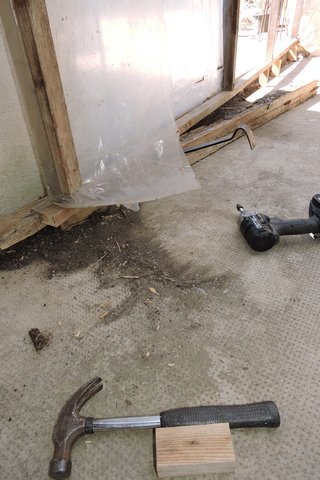
I ran into a problem though, because I think I must have nailed the frame to the supports because even with the frame supported, I couldn’t get it out.
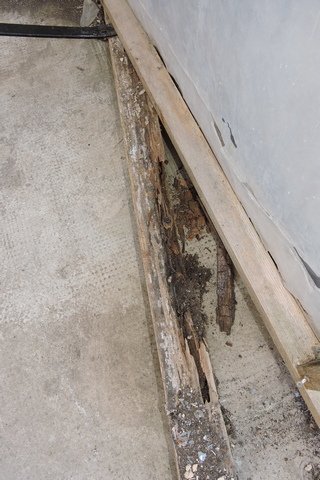
By now we were into Saturday afternoon, so I finished for the weekend. The supports have rotted away and are clearly at the end of their life.
Your weekly dose of cats
The felines are not happy with the heat, spending much of their day sleeping anywhere they can find that is cool.
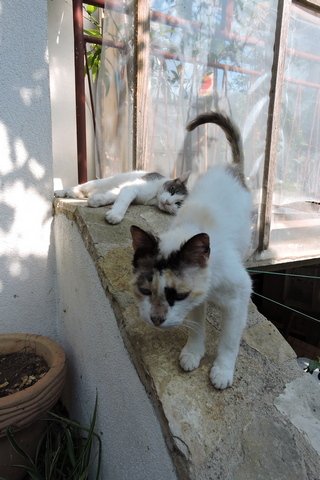
Even Callie, who is now 15 and came with me from Abu Dhabi, so is used to heat, is finding it all a little bit too much.
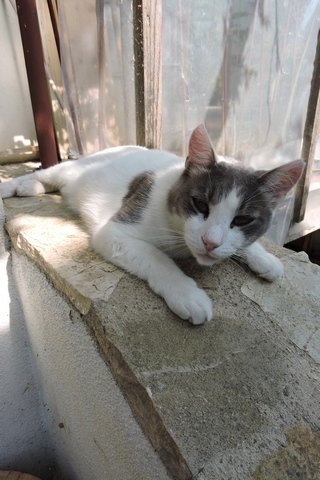
Argent is more laid back, especially after a long, cool drink of Goats milk.
From Bulbs to Cicadas
On a baking hot Sunday afternoon, with an outside temperature of 35.5°C but because of the high humidity, a feel of 40.4°C, I am sitting by an open window where a cooling breeze is evaporating perspiration while I looked at my annual Springwatch spreadsheet.
I did some updating of formulae last week and some are complicated –
=ROUND(AVERAGE(IF(NOT(ISBLANK($C6:$N6)),$C6:$N6-DATE(LEFT($C$3:$N$3,4),1,0))),0) !
Do I get a kick out of writing spreadsheet formulae? Definitely not, they tax the brain. However I do get a kick out of seeing something I have written actually work as it should…
I have always been an “observer”, from having I SPY books as a child on car journeys, to Observers Book’s, which I still have on my bookshelf, doing more than just looking or seeing appealed to me.

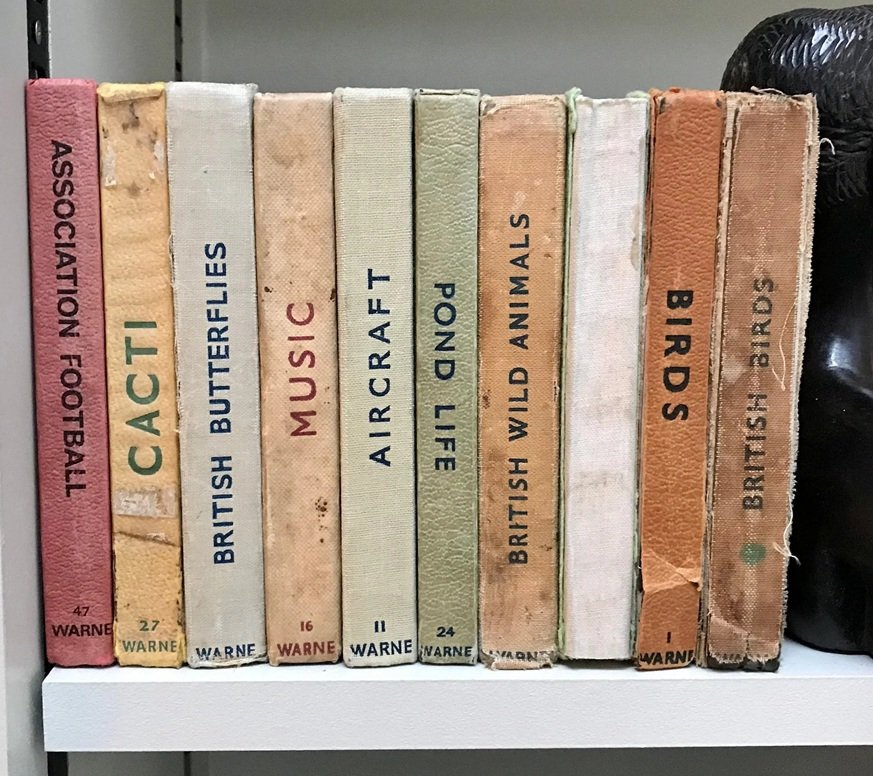
Professionally I have been complimented for “attention to detail” and “measuring and monitoring”, which I still do.
So moving to my Dol house, it seemed logical to combine my weather station with observing the natural world of which I am a part.
Looking is a passive activity. Observing is a cogitative process which requires the person to notice details, assign a meaning and understand the context. Then record what they have seen.
Springwatch is a BBC Television series, begun in 2005, which charts the progress of spring across the UK, from the Channel Islands to Orkney and Shetland. It is filmed throughout late winter and spring, then edited and aired at the end of May.
It began after I emigrated, so I have never actually seen the programme, but understand the concept of how weather and climate breakdown is altering the timing and progression of events in the natural world.
If there is unusual warmth early in a year, then insects may emerge early and not be available as a food source for migrating birds, when they need nourishment.
I started my Springwatch calendar with just four species the first year and 19 the second. In 2026 I measured 47 species around my home, things which WILL happen regardless, just noting and recording the dates.
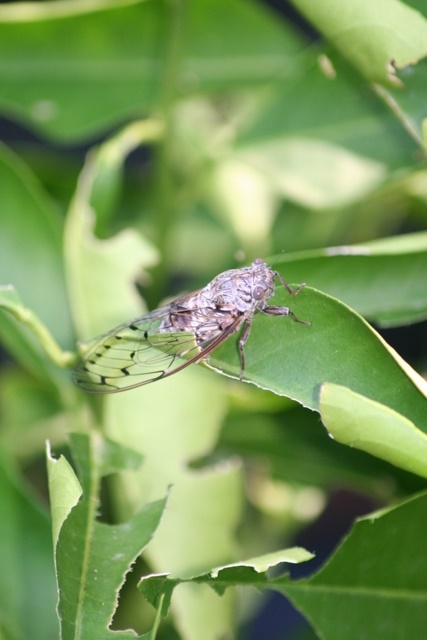
It is of course completely a completely random series of species, from the first shoots of spring bulbs appearing above ground, to my last observation, the first Cicadas emerging and chirping, 219 days later.
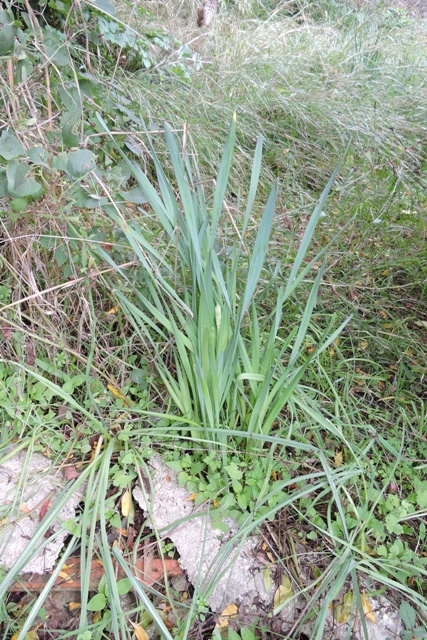
When I looked at the spreadsheet, I realised that as I have it set up, it is creating an inaccurate picture. Take December as an example. I have grouped the Hyacinth together, the same group of bulbs in my kitchen window flowerbed, with the first shoots appearing and then the first flowers.
The shoots appear in late November or early December, but the flowers burst in late January or early February. When looking at monthly trends, this means that the data is unbalanced.
Going through my list, this happens almost every month. So whilst I have finished the collecting for 2026 and the spreadsheet has done the calculations, I actually need to move some of the headings around so that they are associated with the calendar month and not as a succession relating to a single species.
It will be work for more hot afternoon’s this summer.
Why Phenology matters
There is a science called Phenology which is the study of recurring biological life cycle events. This is what Springwatch is. However, calling something “Springwatch”, or Autumnwatch are catchier names than Phenology!
My observations are subjective, simply because of “life”. When I started the project, I began by looking at EPN, the European Phenology Network, but what became clear is that whilst the concept is highly developed in some parts of Europe, here in the Adriatic, it is rudimentary at best.
There are lists of common species which are observed, but none of them are in my back yard. So I developed my own. They are things which are easy to see, for example the Scarlet Lily beetle, Lilioceris lilii.

I have a lot of Madonna lilies and these bright little insects appear in February, when there is not much colour around, so they are easy to see.
Another of my indicator species is an old Almond tree, in the east orchard. But this is where it gets complicated.
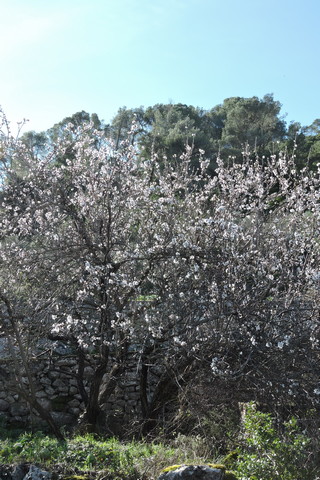
I have no idea of the age of the almond tree, nor of its variety, except it has white not pink blossom. Being an old tree, when the first blossom opens each year is a good indicator. However the actual environmental conditions also affect opening.
My home and all the orchards lie in a Thermal Belt, an area where in winter cold air drifts down the hillside, without collecting. It is also north facing which means that from November to early February, it gets no sunshine, being in the lea of the hillside and trees behind.
On the other side of the valley, where there is constant winter sunshine, and a lot of pink Almond blossom, the trees are often in flower before mine.
I also record when full blossom is achieved. This is subjective, meaning it is when I look at the tree and think it is covered. That isn’t scientific and I could be a day or two out either way. But it is a good approximation.
In both China and Japan, where there are festivals around the blossoming of trees, their records of these festivals go back 1,200 years.
Today in Washington DC, there is a huge effort every spring to identify the peak flowering week of the Cherry Blossom, so people can visit.
At the other end of the year in New England, “Leaf Peeping” is a recognised tourism activity, with forecasts about leaf colour, intensity and the best times to visit, being related to the important autumn tourism industry.
So in both cases, Phenology is more than just a science, but is important because of the amount of money visitors will bring to an area in a good year.
Sometimes though, science cannot provide you with answers, only questions.
What is most noticeable this year is that the number of two migrant bird species are really down.
Writing this on a warm, sunny afternoon, there are no Golden Oriol calling. I heard the first ones on the 25th April. The average arrival date on my Springwatch spreadsheet is the 28th April, so that is about right. But ever since, the numbers have been significantly less than previous years.
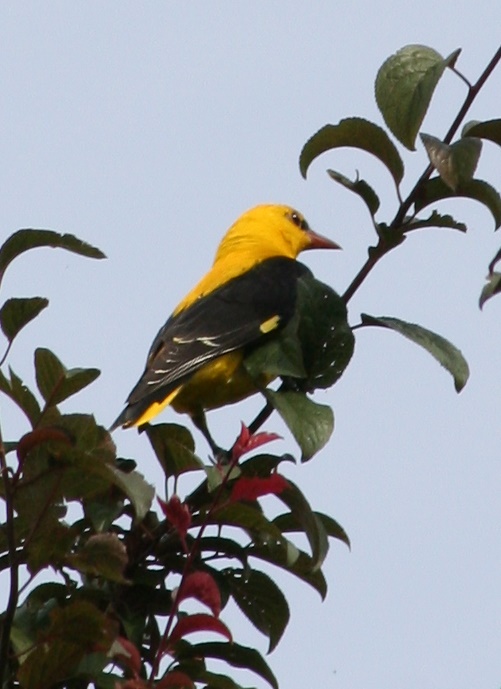
I usually have a pair which nests in an old Linden tree. They are absent this year and whereas I would see these bright yellow and black birds taking cherries and plums from my trees, there has been no stealing at all this year.
They are just not here?!
At the other end of the day, the Scops Owls, Otus scops , with its almost electronic night time calls, are also not here in the numbers I have had in previous years.
There would usually be three or more calling around my home. This year on many nights there have been none, or just a single bird calling from a long distance away. I heard the first Scops Owl on 29th March, again about the average arrival date after its journey from South Africa.
Looking back at the weather, there were two significant storms which moved west to east across the Tyrrhenian and Ionia seas, in the path of these birds migration.
I can only suspect that many were blown off course or perhaps drowned in the storms. It is just another example of climate breakdown affecting our natural world.
There are few records of the migratory route of our summer birds, but the above example created by the Royal Society for the Protection of Birds is an example of Swifts. I have Swifts which nest in my buildings every summer.
More tools required
My days starts early, except at the moment I’m not sleeping too well because of the heat, so I am perhaps not up until 06:30.
The indoor temperature has not dipped below 29°C for a week now and humidity has been around 50% throughout the day. I don’t have any air conditioning, so made do with reciprocating fans and a cold shower before bed!
This means that whereas earlier in the year I was up at 05:00 and working outside until the temperature rose above reasonable level, this week, it has been 07:00 before I have started irrigating. On several days it has been over 30°C by 08:00.
Even so I have been doing more work on the table for the drill press, at least until the sun has heated the courtyard to the point of being uncomfortable.
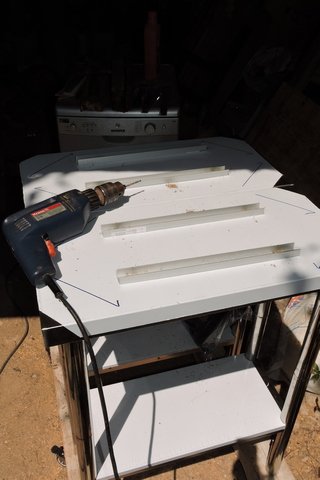
This is a pair of stainless steel workshop tables which I have joined together. The task this week was to have been to fit the wooden tops, bolt them in place and then mount the drill press on top.
It was hot working, even in the early morning sunshine. I clamped the two wooden top pieces in place – I am using different materials and different thicknesses to give a really solid and strong work surface.
After carefully measuring, marking and then using a punch to mark where the holes needed to be, I drilled the pilot holes through the stainless steel top.
However I hit a problem when I was trying to enlarge the pilot holes to 8mm for the bolts. My HSS drill bits would not cut the stainless steel.
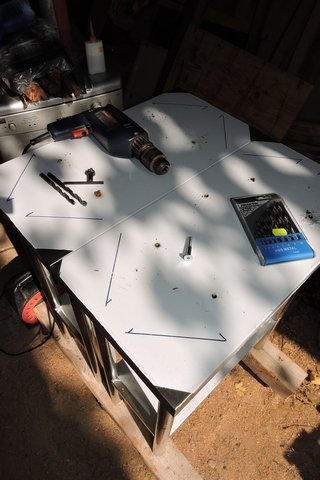
I had used brand new 4mm bits to make the holes, which they did without a problem. After hunting through my box of drill bits, I didn’t have any brand new large diameter HSS bits.
The old HSS bits would not enlarge the pilot holes so I presumed that having had them some years, and used them on many occasions, they needed replacing.
On Wednesday morning I was at the local builders merchants, bright and early, and bought the only set of HSS drills they had, which included the 8mm I needed. At €10 for eight drill bits, they were not too expensive.
Returning home, I fitted a new bit into my drill and started to dry and enlarge the pilot holes. It didn’t work. The stainless teel screamed and the bit got hot.
So I consulted Google to see what it suggested for drilling holes in ENOX. It was another learning moment.
I consider myself to be a reasonably accomplished wood butcher, but have never been trained on or really worked with metal. I discovered that stainless steel can be “case hardened”, when you drill it, making it too hard for a standard HSS drill to penetrate.
I also discovered that a different type of drill bit HSS-E/M42 or M35 drill bits, of high hardness and with cobalt tips need to be used for ENOX. I have never heard of the M35/M42 designation before, but just know they are not available on the island!
Rather than damage my new work table I stopped my efforts and ordered a set of bits on-line from TEMU. As always they will take about a week to ten days to arrive, but at least I will have the right tools to finish the job.
And yes, I know, it is yet another job that is waiting for something to arrive, before I can finish it! NCG