Covers off and on
This week: Covers off and on; Lots of fruit; A walk on the wild side;
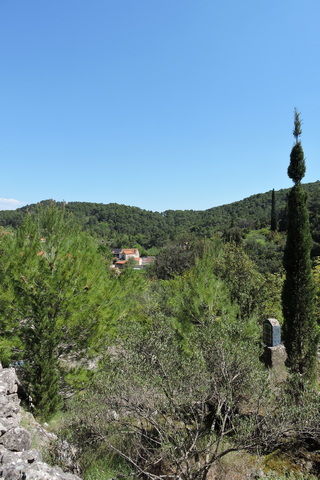
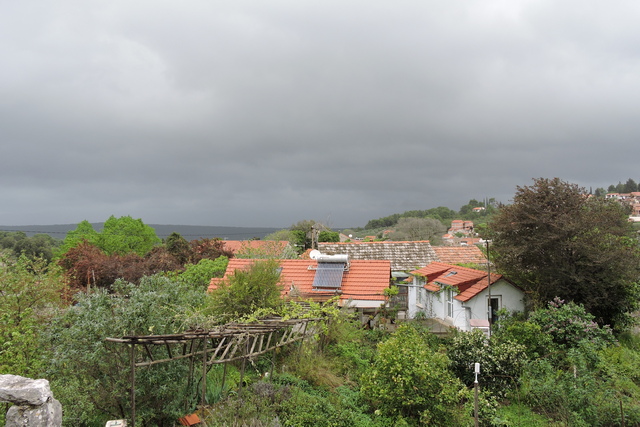
The week started with some rain. Black clouds formed a backdrop to the approaching rain. We have had 12mm or 12 litres /m².
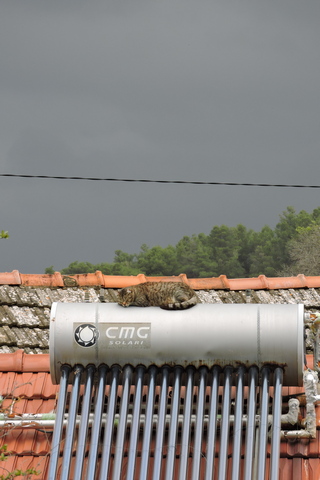
One person who did not appear concerned was Gismo, who was on his vantage point, the top of the solar water heater – a nice warm spot, whatever the weather…
The rain was welcome and although I have been “spot irrigating”, I have not needed to turn the underground system on yet.
Once the sun returned, I started to control the weeds once more.
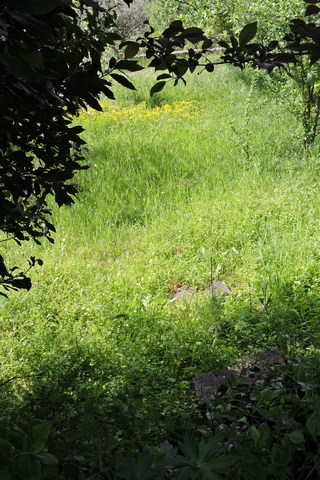
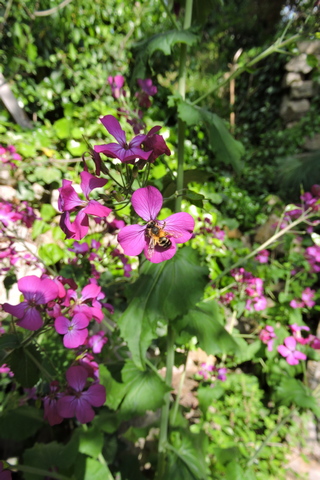
This week my Honesty plants, Lunaria annua, are the best they have ever been. in a damp, shady spot, they seem to have thrived in the conditions.
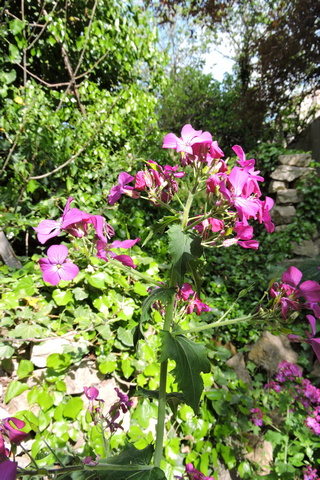
A favourite of butterflies, they have no scent, just beautiful magenta flowers.
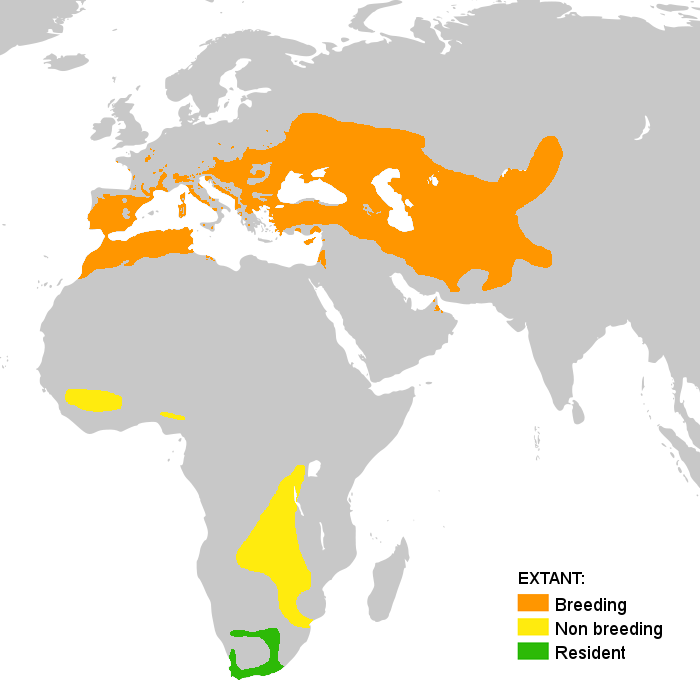
The Bee Eaters have returned from tropical Africa this week.
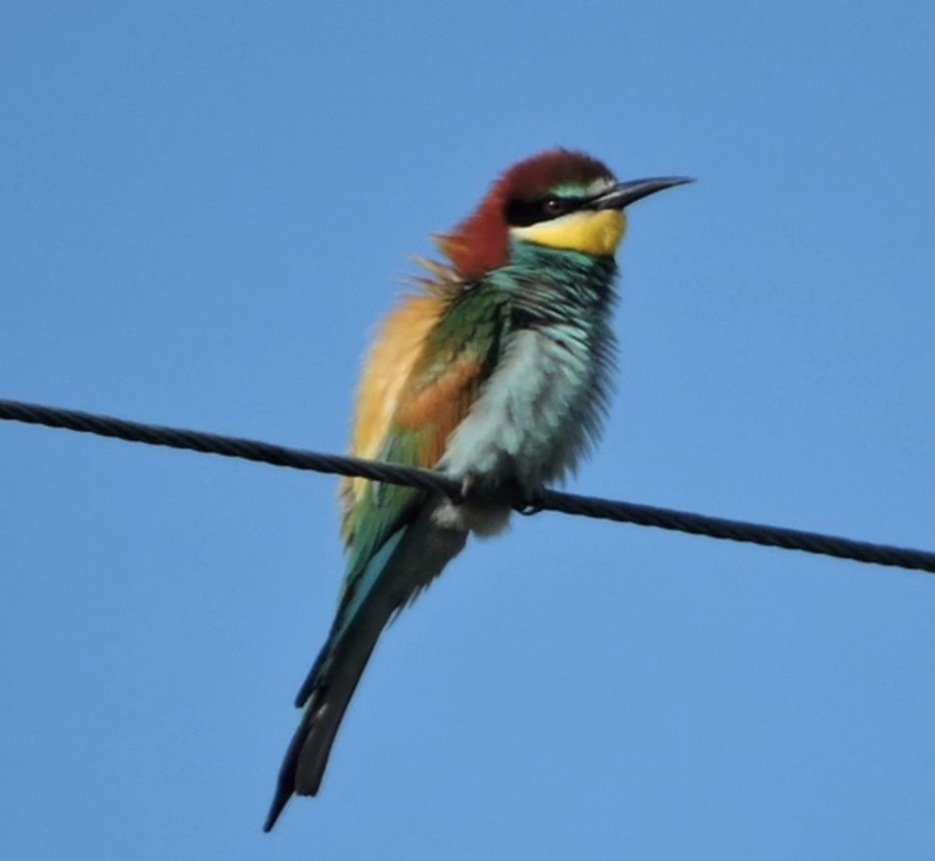
These colourful little birds were in a large flock calling and feeding over my home. They nest in burrows in sandstone and make the huge journey from tropical South Africa to breed on the island each summer.
Then they leave and fly back south again in the autumn.
Ivy is one of my “problem children”, because it thrives in this climate and readily sets seeds, which the birds eat and then spread far and wide.
As I passed some Ivy which is growing over an old wall, I saw a different, large caterpillar sun bathing on a leaf.
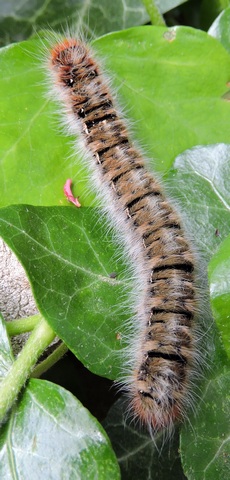
Not a caterpillar I have seen before, I started doing some research. At almost six centimetres long and with bright orange and bright white hairs, it was not difficult to identify.
This is an Oak Eggar caterpillar, Lasiocampa quercus. Another Mediterranean and southern European moth species. Ivy is one of its food plants.
I have never seen this moth, but being a day dweller, I don’t see too many moths. This photo is from Wikipedia.
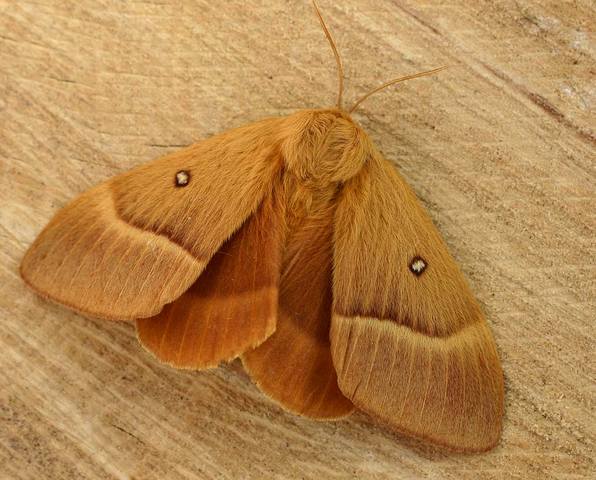
Despite the name, Oak is not a food plant. The name is because the larval chrysalis looks like an acorn.
The longer I live in my Dol House, the more new (to me) species I see.
Covers off and on
With the useful rainfall this week, on Thursday my soil moisture gauge in the citrus orchard was registering 45%.
This device, near to an orange tree, measures soil moisture at a depth of 10cm. My citrus orchard has the worst soil and in summer is the driest of all my land, so it is a good place to measure soil moisture content.
At the same time, the sun came out and at mid-day, my weather station was recording a sun intensity of 704 W/m². In June 2025 I recorded 929 W/m² and in July, I had the highest reading of 1075 W/m².

The mean is 586 W/m².
Watts per square metre, W/m², is the international unit of measurement of solar energy, or solar radiation received on the surface of the earth.
So although we are two months away from the Summer Solstice on the 21st June, we are already receiving 75% of the maximum June solar radiation. The winter minimum is around 200 W/m².
This is another example of how I use data from my weather station to inform my work around my home.
So with a reasonable amount of soil moisture, my actions now are about preventing premature evaporation.
I started putting the summer “umbrella” covers over my citrus trees.
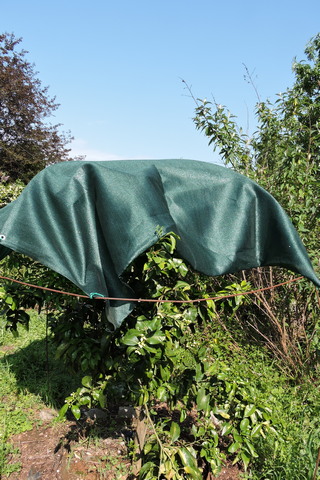
With fifteen citrus, of various kinds and varieties, oranges, lemons, grapefruits, mandarins/clementines and limes, protecting them now should improve the fruit crop later.
Last year I waited until some of the trees were suffering from water stress, before I tried the summer “umbrella” idea, which worked really well.
I needed to replace some of the wires which hold the frames together because they had corroded. But once done It was not difficult to fix all the covers.
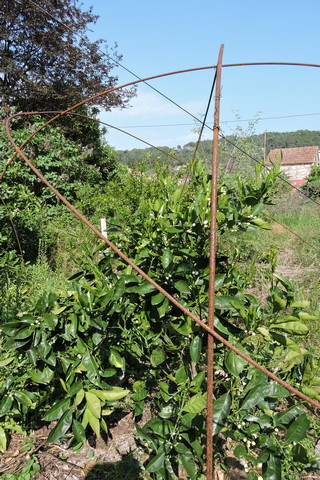
Meanwhile the inside of the polytunnel has been reaching over 40°C in the sunshine, so I removed the polythene winter cover.
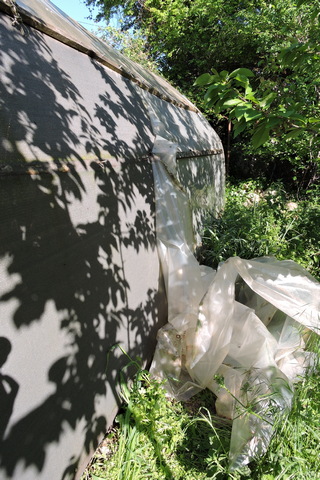
I knew when I put the cover on the shade netting last October that this would be its last winter. Over the winter the polythene sheet had deteriorated more and torn.
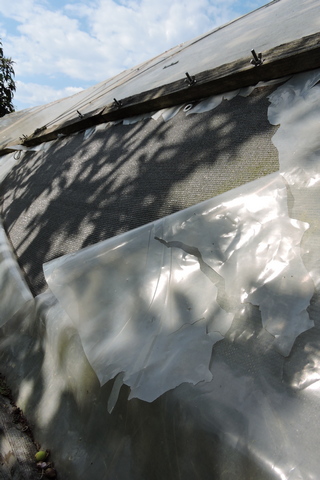
This material is just not UV stable, so even just being used between October and April, it is exposed to a lot of sunlight and UV radiation.
I may be able to salvage some of it, but a lot will just go in the recycling bin.
Lots of fruit
I’m really not sure what the reason is, but I have a huge amount of fruit which has set following blossom time this year.
We have had a very wet and cool, but not cold, winter. Whilst the weather conditions may have favoured the more temperate trees, for example my cherries (which have more fruit than I have ever had previously), it should not have affected the citrus.
Yet my orange trees have so much blossom, that if even a half of it sets fruit, I will have to remove fruits because the trees will not stand the weight.
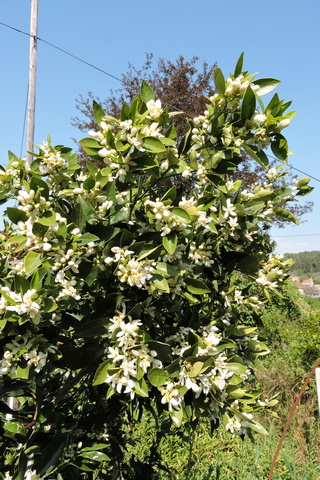
Grapefruits and lemons are the same. But this week, the scent of orange blossom has been filling the air around my home.
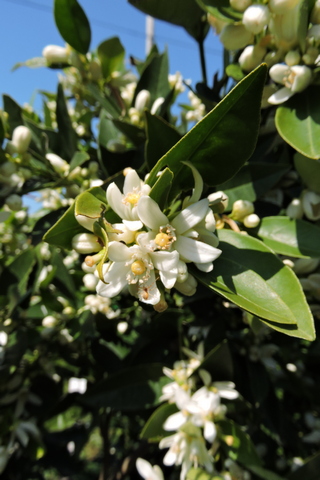
Every time I walk out of my door onto the patio, the air is filled with the scent of a perfumery.
The pears also seem to have a good crop too. I did choose varieties which need minimum winter chilling hours though.
The opening of the blossom is the first stage in the reproduction process. Pollinating insects transfer pollen between flowers which is the fertilisation. With out this transfer, then no fruit will set.
A successful pollination results in fruit set. The petals fade and drop and a tiny fruit begins to swell at the base of the flower. These are very small cherries.
At some point, on some trees, there is a natural thinning process. Trees can be over burdened with fruit, so some are shed and fall to the ground. This is so the tree has enough resources to make sure the remaining fruit survive.
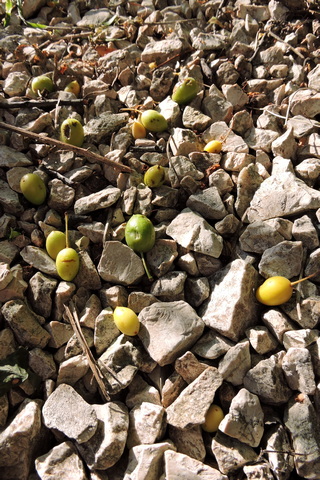
I have a large crop of breba figs, the first of two crops. Breba are produced on last year’s summer growth.
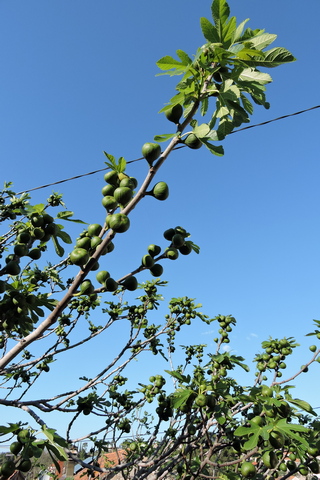
A third to a half of these are being shed at the moment.
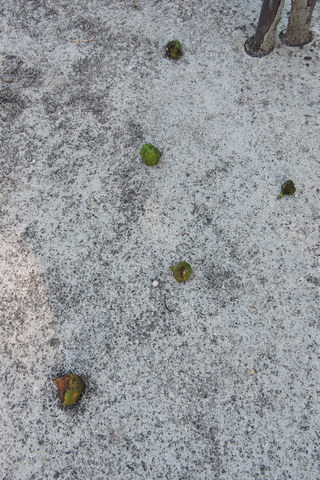
Also my early Mirabelle plum, Prunus domestica subsp. syriaca, is losing large numbers of fruit.
I’m not worried though, because the tree was covered in blossom and even though a substantial, old tree, it could not support this level of fruit through to maturity.
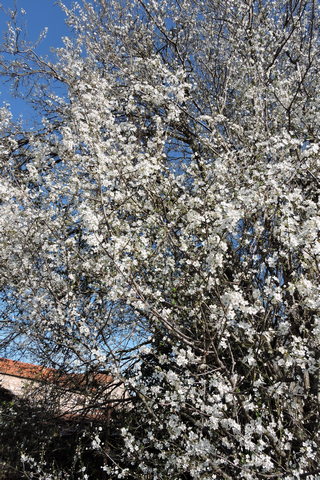
Overall for a combination of reasons, be it the winter weather, or the right temperature and abundant spring pollinators, this year looks (at the moment) as though it will be extremely fruitful…
A walk on the wild side
We have been up through the Maquis again this week, after the rain, to look at orchid development.
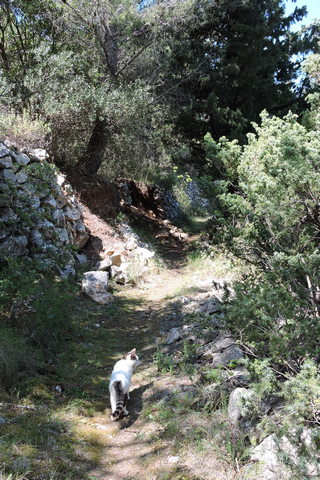
I was delighted to see that the first flowers have opened on the Violet Birds Nest Orchids, Limodorum abortivum.
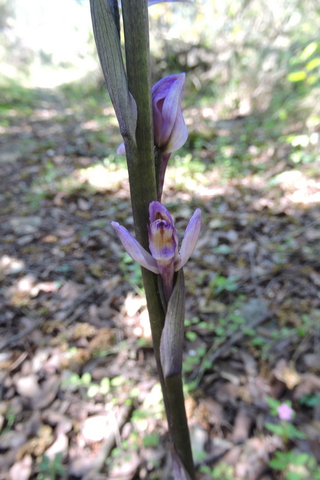
However what pleased me more, was that I found three more flower shoots which have appeared. This doubles the total number of shoots this year from three to six.
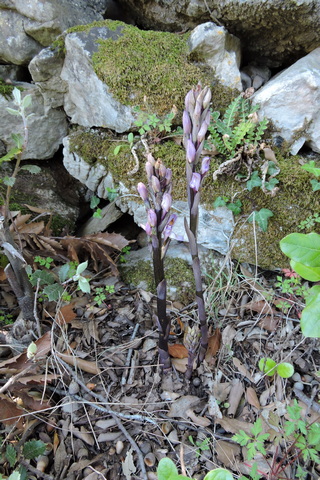
These three are very close to a wall and are hiding in plain sight.
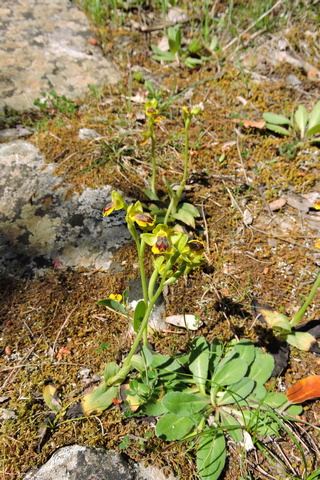
Elsewhere there are more of the diminutive Eastern Yellow Bee Orchids in flower, together with other dark Bee orchids.
Looking at the first orchids to flower, the Early Spider orchids, they are now dying back and presumably setting seed.
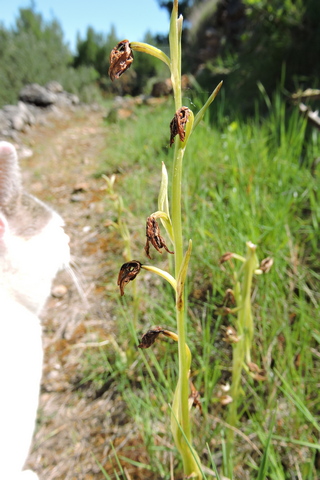
Orchid seeds are tiny, the smallest seeds in the world, often as fine as talcum powder, much smaller than grains of sand.
So although I cannot see any seeds, I hope that they have been dispursed to continue the spread of these beautiful flowers in this area of the island. NCG