Mediterranean life is a privilege!
This week: ; ;
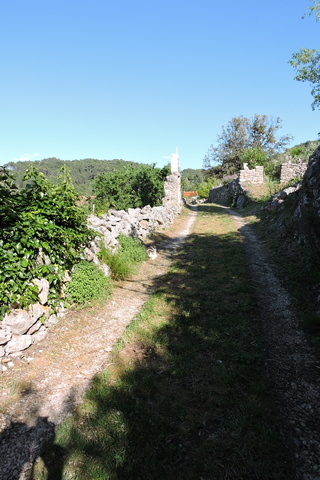
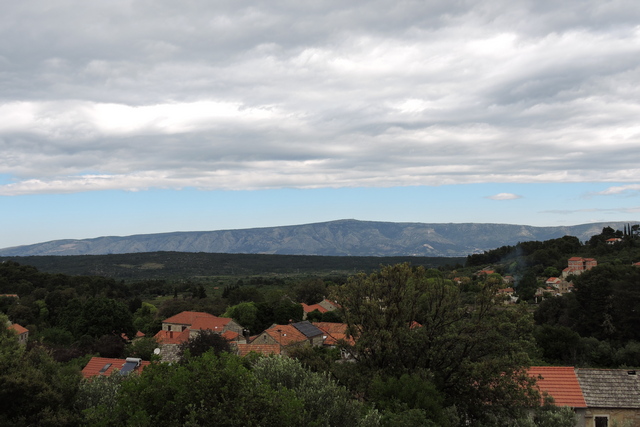
This week the weather has been fine and sunny, but with a cold wind. On Thursday a cold front moved down the Adriatic with the line of cloud which marked the upper edge of the front, as straight as a ruler, across the sky.
This weekend has been the Hvar Trail Run. Readers may recall that last year, the local municipality used a strimmer to cut grass to prepare the local paths for the Trail Runners.
In doing so, they also cut down every orchid.
The result was that throughout last year, there was not the diversity of insect and reptile life to be seen on the paths that had been mowed flat. I complained at the time and several times afterwards, and someone has listened.
The trail markers went up again this week. However this year there has been no repeat of the grass and orchid destruction. Really there was no need anyway because the path borders have never recovered from being scalped last May.
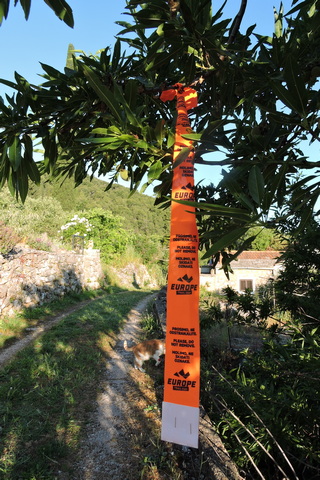
On Saturday morning, the runners came through. There were far fewer that last year, perhaps two dozen. Then later in the day, the organisers came through and removed all the markers.
Clearly this year it is not a two day event.
When I went up the path on my daily orchid patrol, I was pleased to see that there is no damage. Even the Violet Birds Nest Orchid stems were still standing in the path and their seeds pods are swelling.
As I suggested to the organisers last year, it is possible to organise a trail run, without destroying the local flora.
The Wild Gladioli, Gladiolus italicus, which I planted last autumn in the kitchen bed are in flower this week.
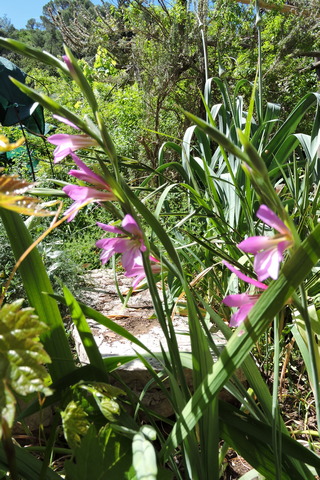
They are the last of the spring flowering bulbs in this flower bed. Already the early flowering bulbs have died back and soon the soil will be bare.
I might plant some annual bedding plants as replacements. It depends how much I want some summer colour in this spot.
As the soil is already very dry, whatever I plant will have to be watered.
Because my soils are rapidly losing moisture, I ran the irrigation system for the first time this year. It is only a few years ago, that I wasn’t starting the irrigation until the end of May or early June. I can’t do that any more.
When I was looking at my grape vines, the early varieties already have a lot of small bunches of grapes.
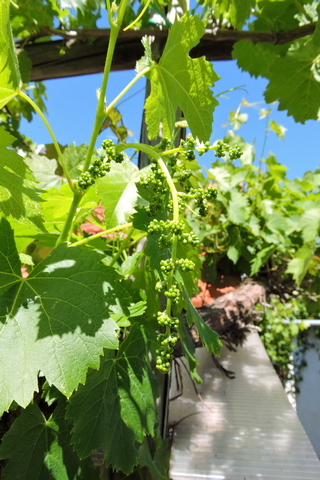
Meanwhile the autumn fruiting varieties are still in flower.
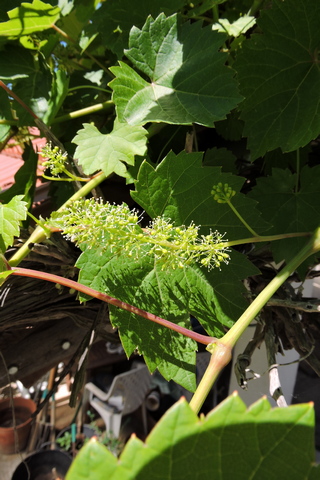
We are very quickly moving from late spring into early summer…
The world is in a mess!
I was talking over a coffee with neighbours on Friday morning about the weather. On the TV, the weather man was reporting temperatures of -5°C around Zagreb.
Our overnight low had been +8.4°C, but then we are 400 km south.
The unseasonable cold has been caused by a huge area of Arctic cold which has covered most of central Europe. Here in the southern Adriatic, we are on the very edge of the cold air.
Nothing can be described as “Normal” anymore. We are past climate change and into climate breakdown, where some places are hotter and dryer, while other places are cooler and wetter.
When I look at the precipitation my weather station has recorded, we are well above the average for this point in the year.
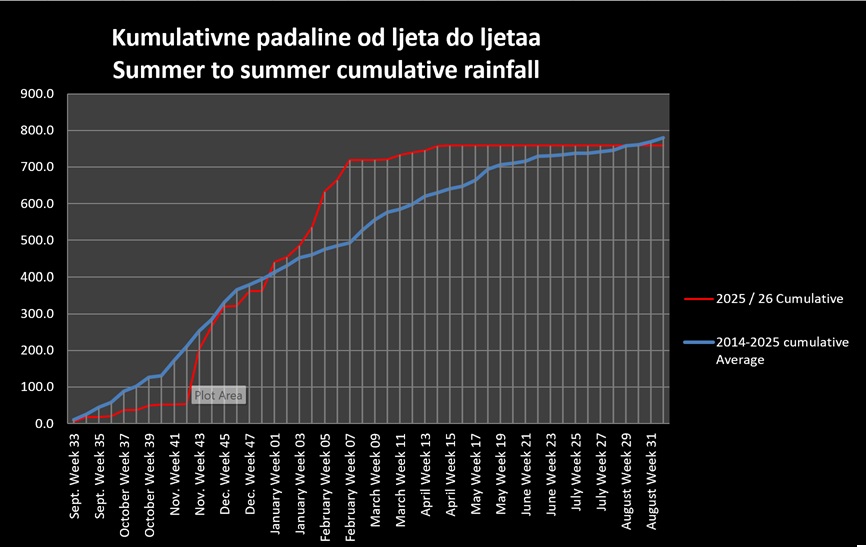
However this week I have had the irrigation running because my orchard soil moisture meter is down at 27% and the trees are at a critical point in the fruit growth cycle.
But when you look back at the winter, from November to February, we had also been well above the average. Now all that moisture has gone.
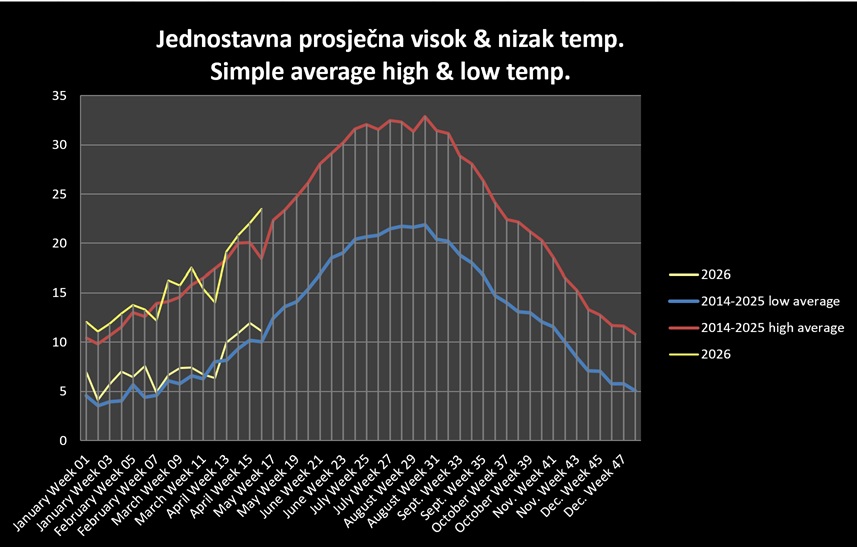
Our temperatures have been below the recent averages, especially the 11 day running average, which is critical to plant growth and development cycles.
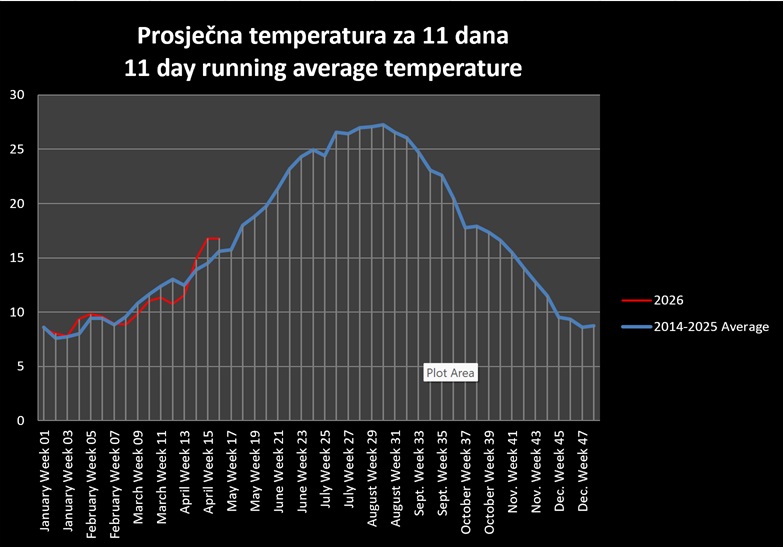
The daily high and low averages have been around the average, but recently have been higher after a cool Easter.
What does all this mean?
Uncertainty in a word. The supercomputers which are used to forecast our global weather have little data to base their predictions on.
The current very rapid warming of the Pacific Ocean, in an El Niño event, WILL have an effect on Europe. The most likely effect is that this summer, autumn and early winter will be much warmer than previous years and probably with less precipitation.
I try to no longer use the word “normal” when I am talking about the weather, because nothing is normal anymore. But when I look ahead to the summer, I suspect it will be anything but “normal”.
There will be places which are cooler and wetter than previous years, however this does not buck the trend of increasing temperatures and severe weather events.
Part of the reason for this is because warm air and a warmer atmosphere can hold more moisture and creates stronger storm systems. So when the rain does come, it is heavier and can last longer.
We are living in very uncertain times….
Weeds, weeds, weeds…
The wet and relatively mild winter has favoured some plants, but not others.
This year my Honesty plants, Lunaria annua, have given their best display ever.
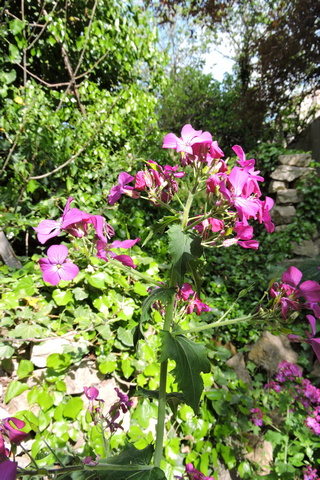
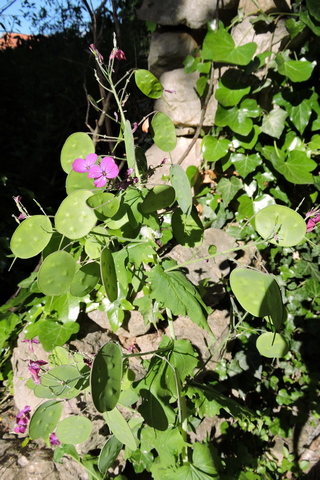
And now they have set seed, there are the moon shapes seed pods, which give them their name, covering the plants, from top to bottom.
My plum trees also are covered in fruits, as are the cherry trees. However there is a cherry tree nearby in an olive grove, which appears to be dying.
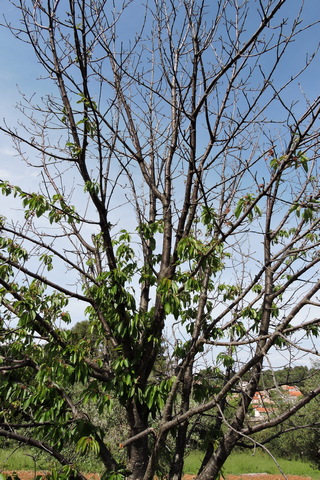
I don’t think it is disease and can’t identify the cause. But obviously not everything is happy.
Weeds have been doing extremely well, especially the Pellitory of the Wall, Parietaria judaica. I have more this year than I have ever had before.
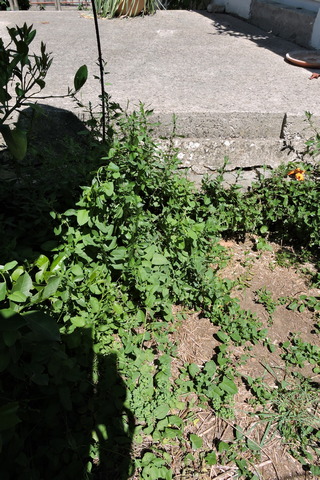
As the name suggests, it likes growing out of our limestone walls and is a dreadful annual Mediterranean weed which sprouts everywhere!
Growing out of walls makes it hard to remove and impossible to eradicate.
After pulling the plants stems off, the area looks better, but plants are still firmly embedded into the walls.
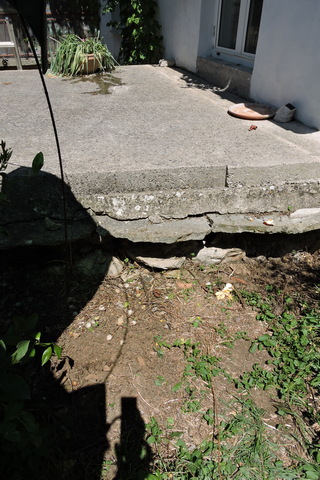
Likewise, the Pellitory had established around the banana plants I moved outside last autumn.
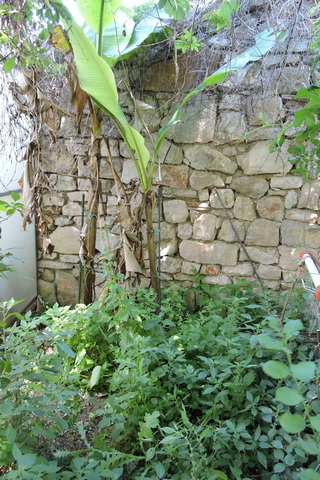
The plants are easier to remove from soil that from stone walls.
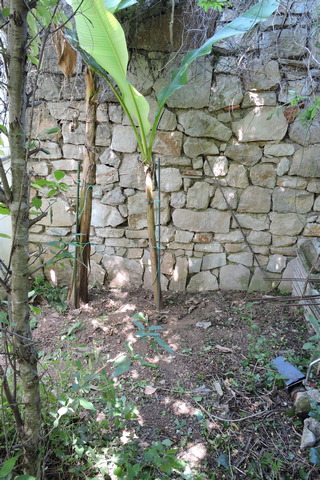
However, because of their growth pattern, where at every leaf node on the stems flowers grow, it also means that a single plant can spread thousands of tiny seeds.
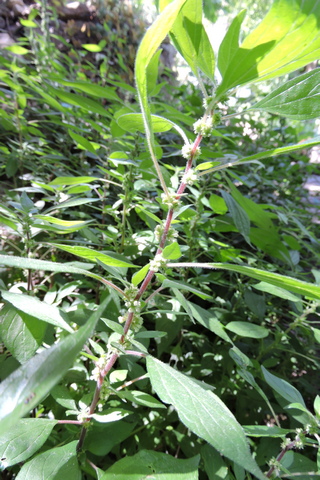
Now is the time to remove them. The seeds are not yet ripe, but the stems are firm enough to be gripped and the plant can be pulled out of the soil.
As well as leafy weeds, the annual grasses have had a bumper season and like the Pellitory, I am trying to remove them now before the seeds ripen and spread.
Mediterranean life is a privilege!
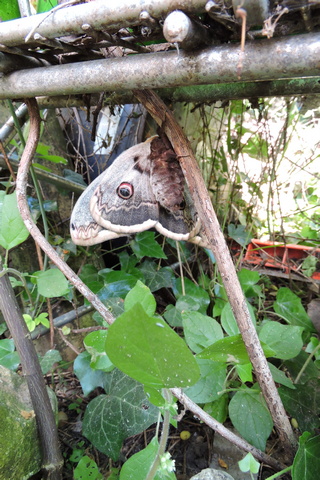
As I was removing some of the Pellitory of the Wall leaves, I caught a movement and saw a Saturnia pyri, a Giant Peacock Moth, had just emerged and was unfolding its wings.
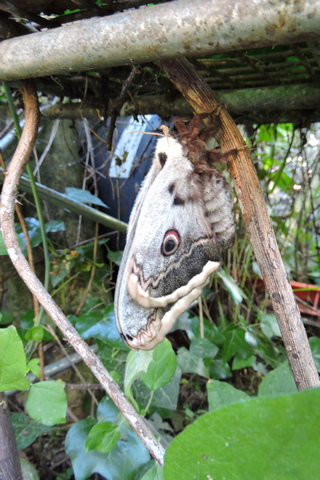
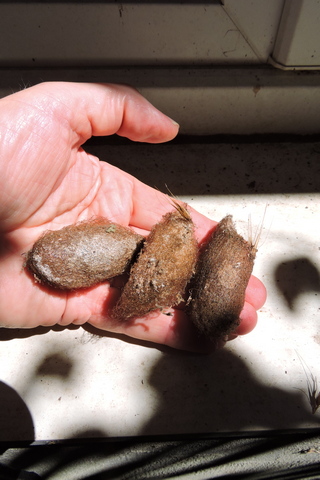
I often find the woven chrysalis cases around my home, but this is the first time I have found a newly emerged moth. These moths have a palm size wingspan of 15-20cm.
Caterpillars feed on various deciduous trees and shrubs, however the adults have no mouth parts, so do not feed during their short, 10 day life. They search for a mate, lay eggs and die.
This moth is found across the Mediterranean from Iberia to the Levant and Syria. I have left the leaves to protect it until it emerges into the sky after dark tonight.
The main food plant for the caterpillars is pear and plum trees. I have also found their caterpillars on my Pistachio trees.

In the autumn, after growing to the size of your little finger, the caterpillars spin a hard outer case around themselves, somewhere out of the way. Often I find them under the edge of stones.
Inside, the caterpillar pupates into a chrysalis and remains inside the cocoon over the winter, to emerge, like the one I saw, in late April or early May.
Living in the Mediterranean amongst the natural world is a rare privilege… NCG