Now just waiting
This week: Now just waiting; Plum support;

Temperatures have dropped 10 degrees from where we were a week ago. For the first time in weeks, on Friday night I didn’t need a recirculating fan to keep the bedroom cool.
Although the last week of July and the first week of August have always been the hottest in the year, this year because of the heat domes which settled over the Iberian peninsula and western Europe, June and July have been way, way hotter than usual.
We are now back on the average of 27°C, which is normal. 27°C is our average for the next three weeks before temperatures begin to fall in mid August.
The seasons are advancing with leaves on the grape vines beginning to change colour. I usually notice this around the start of August. They are the first in the garden to begin to change.
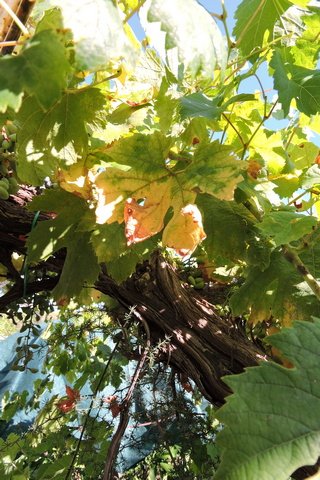
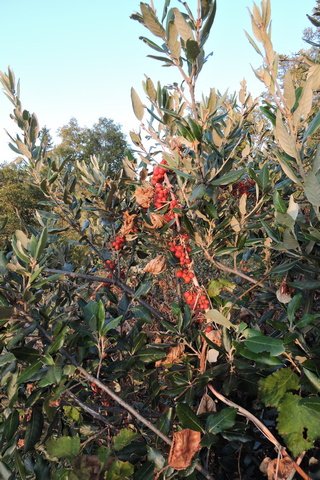
Winter berries are ripening on the trees and day length is dropping markedly now too. A month ago, I saw the first sun in my study window at 05:45, but today it was 06:15.
Our Swallows have departed for their winter hunting grounds in South Africa.
I noticed 10 days ago that they were gathering on the electric transmission line close to my study window. There were four young birds sitting in a row, twittering away then darting off to catch a fly before returning.
Then suddenly this week, they have gone. No more calling, no more fly catching, no more sitting on the wires.
I always find it a little surprising because down in Stari Grad, the Swallows are still flying. So why the ones which return each spring to breed around my home in Dol leave so early, I do not know.
It is much easier to note the date that the first birds return in spring (this year on the 5th April), but much more difficult to note the date that they depart. It is only as I sit by my window and realise that there is no birdsong outside, that I realise they have flown off.
We had some much needed rain on Tuesday as thunderstorms passed the island. With just under 8 mm, it was not a huge amount, but was considerably better than nothing.
I have continued irrigating though, to try and build on the rainfall. There is no really significant rain in prospect though for the next ten days.
This week has mainly been an “odd job” week, so I have little to show for my efforts, but that is often the way with things here.
Your weekly dose of cats
When it is really hot outside, then the only thing to do is take a siesta, in the coolest place possible…
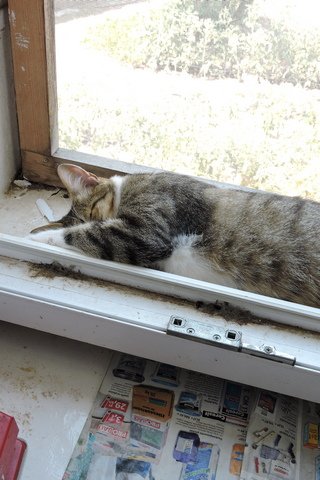
Tigger has been travelling again!
Since he was a tiny kitten, he has regularly disappeared off for five days to a week at a time. I’m sure he has a second home nearby where he goes, because he comes back clean, well fed and happy.
After being missing for a week, he waltzed in just after 5am on Monday, had some breakfast and curled up on my knee.
He refuses to keep a collar on, so tracking where he goes with an AirTag or GPS is not an option. But he goes somewhere, then returns days or a week later and resumes his life with his siblings.
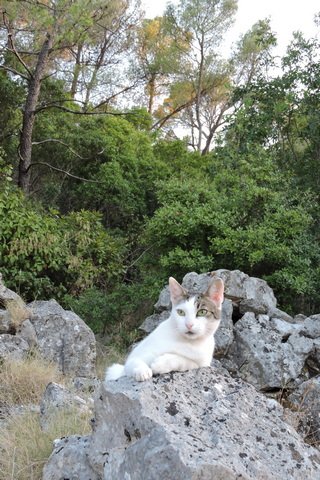
They really are living their best lives…..
Now just waiting
I always keep an eye of the weather, so looking ahead at the start of the week, there was some rain forecast for Tuesday. So I had some work to do before it arrived.
First thing on Monday, I was at Volat, my local builders merchant in Stari Grad, to get a tube of specialist adhesive for stone.
Once back home I measured two lengths of polythene sheeting to fit between the wooden roof beams, above my bridge.
There is a history about why most of my living space is at first floor level.
All my buildings are more than 130 years old and in those far off days, the ground floor was always the Konoba where animals were kept, olive oil was stored and wine was made from grapes.
So the first floor level was the family living space, above the ground floor, working part of the buildings.
There were steps up from the courtyard to the first floor main door. Then in 1973, according to the date I found etched into the concrete, the buildings were linked at first floor level with a reinforced concrete bridge.
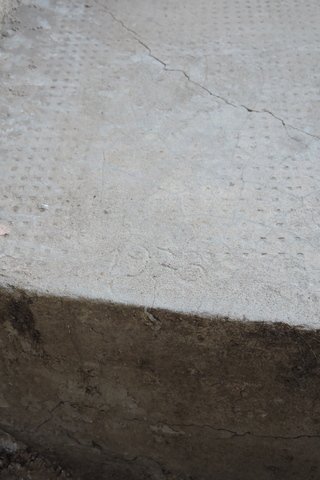
I very quickly realised that living between the buildings meant getting wet every time it rained. So I installed a roof, as a temporary measure until I get the permanent extension built.
One very early job was to install guttering. Old buildings here simply never had rain water guttering fitted, so the rain cascaded off the tiles and down the walls.
However like all temporary fixes, they have a shelf life.
This past wet and miserable winter highlighted problems where rain was still managing to drench the bridge and leak between concrete pours to soak the dry winter firewood I store underneath.
Once again it was an engineering problem. How can I put something under the roof tiles, to direct rain into the guttering? Ideally you would use thin galvanised sheet, bent into shape and fixed to the roof.
I really didn’t want to remove the guttering, to drill up into the eaves to fix anything, so went with a simpler, albeit less durable option, of thick polythene sheet.
To make sure the adhesive adhered to the polythene, I roughened the surface with emery paper first, so it was no longer smooth and shiny. Then I applied a thick bead of adhesive to the underside of the eaves.
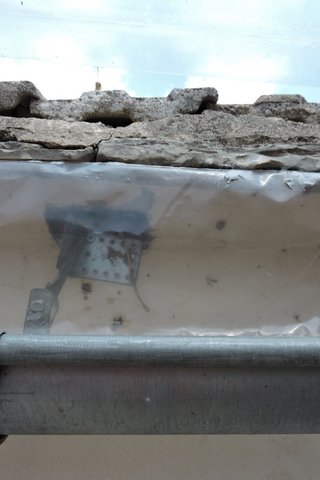
Fitting the polythene was then easy. For good measure I also applied adhesive to the guttering, so wind will not move the polythene.
There was one small problem, a Hornet’s nest.
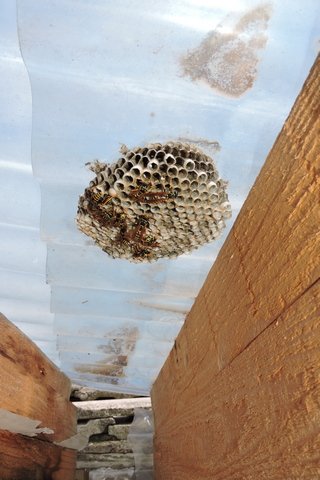
I believe in live and let live, and these small hornets are a horticulturists friend. This is because they feed on caterpillars and small bugs and feed their young on them too.
Getting up before dawn on Tuesday, at a time before the hornets are warmed by the sun and become active, I finished fitting the polythene around the next without harming any of them, or getting stung.
I watched on Tuesday as thunderstorms headed towards Dol and then the island’s topography diverted them away. We did have some rain though, a very useful 8 mm.
This tested my work and on Wednesday morning there was just one place where rain had still worked between the concrete. Overall, a positive result and it gives me the necessary information to make some minor adjustments.
Plum support
Some of my best work is done in the dark, thinking in bed!
I was thinking about how to install the support for my courtyard plum tree, when I had an idea about using an anchor stone as a base.
I had been wondering about how to fix the upright wooden lat, which is four metres long, so it didn’t move, but also didn’t touch the soil and rot in winter.
After hunting around in my reclaimed stone pile, I found the perfect piece, with a cut out section when the base of the wood could sit.
In another pile of architectural salvage, I found a small length of 8mm smooth steel, so drilled a hole through the stone and then ran the steel into the soil below.
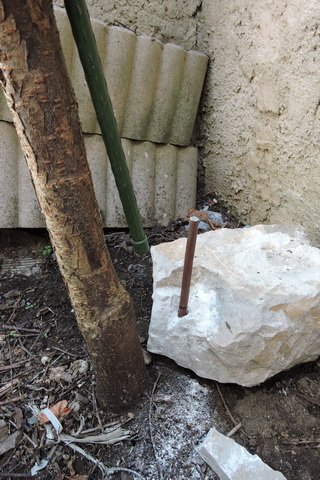
This gave a semi rigid vertical, and a heavy piece of stone to keep everything in place.
The next part of the project was to mark the end of the wooden lat to find the centre and to drill a 100 mm deep hole into it.
The wood slipped easily over the steel and was held in place with string while I constructed the next pieces.
Fortunately the bridge railings are only 2.5 metres away, so after measuring I cut another length of timber, a little over size to allow for error and fitted it around the railing.
At the upright end I marked a small rebate so it would fit the upright exactly, cut it then screwed it to the upright.
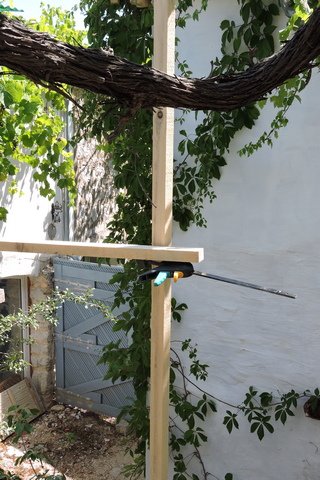
The upright was now stable, but needed a second horizontal length to completely lock everything together.
Once this second length was fixed, I hung the drooping branches from it.
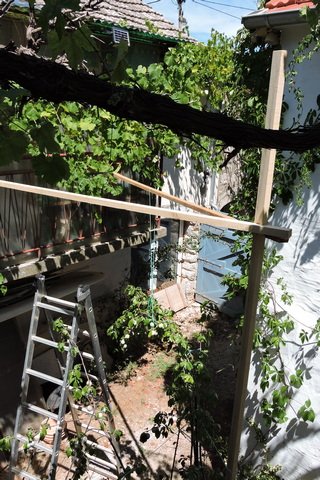
As I have said before, this tree is a Shropshire Prune Damson, so is not a weeping variety of tree. It is simply the weight of fruit this year which is causing the upper branches to bend over.
Once the fruit is ripe and has been picked (in late August) I will fix these branches to the upright so the tree grows with a strong vertical support.
This should prevent similar problems in future years. NCG