Master
This week: Can we do what we need to do?; Going back in time;
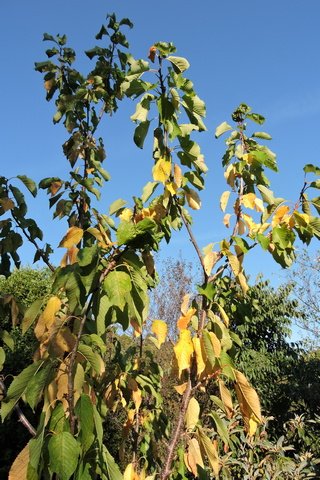
It has been another baking hot week here in Dol this week.
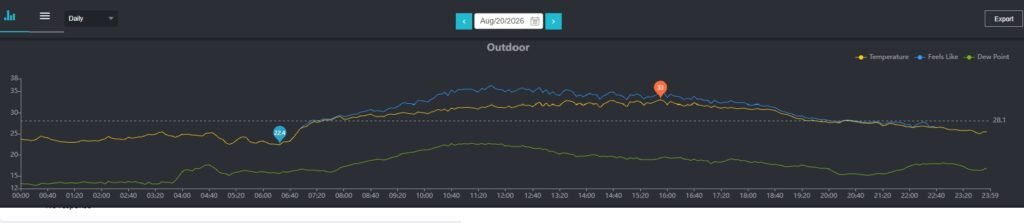
The temperature has not dropped below 21°C at any point during the week, with day time highs of 32° or 33°C every day. The daily average has been around 28°C and has often been above this temperature from 07:00 to 22:00.
When combined with high humidity, for example this morning when I got up humidity was at 90%, it has just been really unpleasant.
That said, I have done few outside jobs, apart from watering plants and trees.
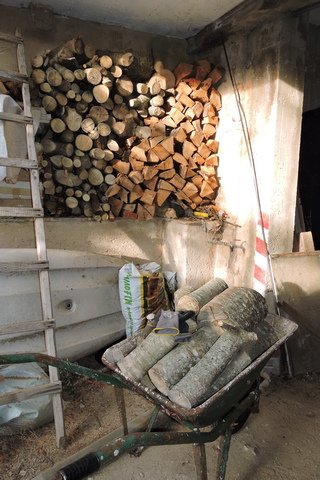
Rain had been forecast for Tuesday, so I moved seven wheelbarrow loads of logs which had been drying in the sun, to my under cover storage.
I need not have worried because later on Tuesday, as I watched the rain on the radar, what looked like an intense squall over the island of Šolta, just 15 kilometres away, had petered out to nothing by the time it arrived at Stari Grad.
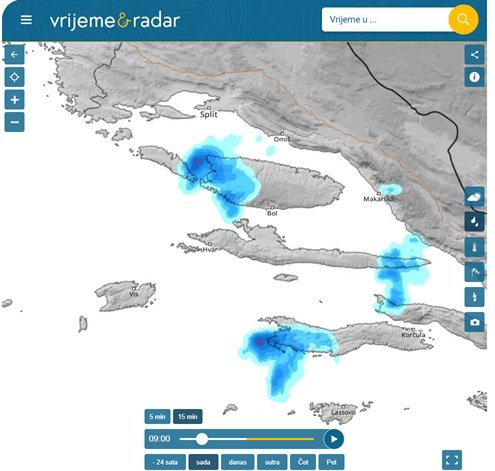
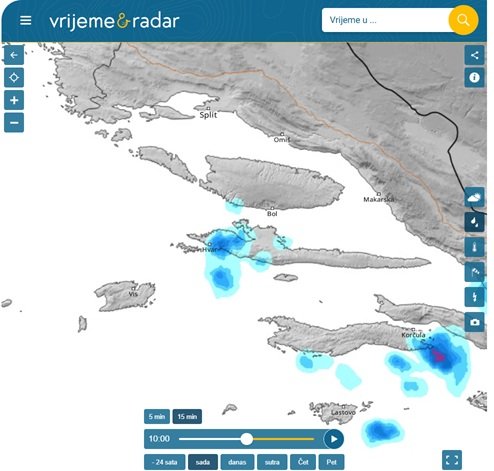
Going to the Post office on Saturday morning, the road reports on the radio were all about terrible conditions up the coast where there was flooding, landslides, roads blocked and property damage, caused by heavy rain and thunderstorms yesterday. Here in Dol, we just had some cloud!
There are still some very large logs in the open air, but for these I am waiting for when my neighbour has their “log splitter” machine out. They are too large to attempt to split by hand.
Overall, I have a reasonable supply of logs ready for burning this coming winter.I
Can we do what we need to do?
We are no longer in control of climate breakdown. We might have been able to do something to stabilise the increasing temperatures some years ago, but now it is out of our hands.
Professor Lorraine Whitmarsh, the director of the Centre for Climate Change and Social Transformations (CAST) and Professor of Environmental Psychology at the University of Bath, said 2026 will probably pale in comparison to future weather events. Speaking on the BBC she said, “this is definitely the ‘least extreme weather’ we will experience.”
In the Pacific, the El Niño ocean heating continues to intensify and whilst it has had some effect on this year’s weather, it will have a far greater effect over the winter and into next year.
The comment from Professor Whitmarsh that “2026 is the coldest summer of our lives” has gone viral, but whilst it may, or may not be true and only history will tell us, the trend is for increasing temperatures over the next few years.
The 2025 British National Emergency Briefing by Professor Hayley Fowler is worth watching, even though it is 12 minutes long.
This was one year ago, before the extreme rainfall of the 2025/2026 winter and the extreme heat and wildfires of the current summer.
I see no attempts here by local or national government to address the issues we currently face.
This is far from unique. Across Europe, countries react and respond to climate incidents, whether that is heat, cold or flooding. Preventative measures are non existent.
This summer in Stari Grad, locals have lost count of the number of flooding incidents, caused by rising sea levels. Whilst I worry about the risk of fire, I also worry about flooding.
On the 13th and 14th September 2024, Storm Boris brought devastation to Italy, Austria, Czechia, Slovakia, Poland, Romania and Hungary when up to 440mm or 440 litres of rain per square metre fell. Dol was on the very edge of the system and I recorded 24mm of rain.
But what happens when there is a rainfall event like Storm Boris, over land which is parched and baked hard? Water cannot soak in and it has to go somewhere. That somewhere will be flooding in peoples homes.
Storm Boris is NOT an aberration. The breakdown of the Jetstream, caused by rising temperatures across the Atlantic mean this sort of event can happen at any time and potentially several times a year.
As I think about the coming winter and heating my home with my wood stove from November to early March, I am not comforted that burning wood is not considered a fossil fuel.
Growing trees draw in Carbon Dioxide, and in the photosynthesis process give off oxygen, locking CO² and sugars into the wood.
When you burn the wood, you are releasing the CO² back to the atmosphere, and CO² is a greenhouse gas. But with no other source of heat, I have no other option and neither do my neighbours.
The impression that I have is that local and national governments, of all political persuasions, are prepared to “fiddle while the world burns”, rather than take the difficult decisions which will be unpopular with their voters, but which might just prevent a greater disaster…
Going back in time
I found that my workshop this week has been cooler than parts of my home. It is insulated with 10 cm of Styrofoam blocks and I can open several windows to get air flowing through.
Air movement, even when the air temperature is high, can be cooling! Si I have spent a couple of days in relative cool conditions.
As the autumn approaches, there are going to be jobs which will need doing, even or despite the heat. One of those will be to rotavate some of my soils.
Last autumn I planted Broad Beans, Cauliflower, Broccoli and Brussel Sprouts in the east orchard, but because the soil had been baked in the summer sun, I had trouble with my small electric rotavator breaking up the clod.

By the time I brought my medium petrol rotavator out, it was too late. Although the Broccoli and cauliflower plants were OK, none were especially good and winter onions I planted failed completely.
This year I want to get ahead of the game.
Long before I was sent to my local technical college to study vehicle mechanics, I had learned the principles of engine construction and the Otto cycle at the University of Hard Knocks, rebuilding and restoring old motorcycle engines.
You only needed one or two spanners and a flat blade screwdriver to be able to skin your knuckled whilst “persuading” something to run again.
I was using a motorcycle for transport too and from work, because you could park it for free in the HQ garage, and there were several times when it was running a little lumpy, that I would strip it down in an afternoon, make the necessary adjustments, put it back together in the evening and be on the bike at 06:00 the next day to go to work.
I had faith in my abilities!
My forty or fifty year old Briggs and Stratton rotavator has been in the workshop for several months, because when I tried to start it, there was no spark at the plug.
Removing the various components, I found that there was no gap between the magneto armature and the fly wheel. That would account for there being no spark at the plug.
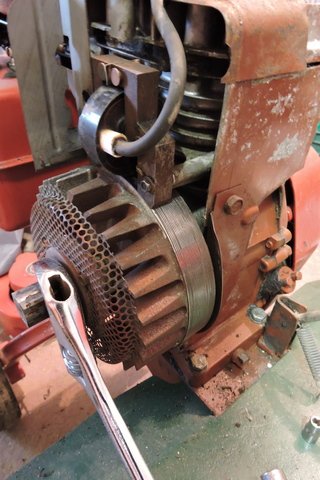
All the parts were in exceptional condition, given the age of the engine and that I last ran it more than 25 years ago!
The flywheel had no corrosion on the surface, so I cleaned and polished it with Solvol. Without corrosion, it was not a hard job.
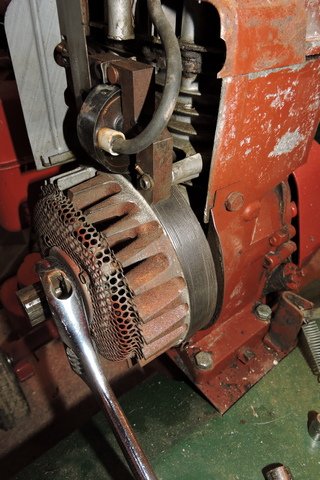
Next I removed the magneto armature. This is the magnetised electronic device which is fixed above the flywheel and is where the electric current is generated that produces a spark across the spark plug.
Again there was no corrosion, so I just polished the armature faces and refitted it.
I had already downloaded a historic Briggs and Stratton engine manual, which told me the gap between the magneto and flywheel should be .020″ or .5mm.
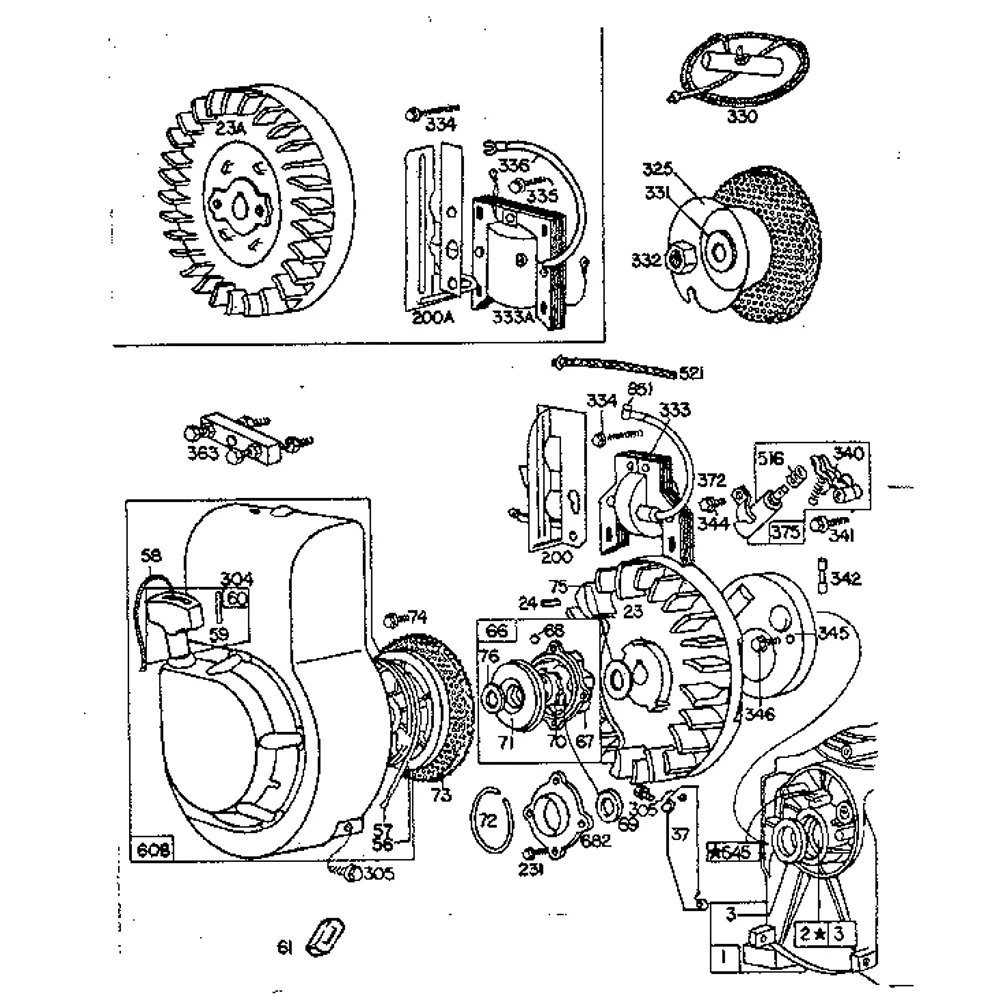
To fix the gap you need a set of feeler gauges. I had a set, but not being something I use very often now I just had to find them.
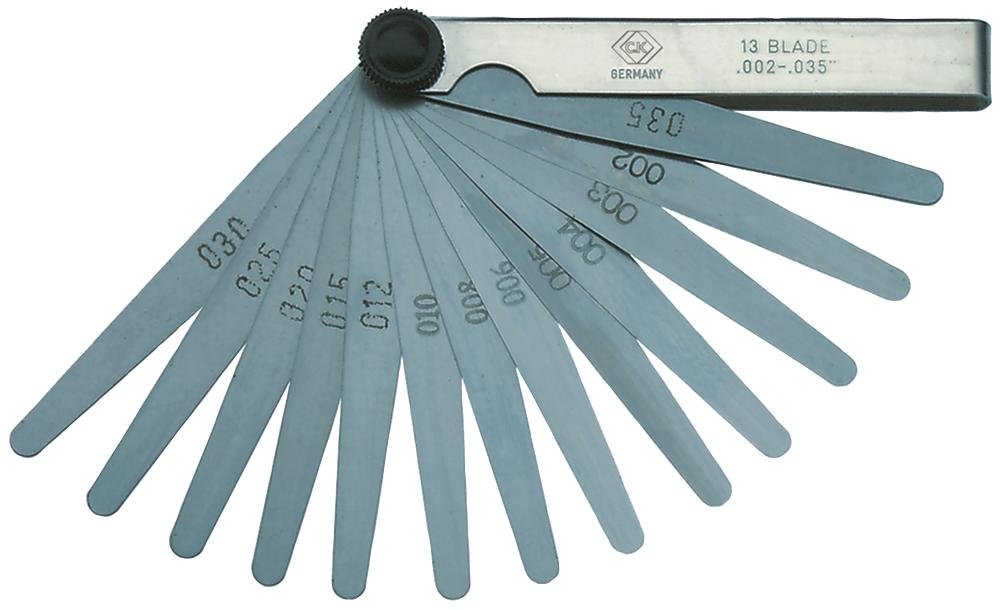
They were at the very bottom of an old motorcycle tool box.
Setting up gap to .020″ or twenty thousandths of an inch was not hard, but it just took a little time to get the gap right and everything locked in place.
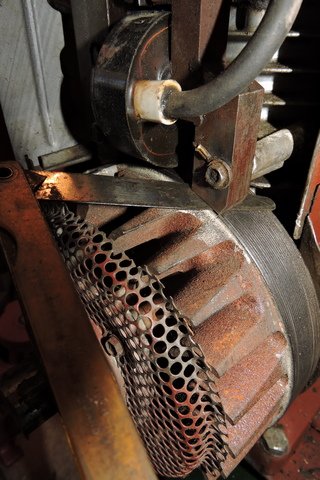
Putting everything back together was not difficult, then I moved the Rotavator into the courtyard. Being a petrol engine, I didn’t want to start it inside my workshop.
With a small amount of fuel in the tank, it took just three pulls on the starter cord for the engine to start and run.
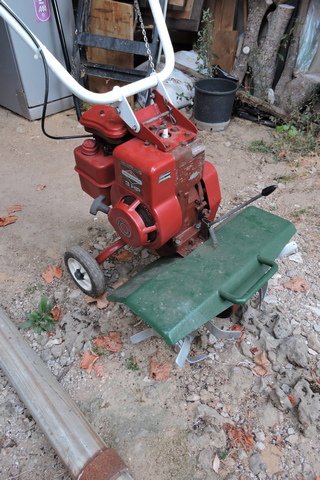
I’m now ready for more autumn work… NCG