Smoke in the air
This week: My own Mango festival; Fire on Brač;
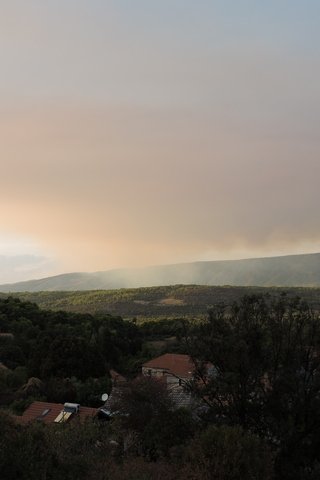
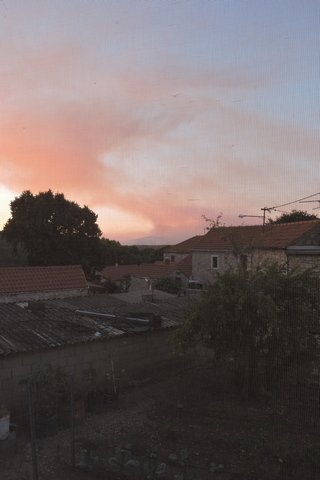
I have just been up the hill, immediately behind my home, to take a photograph of the Pyrocumulus cloud which is over the island of Brač, just 17 kilometres away from home.
There is more about the Brač fire a little later, but as I look out of my study window I can see two towering columns of grey, ash laden smoke and I can smell smoke in the air.
So it has been for most of this week.
I still have my doors and windows open, so I can gain what cooling is possible inside, from having a through-flow of air. Early on Sunday, early being before 03:00, I was awoken by the smell of smoke.
A forest fire has it’s own smell, something very different to my neighbour lighting his smoke-house fire to cure meat for the winter, or the smell of a barbecue. It is different to the smell of an autumn bonfire, which being a little damp, can be mistaken for cannabis being burnt.
Fire is one of my fears because we have no fire hydrants in this part of the village and I am surrounded by extremely flammable materials at the moment.
I got up and went outside. The smell of smoke was heavy in the air, but there weas no falling ash or burning embers, which suggested the fire was some distance away.
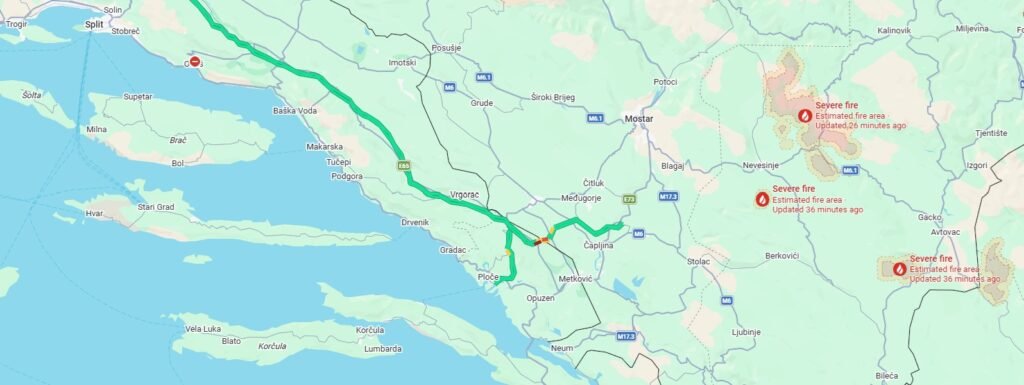
Looking on-line I found nothing and went back to bed. Getting up at normal time, the sky was a leaden colour and the sun just an orange orb behind the smoke. This time I found the course. It was three major fires which had been burning for some time in Bosnia Herzegovina, some 100 km distant.
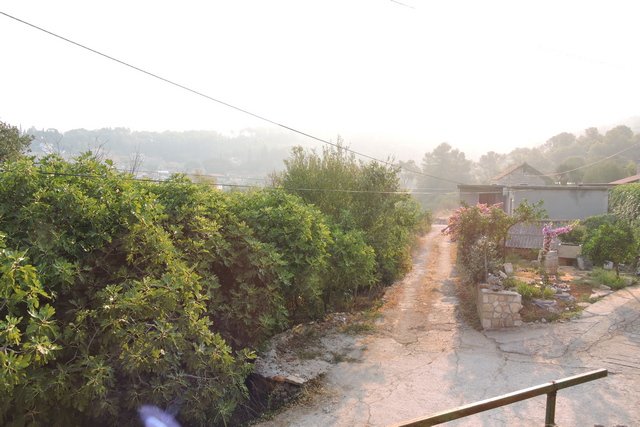
A change in the wind direction had blown the smoke in our direction. The smoke remained for a couple of days, with poor air quality warnings being posted for Split-Dalmatia.
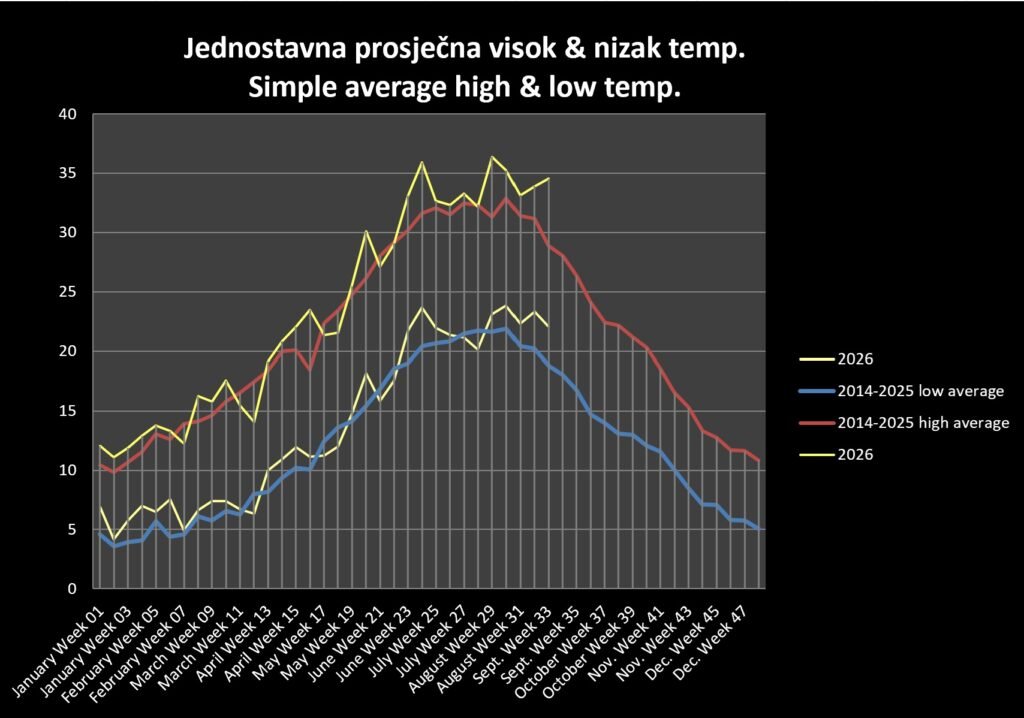
The week has been unpleasantly hot again, with temperatures of 37°C. When I downloaded the weather data for the first week of September, we are ten degrees above the average, still with “tropical nights” and almost zero precipitation.
At the start of the week, we were going to have a change by Friday, with the potential for some heavy and life giving rain. This was because a cold front was going to move down the Adriatic from northern Europe, and it would bring cooler, moist air with it.
As the week progressed, what had been a racing certainty, changed from a probability to a possibility. Early on Thursday morning, as the front advanced south, there was some rain, a meagre 1.3 mm, which as soon as the sun came up, simply evaporated away.
So my irrigation has continued, but not enough to make anything thrive.
On Friday, I watched the weather radar, as storms soaked Split, 30 km away, and here in Dol, I did not see a single drop of rain.
That storm, which had some quite violent lightning, also ignited a fire on the next island of Brač.
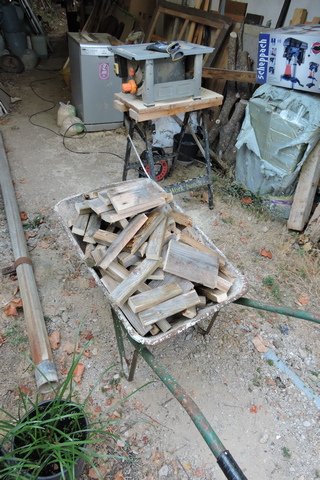
Other jobs this week have been cutting some more firewood, generally tidying up before winter and picking my ripening fruit.
My own Mango festival
I have just one Mango bush, an Alphonso, and it seems that while most of the other fruit trees and shrubs I have planted, have had a torrid year, my Mango has enjoyed the heat.
I have not mentioned it before, because I didn’t want to “tempt providence”, when I saw in the spring that of all the flowers on my bush, there was just a single fruit forming.
I do like mango, eaten fresh, in smoothies, with curry etc and when I was in Abu Dhabi, the annual Mango Festival, held by the LuLu Supermarket was always a wonterful time to shop.
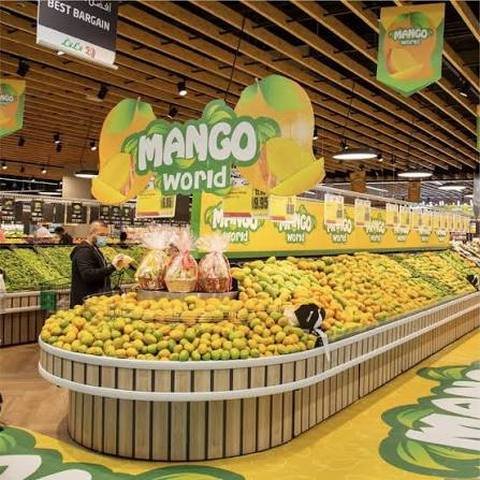
There were thousands of mangos, from tiny mangosteen to huge Keitt, weighing in at 1.5 kg, but my favourite were always the Indian Alphonso.
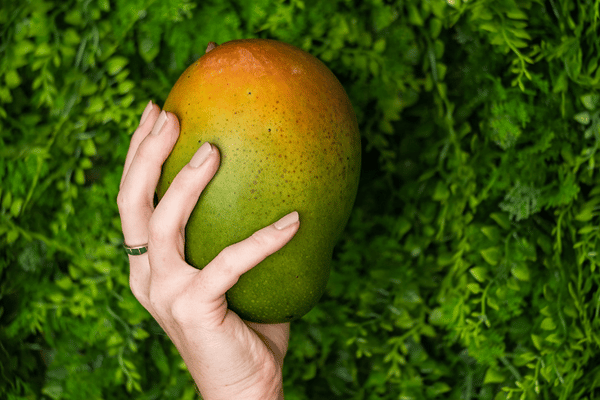
The smell of ripe mangos filled the supermarket and a Pakistani colleague taught me how to tell when a mango was ripe.
First smell it. It should have a sweet aroma of saffron, then gently press the base, which should give a little.
Over the summer I have watched as my mango has swelled then a week ago, it started to change colour, from pale green to a translucent yellow. It was ripening.
On Monday, I saw it had fallen off the tree and was on the floor.
I picked it up, unbruised and immediately smelt that buttery aroma of saffron. Gently pressing the base, there was some give in it.
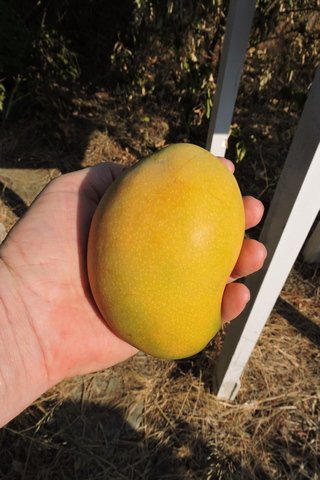
My Mango weighed in at 420gms.
I have occasionally bought a mango at the local Tommy supermarket. They come from Peru, so have had a very long journey. None have ever smelled ripe and most, when opened, have been as hard as rock.
There were some on sale this summer, individually packed at €8.25 each. I’m simply not going to pay that price for a fruit, no matter how much I like it!
My Grandma always used to say that “If you have something good, you should share it”, so taking that advice from so long ago, I went over to my neighbours with my prize fruit, where we opened and shared it. It was the first time they had ever tasted a Mango.
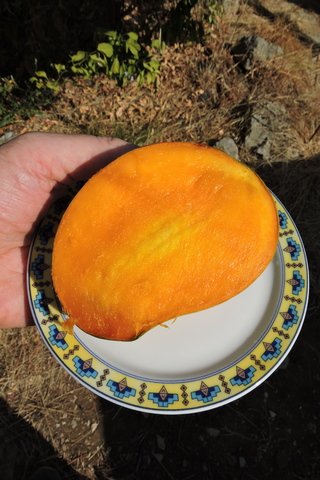
I brought half back and enjoyed it in a fruit salad. My fruit was extremely sweet, very juicy and had the flavour that I remembered so well from my time in the Middle East.
I have saved the seed pod and need to let it dry before I crack it open to get at the actual seed inside. I would like to try and grow a second plant from seed.
Whilst one mango doesn’t make much of a festival, it is significantly better than the rock hard magos from Peru, which the supermarket sells…
Fire on Brač
Regular readers know that I mention the next island to Hvar from time to time. It is called Brač . The Croatian letter ‘Č‘ is pronounced Ch in English, so the name is pronounced as if it were spelled Bratch.
It is the largest island in Dalmatia and has a population of 14,000. Brač is a very popular tourist destination, welcoming 250,000 visitors every summer. There is an international airport with charter flights and scheduled services to several European countries.
On Friday morning, I watched a thunderstorm over Brač, bypass Dol completely. A lightning strike from this storm ignited a fire in a pine forest on Brač. The local DVD Vatrogasci (fire brigade) responded, but by afternoon a large area in the west of the island was on fire. I could see the smoke from home and three Canadair water bombers were flying circuits and dropping water on the fire.
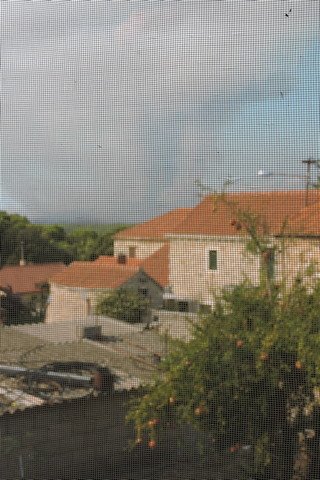
The Canadair CL-415 water bombers are built in Canada and we have six. Whilst the aircraft can fly after dark, practically because of the type of work they do, they are restricted to operating during daylight. So although there were three Canadair’s flying on Friday, they returned to their base at Zadar at 19:10, allowing them to land back at base just after sunset.
However the fires on the island were far from extinguished.
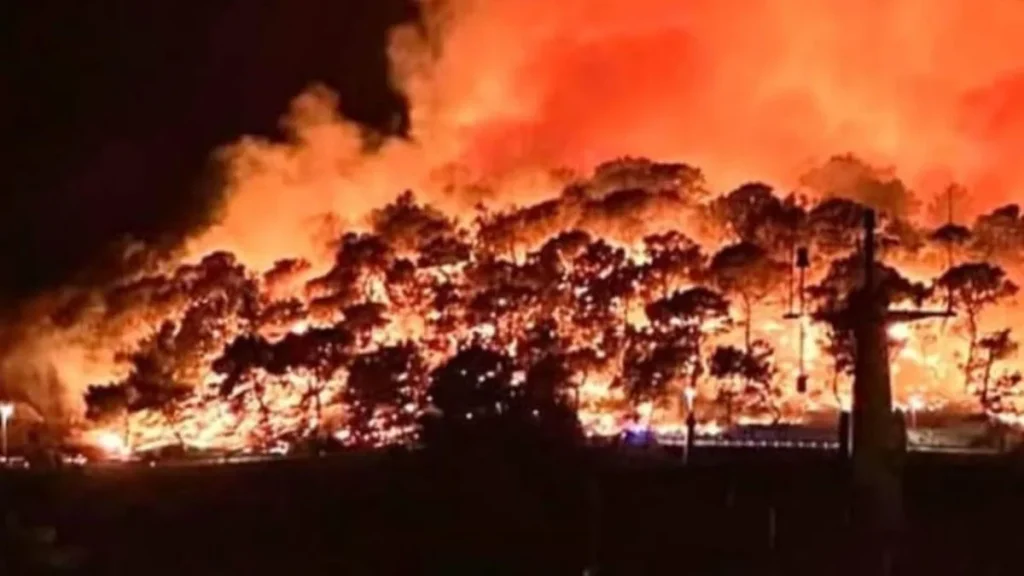
On Saturday morning a fire force with units from as far away as Zagreb (400km), were on a ferry to the island. In the major cities, the Vatrogasci are a paid, full time force, however most fire stations are small volunteer units. In the summer they are bolstered by part time staff and most stations have a core of one or two full time, trained staff.
When there is a large fire, you cannot keep firefighters on duty indefinitely, so reinforcements are required.
Here on the island of Hvar we have three brigades, in Grad Hvar, Stari Grad and Jelsa. So like here, once all the Brač Vatrogasci have been deployed, the only place to get reinforcements, is from mainland units.
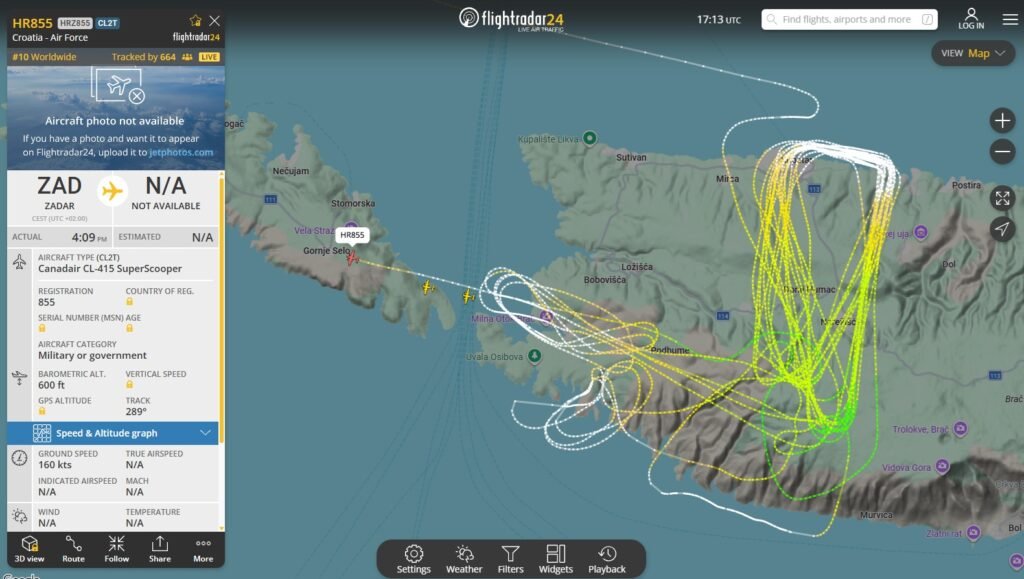
The Canadair’s left their base at 06:55 and by 07:20 were dropping water on the now extended fire. By lunch time there were four aircraft working the fire.
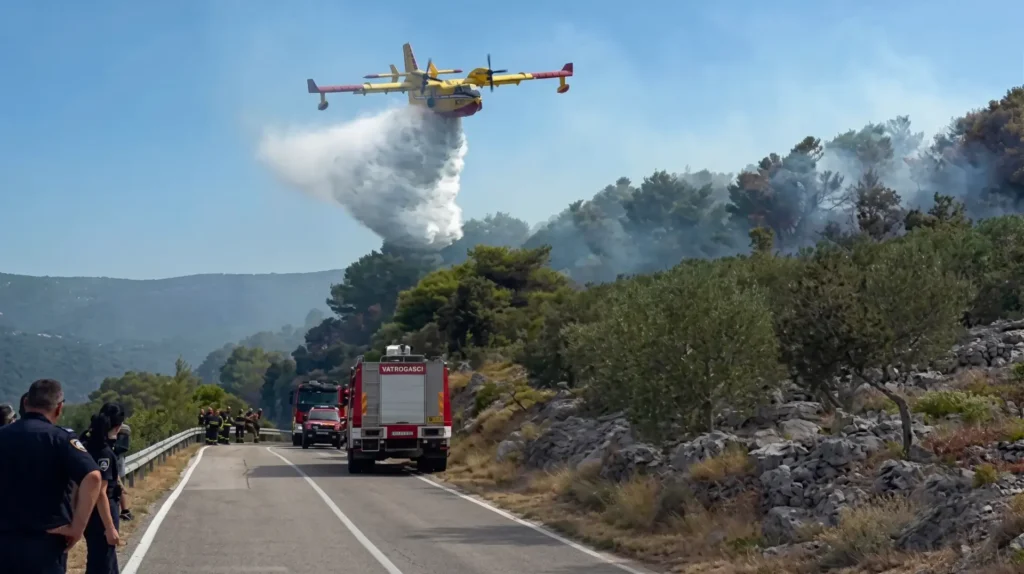
You cannot keep pilots doing this kind flying for long periods because of the intense concentration and effort required to fly at treetop height.
These aircraft are not on “autopilot”, they are hand flown the whole of the time. I have a float plane rating on my licence (brilliant training course!) and it is hard work landing an aeroplane on water, and that is just the landing.
The Canadair’s maintain 95 knots as they skim across the surface of the sea, scooping 6,200 litres before gently lifting off the surface again and returning to drop another load.
So on Saturday, I saw them leave for Zadar again at 13:00 for a crew change and refuel. They had already refuelled once at Brač airport.
What did surprise me was how quickly the fire increased after they left.
By late afternoon I could see from my home that the fire was generating its own weather, what is known as a Pyrocumulus cloud, extending upwards to 3,500 metres and spreading sideways.
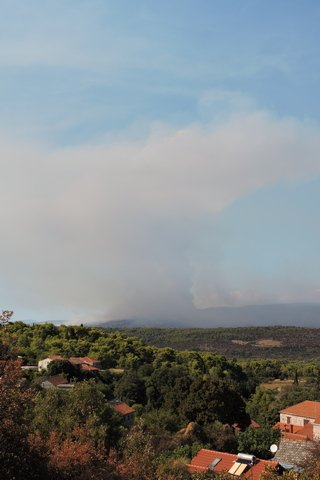
Immediately behind my home is a hill, once covered in terraces used for grapes and olives, but now abandoned. After taking some photographs of the pyrocumulus, I looked around and realised that everything growing has dried out this summer.
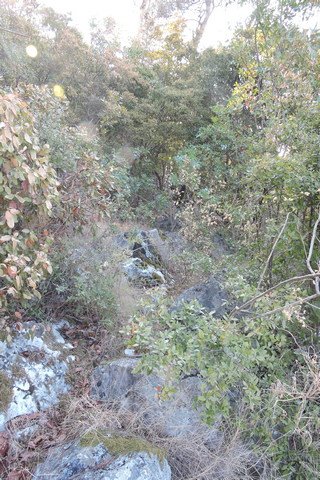
Even hardy Mediterranean shrubs are dying and their leaves are brown and withered.
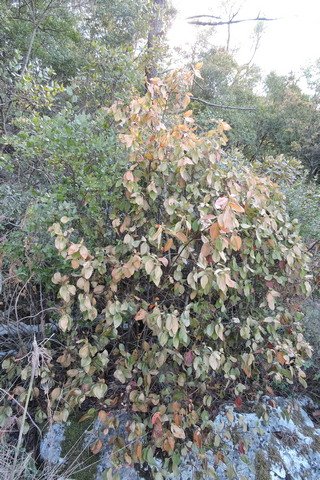
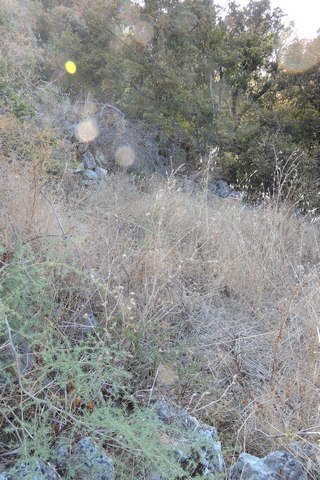
In the underbrush, there is a thick layer of dead vegetation. Last winter’s rain made everything grow. But then this summer’s brutal heat has desiccated the plants, leaving a layer of fuel which is just ready for a source of ignition.
As I write this at 19:10, smoke still obscures Brač, being turned pink by the setting sun, and the three Canadair’s have just dropped the last water of the day and are heading for their base again.
When they are flying, they can be tracked by their registration numbers, HR855, HR888 etc on Flightradar24 .
I can only hope that the fire does not flare up again tonight, like it did last night. However when everything is so dry, all you need is a blowing ember in the wind… NCG