There is NO AI Slop here
This week: ; ;
Well here we are again. Once more it is Saturday afternoon.
I have spent the morning cutting the seed heads off tall grasses that have sprouted in the Drupe Orchard.
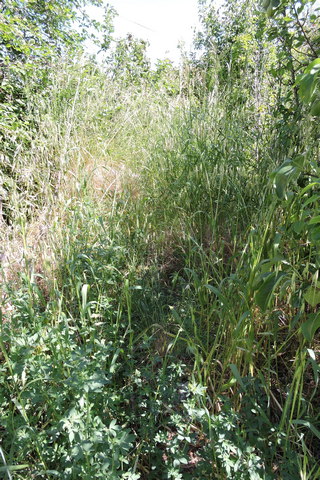
The combination of rain and then warmth has led to exponential growth.
I have to admit that I haven’t been into the orchard for a week or so, because I had no need. So I had not noticed how the grasses especially have flourished.
It is a month or more since I last cut back all the grasses and thistles.
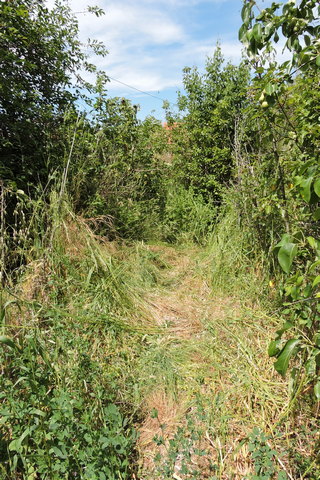
However before the seeds develop and with a hot summer sun beating down, cutting them back to ground level and then leaving them to dry should both ensure the seeds do not develop whilst preventing excessive evaporation of soil moisture.
The year is moving quickly on and we are now just four weeks away from the summer solstice.
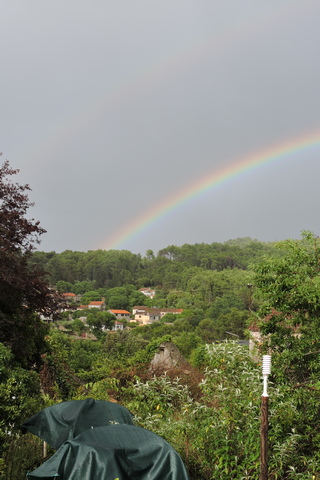
Suddenly the weather has become hotter, although after posting last week’s blog there was a rain shower in the evening which left a double rainbow as the setting sun refracted through the rain shower as it move east.
I have been doing spot irrigation this week, keeping things I have recently planted moist, but without turning on the irrigation system just yet.
Down in the Top Orchard, the Loquats, Eriobotrya japonica, are almost ready for harvesting . They are not climacteric, so I am leaving them to ripen and sweeten on the tree for a little longer.
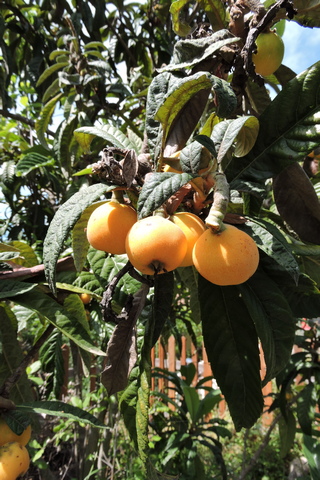
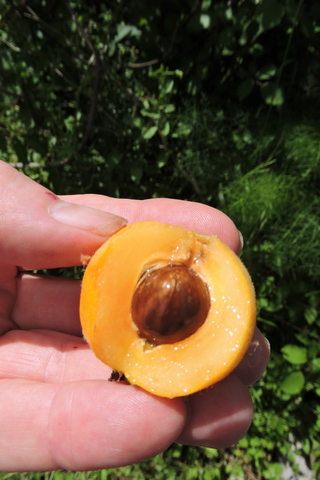
I have picked a couple of the most ripe and they are lovely and juicy. When I look at my weather statistics, we are 150mm or 150 litres per m² of precipitation above the average.
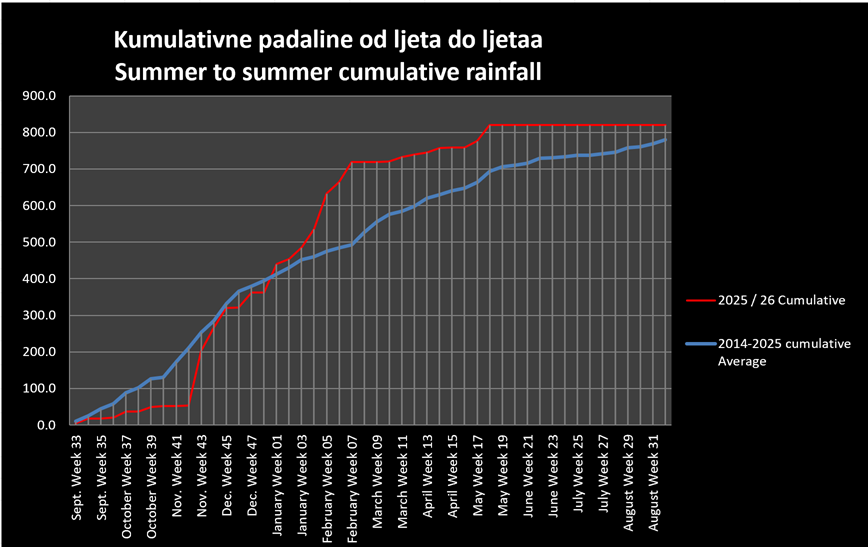
I am as sure as I can be that our wet winter has really benefited a number of my fruit trees. I have had the best crop ever of sweet and Morello cherries, plums and gages, and the pear trees are laden down.
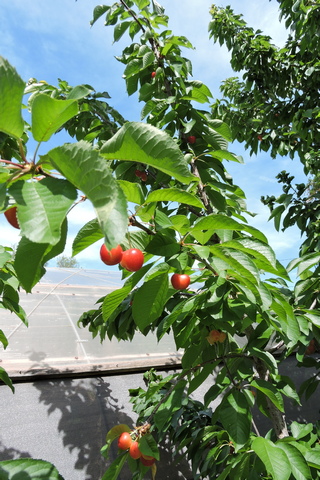
So while personally I hated the long, damp, cool, rainy and overcast winter, it is not all “doom and gloom”.
For the first time this year, I have had the windows open all day in my study.
Last weekend when I took a luke warm shower – the lack of sun during the week had not heated the water – I realised that I have not needed to put the panels on the solar tubes to prevent the water in the tank overheating.
Usually I need to put a cover over ⅓ of the tubes in April and by the middle of May I have ⅔ covered. As our weather has stabilised and is now clearly heating up, I have put the first cover on.
Another job this week was to bring out the insect mesh doors from the store and change the winter “storm” doors for the summer air flow doors.
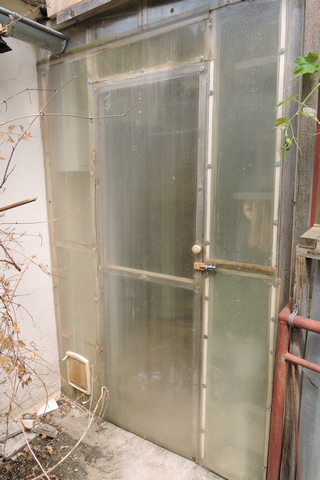
I needed to do a little repair work on the mesh, to re-fix a corner that the felines had opened, however once done, reinstallation was easy.
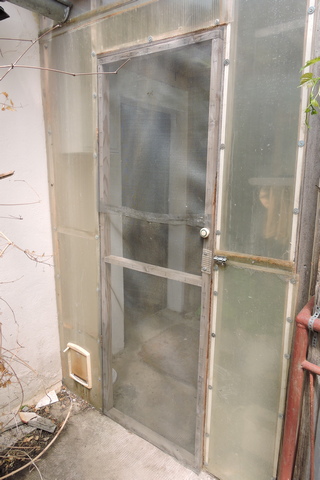
The screen will remain in place until September or October and the windows will be permanently open until then too.
Glorious Gazanias
On Tuesday I had to go down to Stari Grad to collect my latest batch of pills and potions.
I parked under some trees so my car was protected from the hot summer sun. Usually at this time of year these desirable parked spaces are all taken by visitors. However there are a lot fewer international visitors this year when compared to previous years.
My speculation is that it is the current fuel crisis caused by the war in Iraq, which is making our international visitors think twice about travelling long distances.
Walking through the town, in the market area, a local plantsman had a huge number of bedding plants and some late vegetables on sale.
I have thought for a while that I would like to put some bedding plants into the kitchen window bed, now almost all the spring bulbs have died back.
When I looked, there was space to plant “something”, so I was attracted to the bright and colourful bedding plants on display in the square.
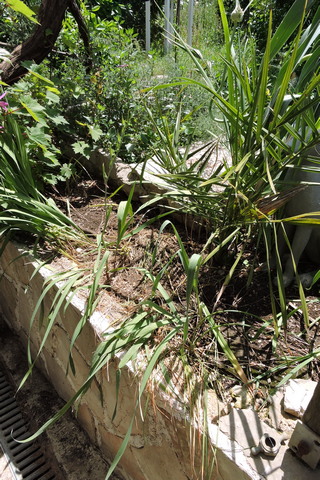
Last year I found a couple of sad looking Gazania splendens, the glorious South African Treasure Flower, the Gazania rigens. They grew and flowered last summer, but did not set seed or survive our winter.
The Gazania rigens is classed as a half-hardy perennial and is listed by the Royal Horticultural Society as H2, which means it does not tolerate frost and needs a winter environment of +1° to +5°C.
My weather station provides me with masses of data, which includes winter temperatures. I have recorded no frost for the past three years, and have a winter average above +5°C.
So based on that knowledge, I bought four plants, two sunshine yellow and two orange.
Once back home, I wasted no time in planting them so they can establish.
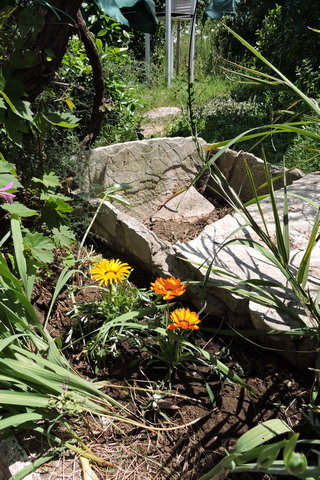
I am going to have to water them, because this bed gets full sun and is dry or very dry for most of the summer. However it will be worth it to have some summer colour.
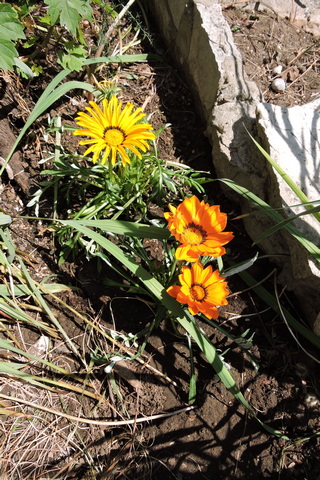
With good luck and a fair wind, they might even survive the winter and even set seed.
There is NO AI slop here
I have had several conversations this week about language.
A couple were about the English language, one was about French and another about a complete lack of a Croatian word for something which across northern Europe is taken for granted.
There was also a conversation about using ChatGPT to write text. A term being used more and more is “AI Slop“.
Slop is one of those glorious old British English words which has now been repurposed.
The “Slop bucket” was something which was kept in a kitchen and was used as the receptacle for food waste, vegetable peelings and anything remotely edible, which could be fed to the family’s pig or chickens.
It has now entered the lexicon of universal English to refer to low-quality, mass-produced digital content. Usually generated by artificial intelligence, lacking originality, any human oversight, or any meaningful substance.
You see it more and more in your online activities. Sometimes a photograph or a video looks just plain wrong. Text is repetitive, just too perfect or doesn’t sound right. When I spot AI generated content, I immediately move on.
There is probably a place for AI, but I am just not sure where, or what place that is.
I don’t use ChatGPT or any of the other AI engines and there is no AI content in this or any of my blogs.
True, I often spend three hours on a Saturday afternoon, writing and refining the text, selecting the photographs and putting the blog together.
However I do not view it as a waste of time. More it is reflective practice, looking at what I have achieved (or not!), and finding the right image to illustrate whatever it is in the blog that I am writing about.
So for the foreseeable future, you will only find words from a real person, with photographs which have perhaps been cropped or adjusted in Photoshop, but are untouched by AI, so please just enjoy what you find.
Insects are important
Insects are so, so important because of the role they all have in pollination of crops.
I preserve insects and their nests at every opportunity. However, first you have to recognise that ALL insects are beneficial in their home territory.
There are some, for example the “Asian Killer Hornets” who as alien invaders have no predators in Europe and so have to be eradicated.
I also do not like our invasive Tiger Mosquito, and try and make sure there is nowhere for them to breed around my home. But even these nasty biting blood suckers, are also food for some of our avian friends.
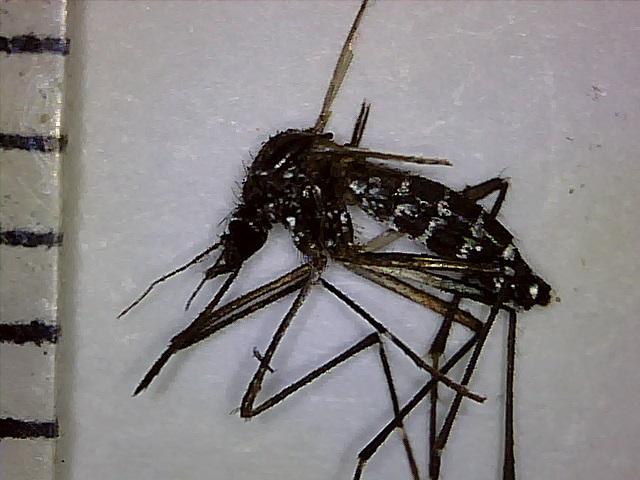
If you have just been stung by a wasp or have discovered a wasp’s nest, you may not feel especially benevolent towards these stingers, but not every wasp stings and I have several species which are definitely a gardener’s friend.
One of these is the Thread Wasted Wasp. Mine are hatching at the moment and I keep finding occasional individual inside. I keep a yogurt pot and piece of card handy so I can safely catch and release them
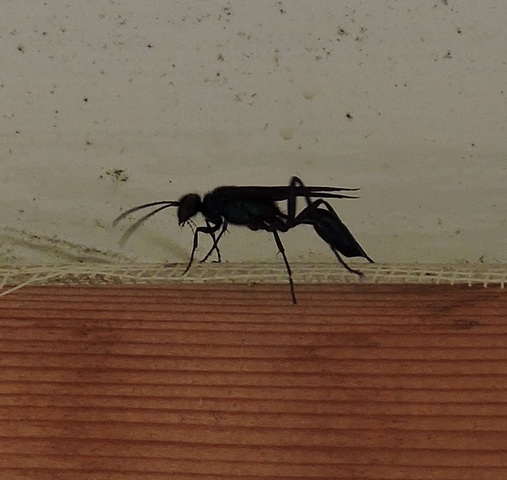
These wasps are really unusual and not just because of the needle-thin link between the insect’s thorax and abdomen.

They are part of the Sceliphron genus and are often known as “Mud daubers”. During the summer, the females gather mouthfuls of mud and build a complicated nest of single cells. In each cell the female prepares a larder of live but stunned caterpillars or spiders and then lay an egg.

When the egg hatches, it feeds on the food provided by the female and then burrows out and flies off.
I have two of these nests inside my greenhouse, each constructed by different species of Mud daubers. One has started hatching and the exit holes of the individual cells are clearly visible.
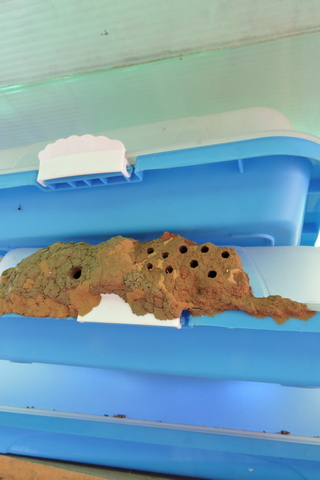
I intend to leave this construction so that this year’s generation can reuse the same cells.
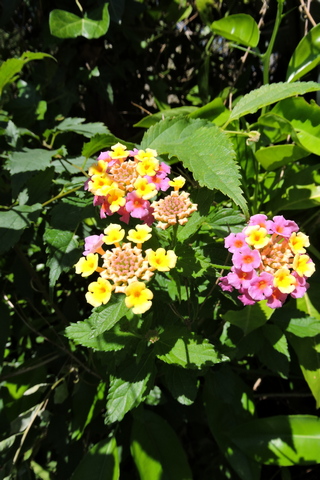
In flower at the moment is the local “Butterfly bush”, the Lantana, . At any time, I can count more than 20 butterflies, together with other insects flitting between flowers on the plant.
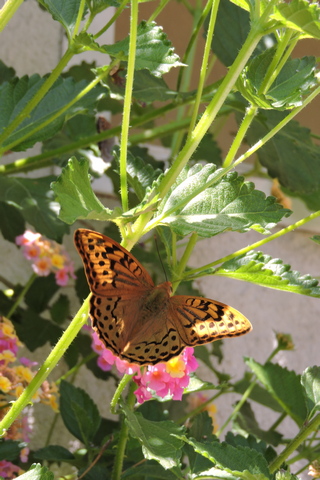
The large Queen of Spain Fritillary, Issoria lathonia, , is one which is easy to spot.
But by far the most numerous are the Wall Browns’, Lasiommata megera.
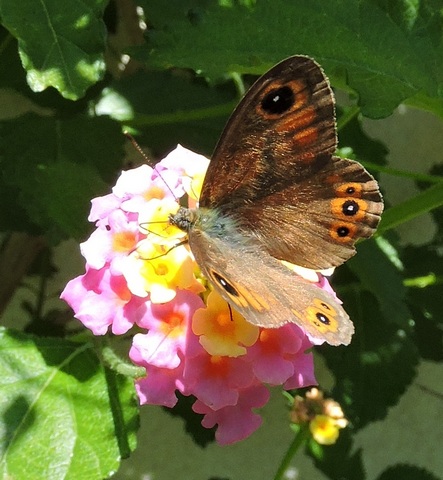
I have three different Lantana and even when my northern European Buddleja are in flower, the Buddleja is shunned by the butterflies. It is only when the Lantana flowers die back that I see butterflies on the Buddleja.

I have noticed that the swallowtail butterflies, which were numerous just a few weeks ago together with the Orange Tips have now disappeared.
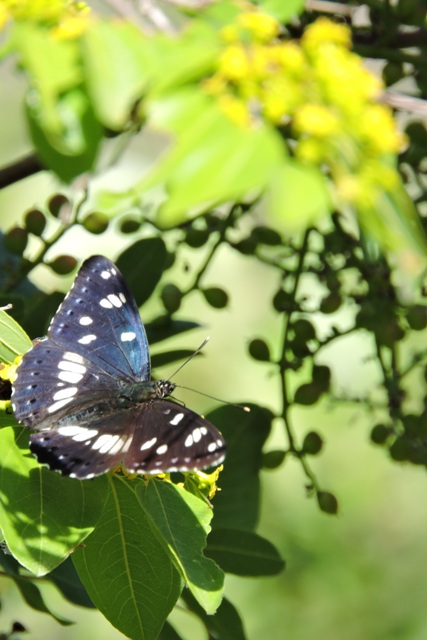
There are one or two White Admiral and Red Admiral butterflies around, but in the main at the moment it is just the Wall Browns. NCG