Red is the colour of the week
This week: Trip to Split; Arbour dismantling; Red is the colour of the week;
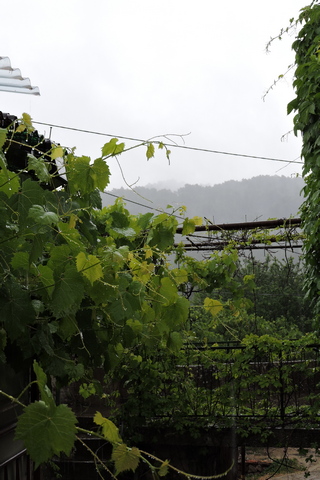
We are in a period of unsettled weather at the moment, however I am not complaining.
This week my weather station recorded a very useful 18mm or 18 litres of precipitation per m² of ground. This has meant that I have not had to irrigate at all this week.
The downside is that with warm, moist weather, the weeds have continued to grow. At the same time I have been removing them as fast as I can.
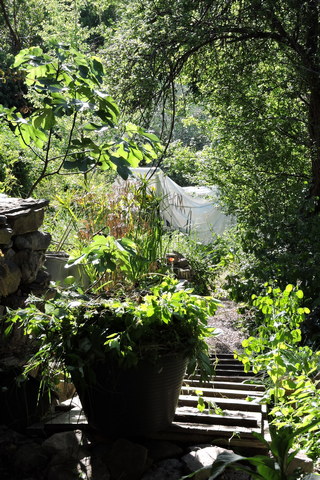
I use the black rubber tubs to gather the pulled weeds and then put them onto the compost heap, so nothing is wasted. In the east orchard I was selectively cutting the seeds heads of grass, before they mature and become another crop!
The unsettled weather is going to continue for another 10 days. Once again, this is a really unusual weather pattern for May here in the Adriatic. It is being caused by weather systems far out in the North Atlantic, which are influencing weather across Europe.
Usually by this point in the year I have been swimming in the sea. However with a sea temperature of just 17°C, it is just a little too cold for my liking. People are swimming in the sea, it’s just me who prefers warmer water for recreational swimming.
On Tuesday I went over to Split. This meant that on Monday I was going round, making sure that I had listed everything I needed.
In the workshop, I have the parts to make a wheeled pillar morticer stand. At the moment, the pillar drill is in a box and I bring it out when I need to cut some mortices.
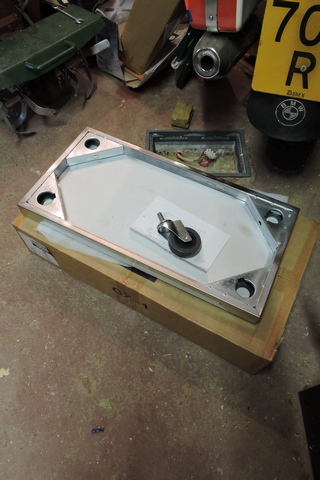
I saw some substantial small stainless steel tables for sale and bought two, but I need to join them together. So on my list was the various hardware items I needed to build the project.
Sadly I was unable to find some of the hardware I needed, so the parts have gone back in the box. What is annoying is that once back at home, I found what I needed on the online shopping site Temu, and ordered them. They will be delivered in about 10 days.
It means that it will be a little while longer before I can set up a dedicated work station to cut mortice joints in wood.
Having reported two weeks ago that the Golden Oriole had arrived back from their over-wintering sites in Africa, they are not as numerous as in previous years.
This last week I have heard an occasional Oriole calling, but whereas in previous years, I have had two or more pairs around my home, even the pair which usually nests in a Linden tree seem to be absent.
Also absent are the Shrikes. These striking little birds with a black face mask, are usually vocal and happily hunt from the overhead wires around my home.
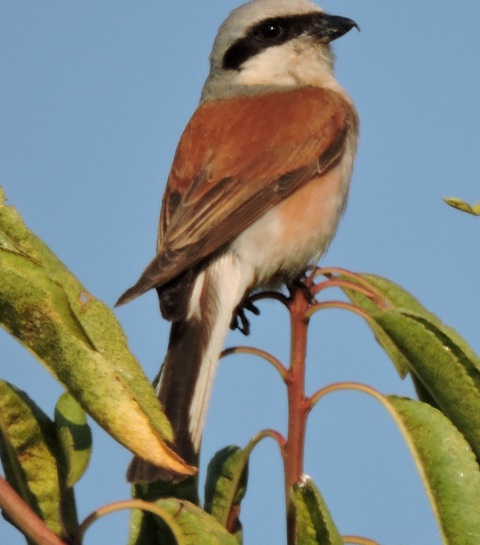
They are another species which winters in South Africa.
This makes me wonder whether the bad spring weather that has plagued the central Mediterranean and Ionian seas has resulted in fewer migrating birds making it safely to their summer breeding sites.
Trip to Split
I didn’t want to go to Split and having returned, I wish I hadn’t bothered! But more of that later.
It is almost six months since I did a shopping trip to the mainland and I had a list of things which I needed, so I decided to go on Tuesday.
I spent some time on Monday making sure I had the right measurements of the various items of hardware I needed.
Once again, it was an 04:00 start to catch the early ferry to Split. Our usual large ferry, the Zadar is out of service and has been for a couple of months, so the smaller ferry, the Korčula, is currently in service.
This vessel doesn’t have the space that the large ferry has, so even on the first early morning departure of the day, all cars were being directed into the under floor deck.
Most of the Jadrolinija ferry’s have two or more decks. A main deck which is always used and then a hydraulically operated upper car deck and/or down in the bowels of the ship, a smaller and confined car storage area.
Arriving in Split, it takes much longer to get the cars out of the under-deck because all the other vehicles have to be let of first.
My first stop was at the Bauhaus DiY store. I had been warned that because they were revamping the store it would be chaotic inside. It was.
Most side aisles were blocked with pallets and almost everything had been moved to new locations. The kitchen, bathroom and lighting display areas have been removed and replaced with merchandise racking – the “pack it high” principle.
I found some of the items I was looking for, including a range of screws, bolts and washers which I needed.
Searching for other things was an abject failure. The Gardenia irrigation system stand had been moved, and was completely empty of stock when I found it.
Outside in the Garden centre, the original area had been expanded into the car park. When I enquired where the wooden poles I was looking for, which used to be in a vertical rack were, the staff member waved vaguely in the direction of the car park and said “somewhere out there”.
Staff were too busy unpacking to help customers, so I wandered around what was in essence a huge unpaking area, where there was certainly a lot of wood, but not a single pine pole of any description, so I gave up, paid for what I had found and left.
My next stop was the City Centre 1 shopping mall on the edge of the town. There I had a very different shopping experience and actually found everything that was on my list.
I even stopped for a coffee and a pastry, before heading back to the harbour and ferry terminal.
By the time the Korčula arrived, there were a lot of big vehicles waiting. Several articulated trucks, two tourist buses, some large camper vans with French number plates, and the usual delivery trucks for the island.
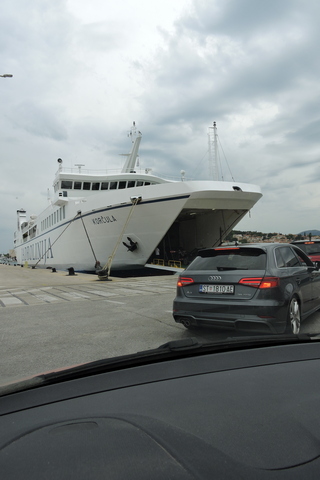
Most unusually the crew started to load cars 50 minutes before the departure time and once again I was directed down into the basement parking area. The reason for loading starting early was apparent. They were trying to “shoe-horn” everything into this small ferry.
A relatively small ferry might work in winter, but at the start of the tourist season, it is simply not adequate for the demand.
I arrived home tired, unhappy that I had not been able to get some of the project supplies I needed and tired from a long day and a lot of travelling.
Arbour dismantling
We have had some windy days recently, so I needed to do something to keep my Arbour upright.
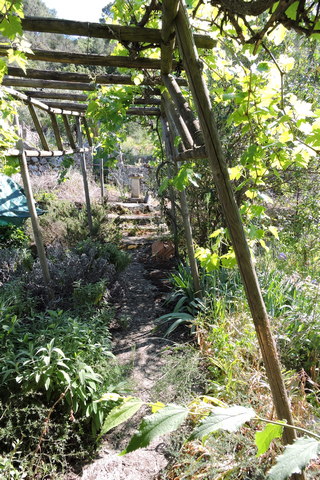
At 30 metres long and now draped with various grape vines, the Arbour is showing its age with some leaning uprights.
The uprights have stood the test of time, however it is the horizontals on the top, where precipitation has got into the grain, that the wood has rotted.
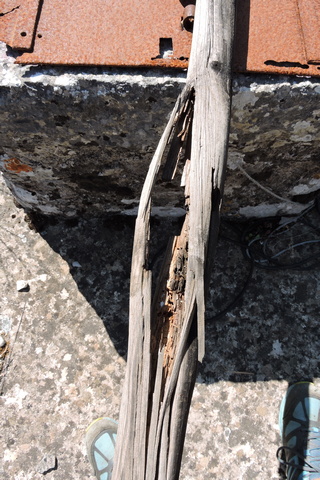
The replacements were just some of the things I was looking for at Bauhaus and I failed to find.
Doing some repairs will not wait until I can find replacements timbers, so I have done a temporary fix to stabilise the structure.
I used steel wire to join the end uprights together. Throughout the build, I have used stainless steel fittings wherever I can and I continued even with this temporary fix.
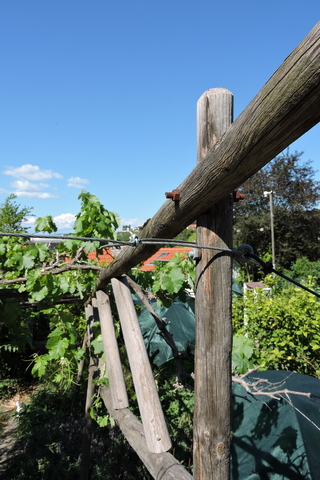
When I removed one of the 2 metre long top poles, in places it is only held together with good luck!
These are not things I can make myself, so I have two choice: I do nothing and the Arbour will slowly continue to decline and eventually collapse; I find an alternative source for wooden poles. Neither are particularly easy.
For now I have fixed steel wire between the two end poles, held with small saddle clamps and with a turnbuckle adjuster at one end. The wire is galvanised but will eventually corrode, so this is only a temporary fix.
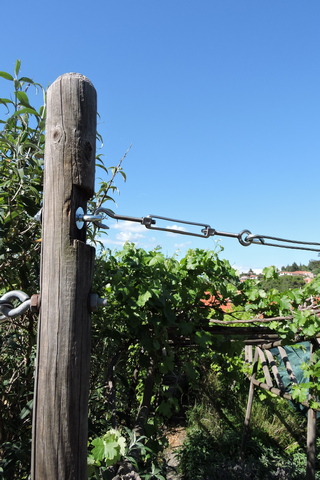
It took a while to make the adjustments of the guy wires and the turnbuckles, but the poles are now vertical again and held firmly in place.
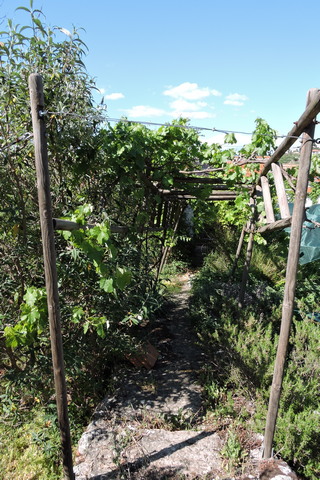
This is another project which is on hold until I can get the materials I need.
Red is the colour of the week
It is the end of the spring bulb season.
Outside my kitchen window the wild Gladioli are at the end of their flowering. Next come the seed pods and then die back and the bed will be bare until leaf growth restarts in late autumn, after the rains arrive.
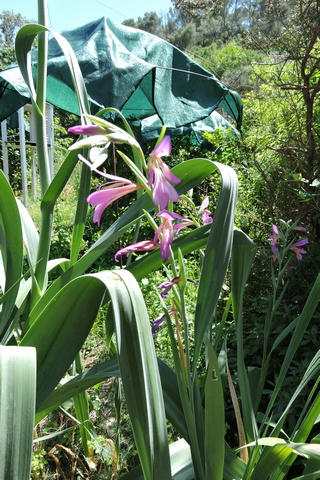
I have had flowers in the bed, of one sort or another, since before Christmas, so for five months.
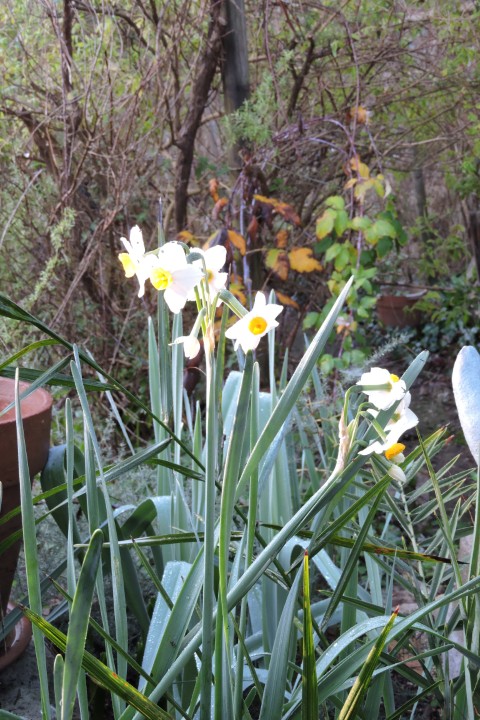
The different flowers from Narcissi through Crocus, Hyacinth, Daffodil and now Gladioli, also mark the changes from late winter through to early summer.
At the moment I have wild Poppy in flower in the orchards. Wild in one sense, that they are wild flowers, but cultivated in another sense because I have deliberately collected seeds and then spread them.
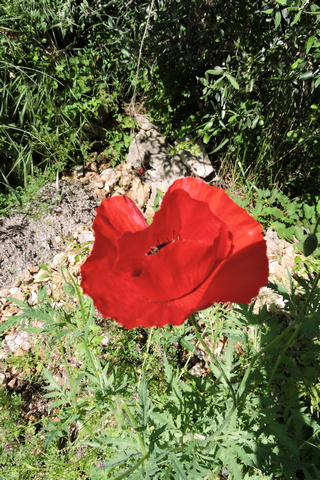
One Poppy has deep scarlet flowers rather than the “fire engine red” of its cousins. The Common Poppy Papaver rhoeas, is native to North Africa, but has been spread around the world. It is an indicator that herbicides have not been used on land and it thrives in disturbed soil.
I would like to grow more of them because at this point in May, they really add a splash of colour wherever they are growing.
As I am weeding, I am leaving the poppy stems so their seed pods develop and I can collect the seeds in due course.
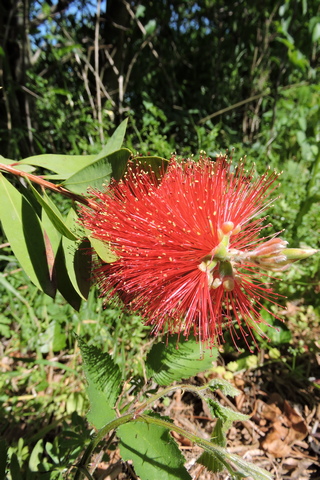
Another red flower to be seen this week in my Top Orchard is the Bottlebrush, Callistemon, an Australian native which I had had in a pot for several years, before I planted it out in the orchard early in the spring. It seem to like its new home.
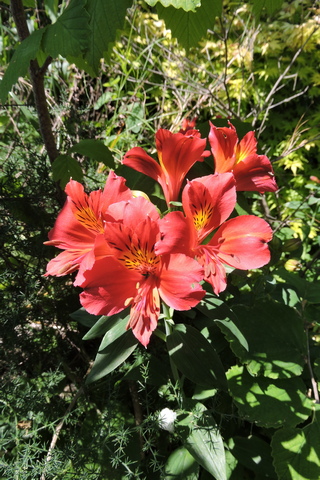
After the mild, wet winter, the Peruvian Lilies, Alstroemeria, are looking incredible at the moment.
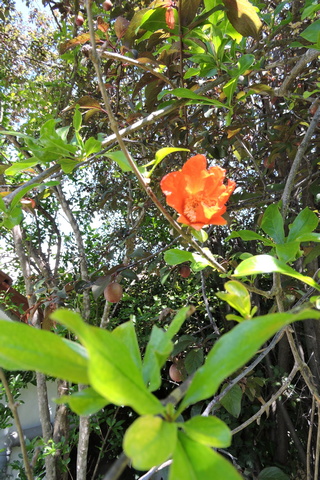
Another red flower in my orchards at the moment is the Pomegranate.
The final “red” of the week are my cherries.
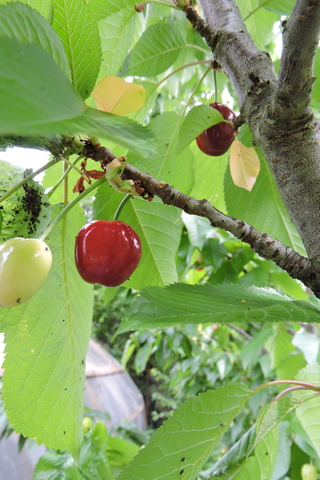
While I was in the Top Orchard this week, I was surprised to see that my “Summersun” sweet had ripe fruit. A week ago they were still green.
This is the first real crop I have had on this columnar tree. Picking them, they are sweet, juicy and have excellent flavour.
I have three sweet cherry trees, an early, a middle and a July fruiting tree. Here’s to a long cherry season this year! NCG