Head for heights
This week: Head for heights; More orchids;
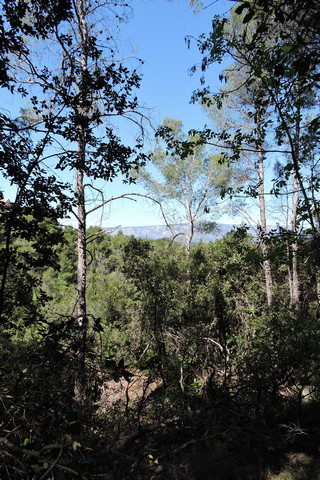
We have had a really nice week of weather this week, which included the first 25°C day of the summer.
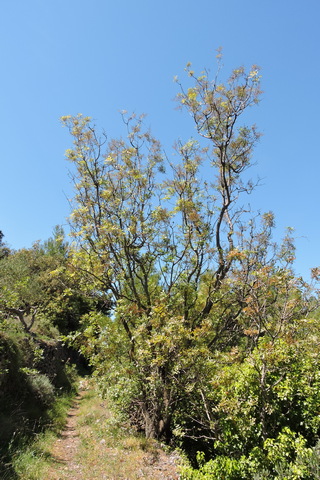
On the paths around my home trees like this wild Pistachio look beautiful against the Mediterranean sky.
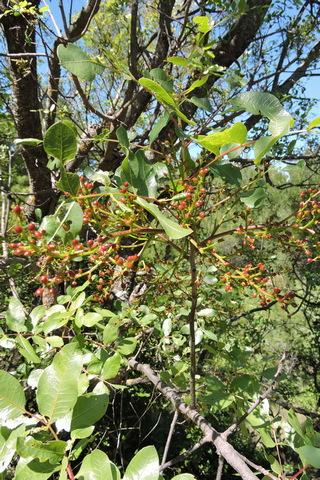
The tiny fruits are forming. However they are small and only eaten by birds.
Unfortunately, the combination of warmth and the rain last week, has resulted in an explosion of growth in weeds and grass.
So quite a bit of my work this week has been removing weeds before they can flower and spread yet more seed everywhere.
As the heat increases, so plants are beginning to show signs of stress. I am watering by hand still, using 12 litre waterings cans, to deliver water exactly where it is needed.
This is still every other day, however I will soon be irrigating everything, every day.
In the polytunnel, the tomatoes are growing well and a couple of the plants already have their first flowers.
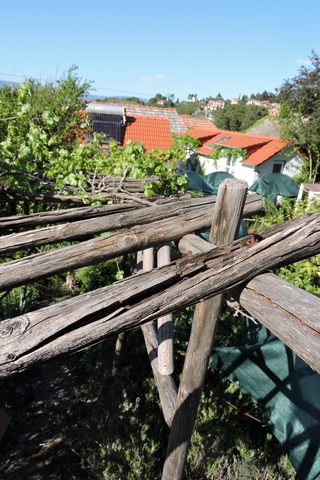
Another job this week has been to start dismantling the wooden Arbour.
I noticed that at one end, it is really detioriating. Then as I was adjusting the cable supports, the bolts holding the cross pieces just came away .
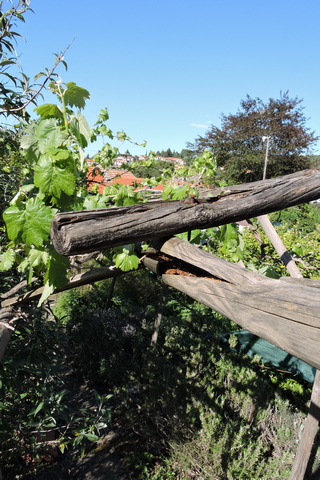
The wood has completely rotted due to moisture ingress. I need to go to Bauhaus to get replacements, however it is not high on my priority list at the moment.
While I was in the Top Orchard, I saw that the broken limb on my old cherry had come close enough to the ground, for me to grab.
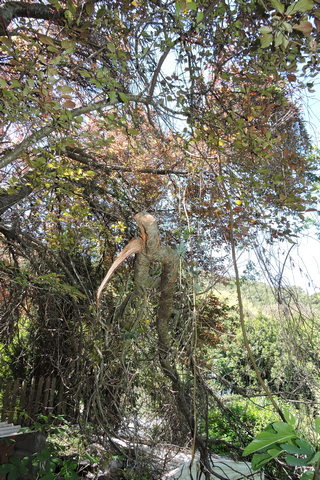
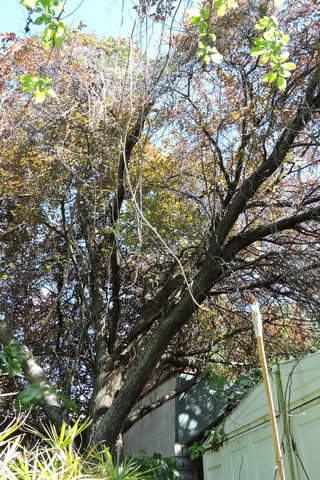
I cut it into small pieces for the wood stove next winter, with the twiggy bits going on the pile to be mulched. What I did see, looking up into the tree, is that there are a number of other dead branches which I need to remove.
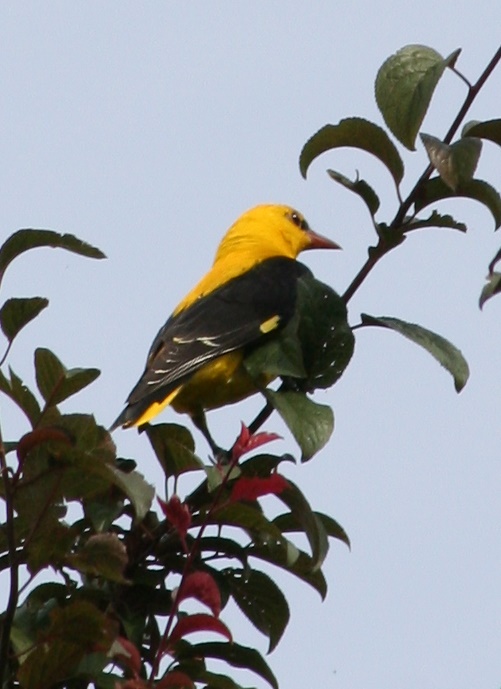
The first of the Golden Oriol have arrived back. While I was up a ladder on Saturday morning I heard them calling.
The year is moving on really rapidly! Tempus Fugit, as they say…
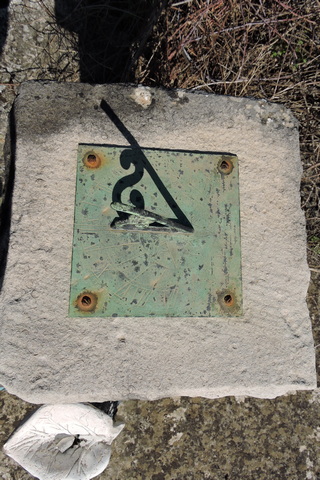
Head for heights
I have pushed this week to finish the Little Owl nesting box.
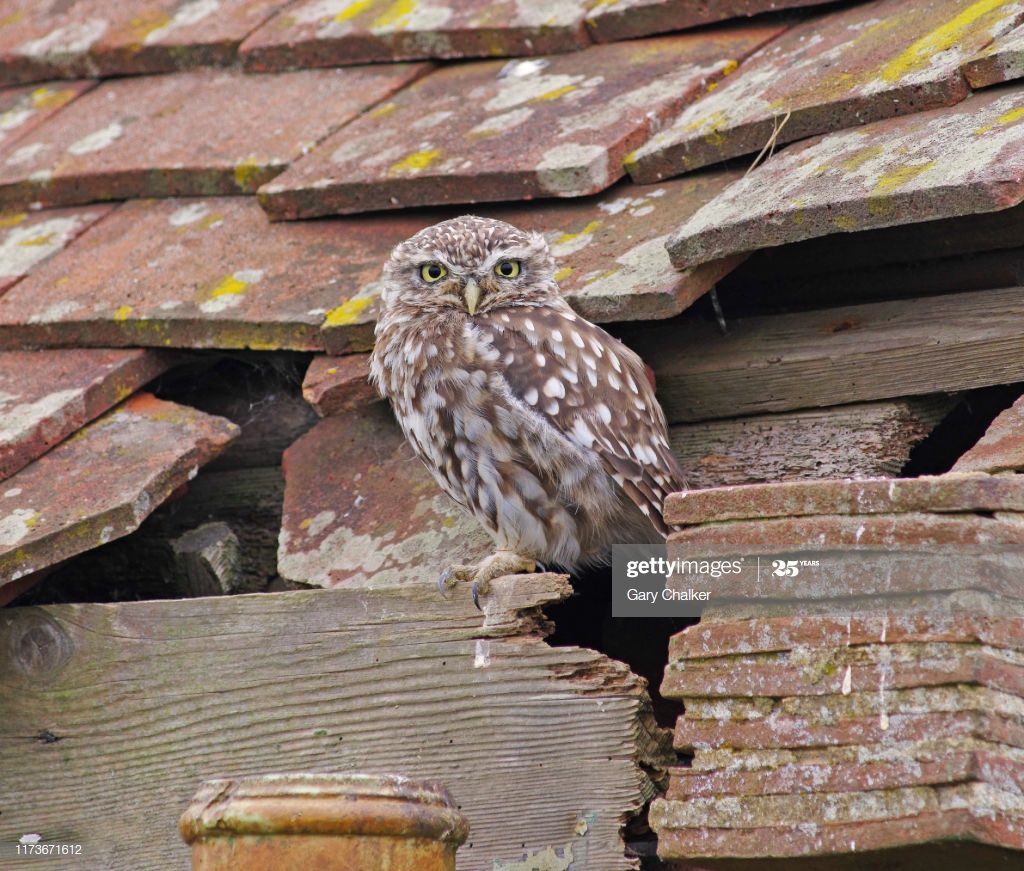
Although I have not seen the Little owls yet, my books say that they start to look for their nest sights at the end of April.
When I was in Stari Grad, I found some of the metal tape I needed, so I can fix a branch outside as a perch. But before doing that, I was wondering about disguising the outside of the box.
I had a walk up into the Maquis where I know there are fallen trees, to see if I could find one with a some loose bark. It didn’t take long for me to locate a decaying horizontal log, which still had some bark, held together with moss.
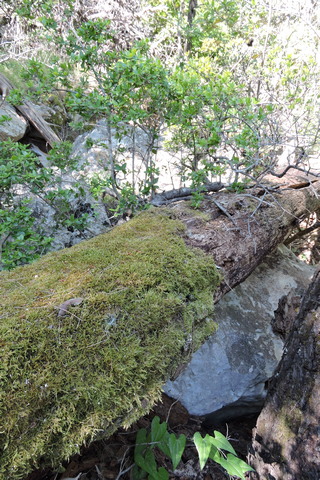
I used a Stanley knife to cut a piece large enough to cover the front of the nesting box.
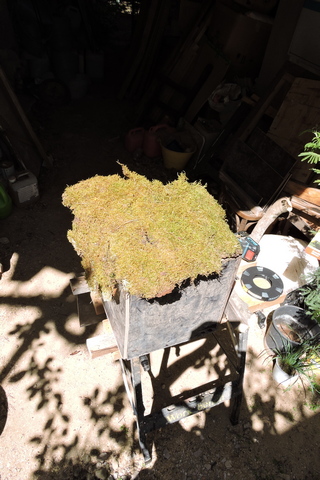
The next job was deciding how to fix it to the waterproof plywood box.
I decided to use a dual approach of hot glue and some screws and washers.
Hot glue sticks to most things, including the decaying remains of the old pine bark. The screws are there to keep things in place as well.
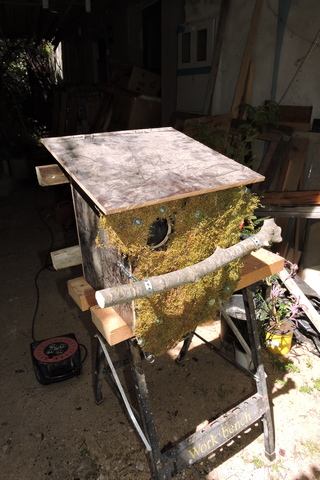
Once I had removed the moss where the nest box entrance hole is, I left the nest box to dry and drilled some holes in the wall where I wanted to mount the box.
I had forgotten that this building has had 10cm Styrofoam insulation added to the outside walls, so I needed 15 cm wall plugs, to make sure I was fixing into solid wall.
The next job was to put the owl bedding material inside the box.
Owls are not especially fussy. They do not make nests with twigs, rather they create a “scrape” in dry material, where they lay their eggs.
I have had some sand drying, so added that first as a base. Then I put some dry wood shavings on top and finally added some dry leaf litter.
Finally it was up the ladder to fix the box to the wall. Working at the top of a ladder is not my most favourite task. However I have a head for heights.
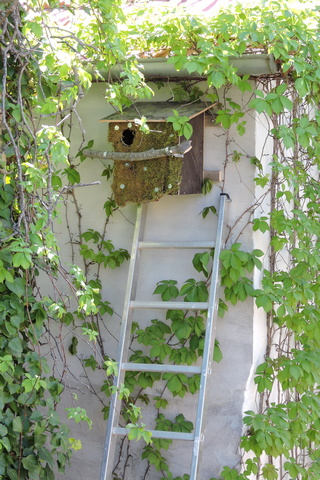
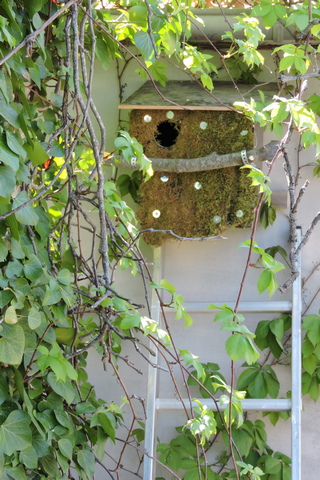
I’m not holding my breath, waiting for a pair of owls to move in. However it would be nice if some of the local birds showed some interest.
I have ordered a CCTV camera so I can monitor what is happening outside the box. If there are any occupants, I’ll buy one of the specialist bird box cameras, to see the goings on inside.
More orchids
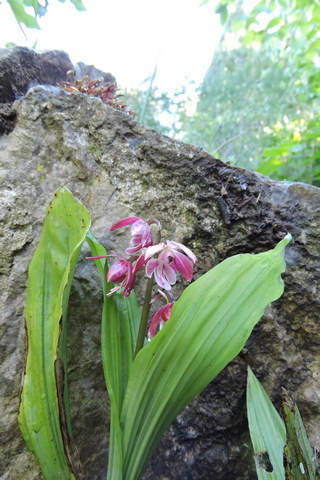
My only garden orchids are in flower this week.
These are Calanthe, one of some 220 in the species which range in colour from white and pink through to yellow and orange. They are an evergreen, but only flower in the late spring.
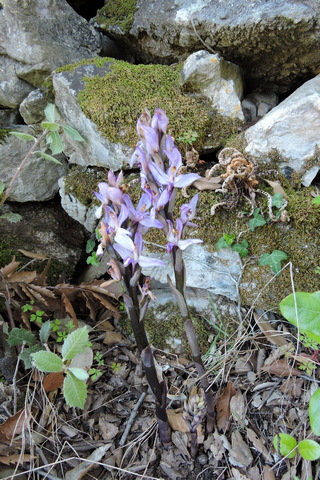
Meanwhile walking the paths around my home, the new group of three Violet Birds Nest orchids I found last week, are all in flower, one week later.
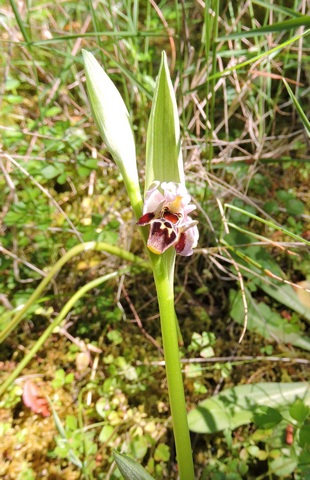
A little further along, I found a Late Bee Orchid, Ophrys holosericea subsp. apulica, which is considered to be rare, except here on Otok Hvar.
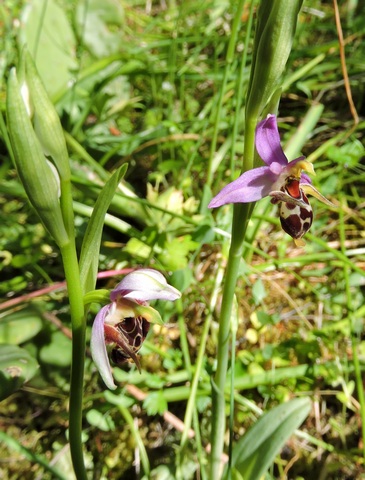
The flowers mimic a female Eucera bee and this orchid is only pollinated by these “long horn bees”.
There were just two small groups by the side of an overgrown path. Recent research has shown that the flowers give of pheromones which mimic the female bees, further attracting males to come and pollinate them.
There really is no end to the lengths that orchids go to, to attract pollinators.
There were also two Bee orchids, Ophrys apifera. These are the late flowering orchids, as we come to the end of the flowering season for the orchids I have around my home.
It seems a shame that there are no organised tours for orchid enthusiasts, especially when the weather is so nice at this time of year. NCG