Where do I start?
This week: Our Patron Saint; Where do I start?; The heat continues;
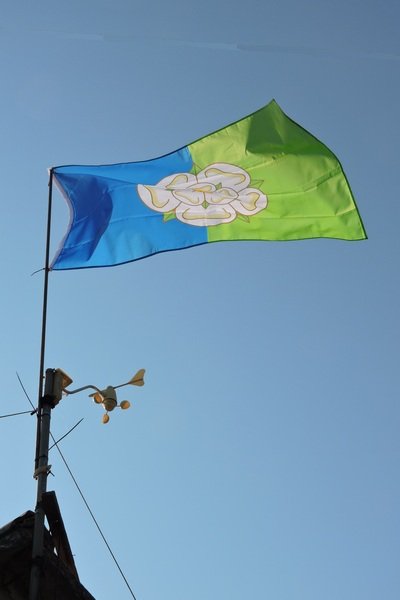
Today is the 1st August, which as all true believers know, is “Yorkshire Day” .
So as is my usual practice on this auspicious day, I fly a Yorkshire flag.

There are actually at least four flags, one of each of the three Yorkshire Ridings, one for the whole county and then some for the new counties, like West and North Yorkshire. I fly the East Riding flag.
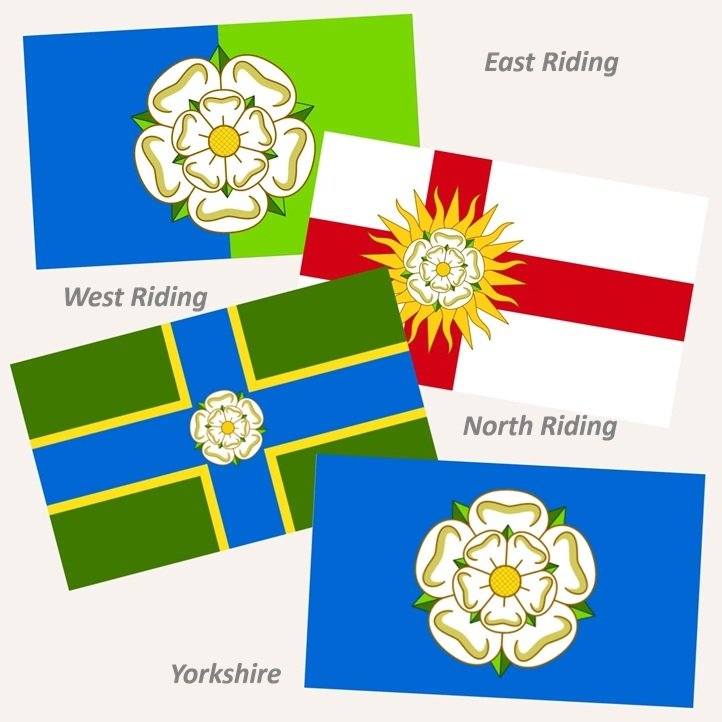
This often generates comment on-line, because unlike the rest of the Yorkshire flags, which use the white Yorkshire rose with a single petal at the top, it is an East Riding custom to use the English double white heraldic rose, with two outer petals at the top.
The flag was only recognised and came into use in 2013, but has been used extensively since.

I always make sure that I am flying my flag the right way up!
We received some rain on Sunday, just 7mm, but enough to wet the surface of the ground. However it has not relieved the drought stress and I have continued to irrigate, night and morning, throughout the week.
There is no sign of any significant rain for the next couple of weeks. That said, I have Rain Lilies in flower at the moment.
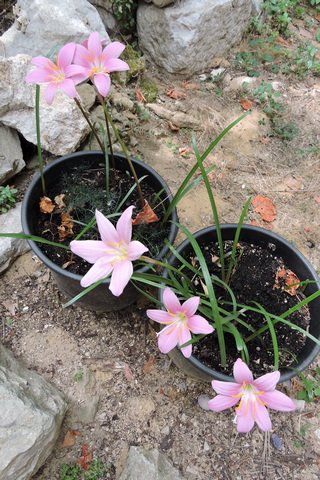
These are Zephyranthes rosea, and they are South American native bulbs. I keep them in pots, so I can make sure they get the water they need to make them flower.
In their tropical home, frequent heavy rain encourages regular flowering. At this time of year, when there is little else in flower, I like them because of the colour they bring to the courtyard.
I have been working on the top of the drill press stand again this week.
The HSS-M42 cobalt steel drill I ordered arrived, so I set about enlarging the holes in the stainless steel top of the drill press stand.
With advice from a friend, I used my variable speed electric drill on its slowest setting to drill out the holes to 8mm.
This hardened steel drill bit worked well and I enlarged the holes without too much difficulty.
The next job was to fit the two piece top. But here I ran into difficulty. Part of the top is waterproof plywood, but the wood immediately under the drill press is mixed hardwood and softwood.
I left these outside in the courtyard while I was waiting for the specialist drill to arrive. The dry summer has meant that the softwood top has dried out and warped, This meant that I had to spray water on the top to try and rehydrate it before I permanently fix it down.
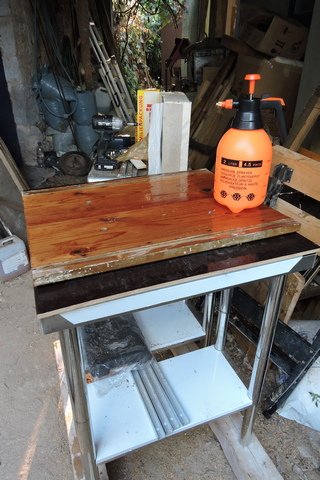
This is one of those jobs which I am not going to rush, so a few days more before I mount the drill press doesn’t matter. The old saying of “do it once and do it right” applies…
Our Patron Saint
Saint Anne is the Patron Saint of this half of the village, with the small church down by the main road dedicated to her.
According to Christian tradition, she is the Grandmother of Jesus. The Mother of Mary is mentioned in the Quran, although not by name.
Saint Anne’s Feast Day is the 26th June, which this year fell on Sunday. Understandably, it is celebrated in the village and is an important date in the annual calendar.
In my part of the village, it is a tradition that neighbours gather together for a meal in the evening. It is also a tradition, that guests bring food to help the host.
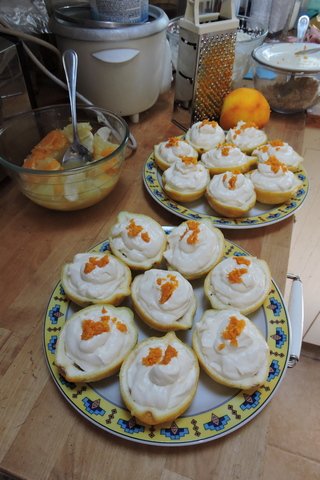
This year, I decided that because of the heat, I would make a dessert which cooled and refreshed the palette; a Lemon Posset.
This is a really simple, yet visually attractive dessert, using fresh garden lemons split lengthwise, with the flesh removed.
I started with crushed biscuits in the base of each lemon, soaked in fresh orange juice. Then I whipped Mascapone and standard cream together, with lemon juice and some of the lemon’s flesh.
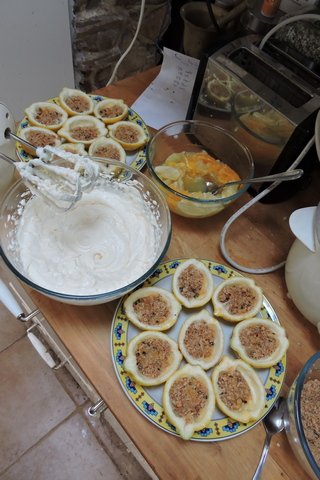
The acid in the lemon juice acts as a natural thickener, so you don’t need any gelatin or anything more than a little sugar, to produce a thick, light and fluffy lemon mousse.
This is piled in each lemon shell, on the top of the crushed biscuits. For final decoration, I use orange zest, sprinkled over the top. They were very well received.
In addition, I also made a Mexican starter, Chilli Rellenos. These are Poblano peppers, stuffed with fried onion, garlic and tomato then packed with cheese.
They are dipped in batter and I fried them in an Air Frier for 10 minutes. They make a very tasty starter.
Everyone enjoyed their meal, but in one sense, it is a shame that we only do this once a year…
Where do I start?
As yet another area of hot African air arrives over Dol, I am trying to avoid being outside. So what do I do with all my spare time 😹?
Doing some digital filing was one afternoon’s job, as the mercury climbed towards 35°C.
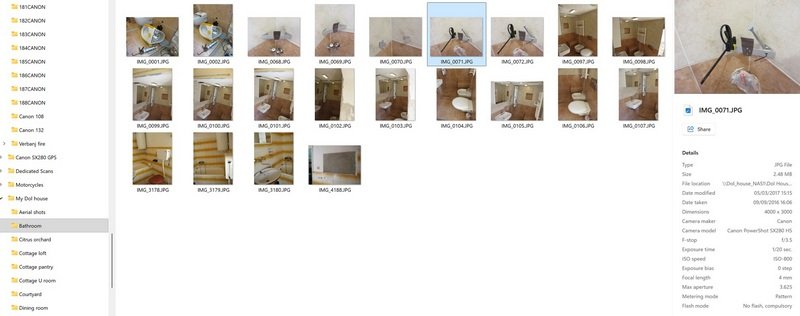
I took a look at my network attached storage (NAS) unit, where I back all my files up and realised that not only do I have a lot of duplicates, but also there are more than 110,000 digital photographs, in month order, since I bought my first digital camera in the early 1990’s.
That is a lot of photographs, all named according to the various camera’s naming conventions. So unless I know roughly when I took a photo of something, trying to find an image is somewhere between difficult and impossible.
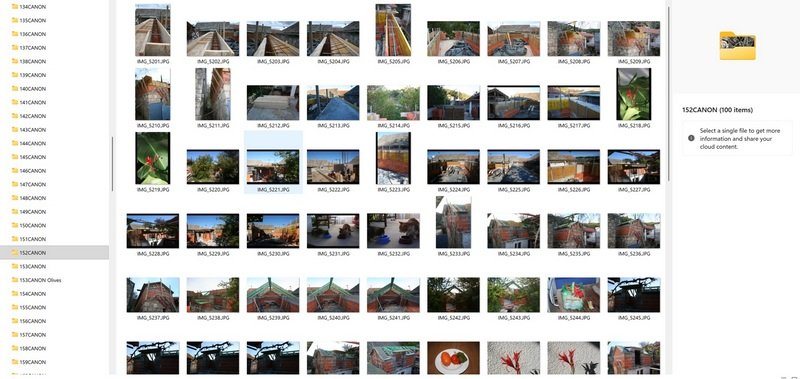
I have thought for a while about changing the naming convention, so that it more accurately reflects what is in the image and on this hot afternoon, it seemed like a good time to start.
Of course these are not the only digital images I have. There are also all the photographs I have scanned and photos I have been sent. However a lot of those I have already filed into an organised system based on the subject matter.
Because I have filed photographs by the camera they were taken with, I started with my Canon DSLR, going through each set of photographs and moving them into subject areas.
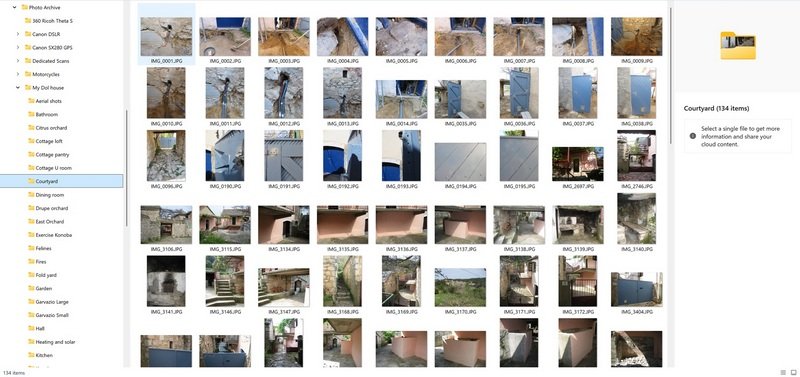
By the end of the week, I have sorted 4,800 digital images and moved them so they are filed more intuitively.
When I am looking for a photograph of something, and this week it was the location of water pipes in the bathroom, it is much easier to look in a folder called “bathroom” rather than try to remember when it was I did the remodelling, and then search by date.
The heat continues
At 15:00 this Saturday afternoon, it is 37.4°C, with the summer sun beating down from a cloudless sky. The “feel” temperature is 41°C.
As the fourth heat dome of the summer over western Europe, moves north east this week, we will once again be on the edge of the heat dome. As it slowly shifts, our temperatures are forecast to increase all next week.
The first week of August is usually one of the hottest weeks of the year, here in Dol, so no surprise there.
Being the first of the month, I uploaded my weather station data to the spreadsheet. The cooler temperatures of the past week are clear on the daily maximum and minimum temperatures for the week.
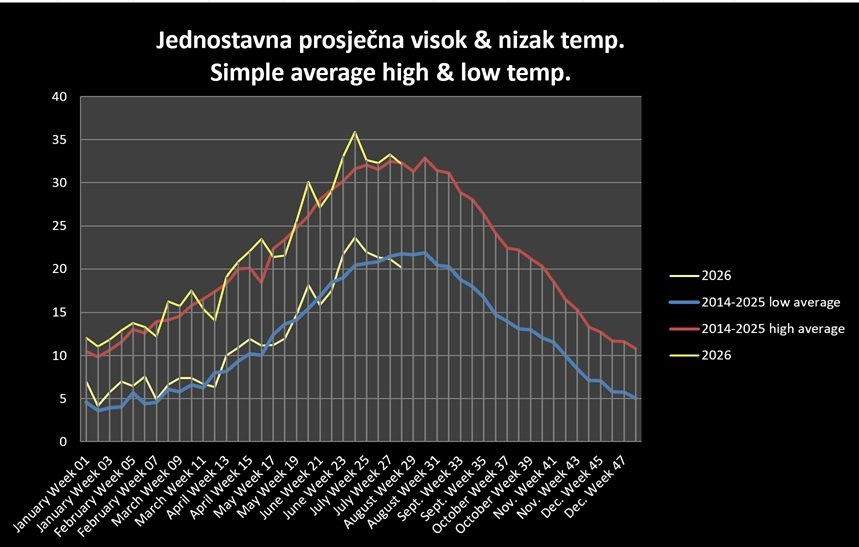
I get these figures by adding together all the daily maximums, then the minimums and dividing by seven to produce a weekly average.
This week I read an interesting article about Phoenix and the problem they have with tropical nights.
In cities where “heat islands” are created, the exceptional heat becomes self reinforcing, with each day and night hotter than the previous.
This affects the quality of life and also becomes a particular issue with the elderly and infirm.
When I listen to the BBC weather forecasts about the heat affecting the UK, they also mention the effect that a lack of night cooling has on sleep.
I have certainly noticed recently that my sleep has been more disturbed, even with a recirculating fan keeping air moving from outside through the house, including the bedroom.
The sun beating down on my solid, 70 cm stone walls heats them through, so that they feel warm, even on the inside.
At night, the walls then radiate the heat back to the atmosphere, inside and out.
Trees and greenery reduce this effect, by promoting evaporative cooling. However around my home, there is no more moisture in the ground left to evaporate and all the trees and plants are under heat stress.
Throughout Europe the threshold for a “Tropical night”, (HR: tropska noć) is a night when the temperature does not fall below 20°C at any time. I measure these and I also measure nights where the outside air temperature does not fall below 25°C.
When I looked at the period from the end of May until today, a total of 68 nights, there have been 38 above 20°. This doesn’t sound much until you look closer.
From the middle of June to today, a total of 45 nights, 37 nights have never been below 20°C. This is 82%.
I started to try and produce a graph to show how the number of tropical nights are increasing year on year. But while I have all the data, it is not organised in a way which easily made a meaningful chart.
With a very hot week in prospect for next week, I think I will have a go at the task when it is just too hot to be outside. NCG