The ethical dilemma
This week: Our weather so far; The ethical dilemma; Waterproofing;
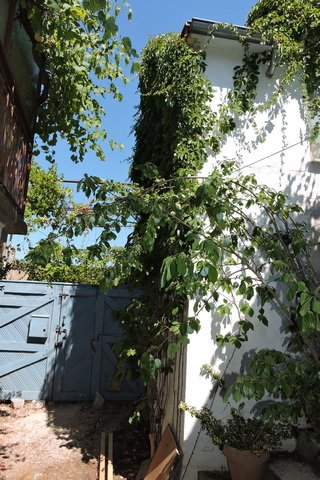
My week has been both busy and slow, at the same time.
I have been busy finishing the rain barrier on the bridge between my buildings. However the summer heat means that I have been working more slowly, drinking lots of water and trying to be sensible.
Irrigating takes time every morning and evening and I am really only just keeping things alive. Few plants are thriving in this heat. Many Mediterranean plants shut down in late May, becoming dormant until autumn, when our wet season used to start.
However nothing is certain any more. In the time I have been here, I have detected a shift to a later starting wet season, which then has more intense rainfall.
I garden ethically, planting for the future with things like my Pistachio and Pecan trees. I plant things which survive heat with minimal moisture, plants which originate in the Mediterranean basin.
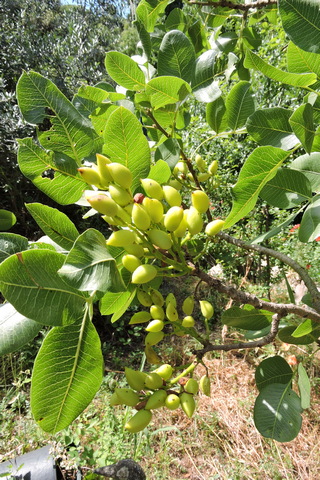
But it isn’t enough. I am also thinking ten, twenty even 50 years ahead.
A little further on in the blog, I look in more detail about my prevailing growing conditions, however talking to friends this week, we were lamenting the lack of progress and lack of interest at individual, local, national and international levels in solving the CO₂ emissions from burning fossil fuels.
They had been to the local fuel station when the tanker had arrived to refill the underground storage. We have three main fuel station on the island and one for boats.
This delivery was 36,000 litres, and they get a similar sized delivery every other day.
This rate of usage, 18,000 litres a day, bearing in mind we are a small island with mostly smaller size vehicles, multiplied across the world is simply unsustainable.
Our weather so far
At the end of the first week of July, I have updated my weather station statistics.
Mercifully, the temperatures have been lower this week than at the end of June. The extreme heat of the end of June shows up well on the most recent charts, produced from my weather station data.
We are still above the long term average, but not by much.
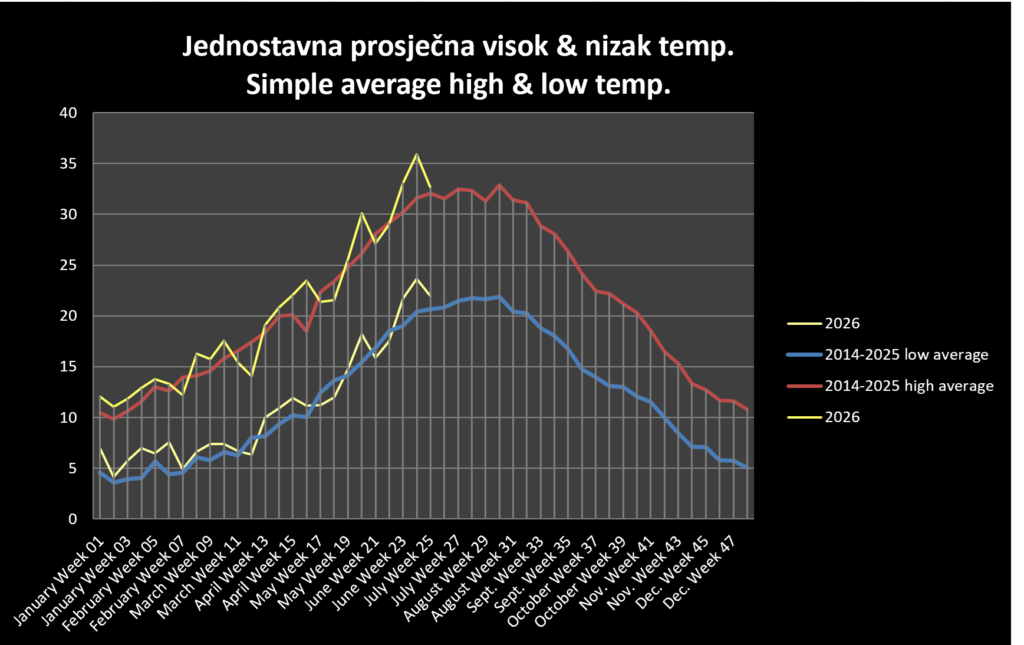
Looking at the “average” lines on the chart (red and blue lines), you can see that July and August are usually hot, so we have another five weeks of heat, before the weather noticeably cools.
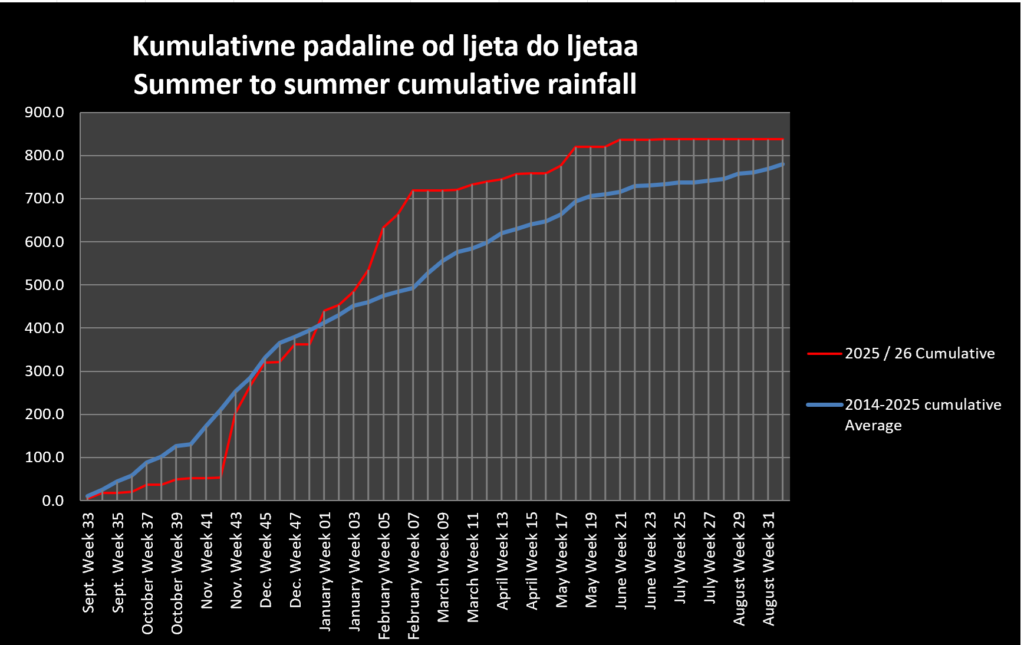
The recent heat has removed most moisture from the soils on our island. Despite recorded precipitation being 100mm or 100 litres per square metre, above the average, the chart demonstrates the wet winter, but then very little rainfall between February and May and almost nothing since.
Climate breakdown is real and we are living through the effects, every day…
The ethical dilemma
I’m stressed and my fruit trees are stressed!
As our climate alters irrevocably, I was upset when several of my fruit trees died. Neighbours had seen that some Pear trees and Apples had died and commented on their demise to me, wondering why.
The answer is both complicated and simple.
Across my orchards, I have very poor soils. I have known that since the day I moved in but have tried over the years to improve the soil using a number of methods.
With no cattle on the island, adding truck loads well seasoned manure is not an option.
Instead I have brought in truck loads of plant waste, to try and improve the soil structure. In autumn, I gather what leaves I can and spread them over the soil or just leave them where they fall.
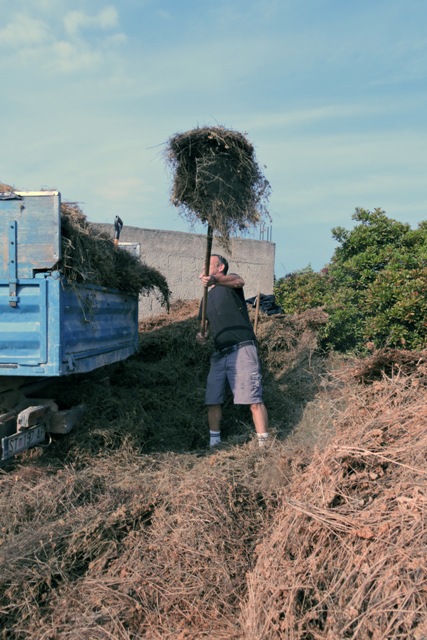
The soils have little in the way of organic matter, even after my feeble attempts at altering the underlying structure.
Some years ago I took a Dundee University soil science course. One of the exercises was to dig a spit of soil out and then count the number of worms.
I did. The total was zero.
When I find a worm in my compost heap, or anywhere else, I celebrate, because they are few and far between.
Good soil health requires a healthy soil biome, but much of that consists of microbes at the microscopic level. I have no facility to get my soil tested, and when I look, I don’t see much.
The second issue is the soil itself. It is a limestone base, so has a high pH of about 7. This alkaline soil can cause essential minerals like iron, zinc and phosphates to become “locked out” and unavailable to plants.
The third issue is the actual soil depth. I don’t have a Ground Penetrating Radar, so cannot see what is actually under the surface, but because of the bedrock which protrudes in various places, my reasonable suspicion is that my actual soil depth is probably little more than a metre. So there is almost no soil depth for most trees to sink their roots into.
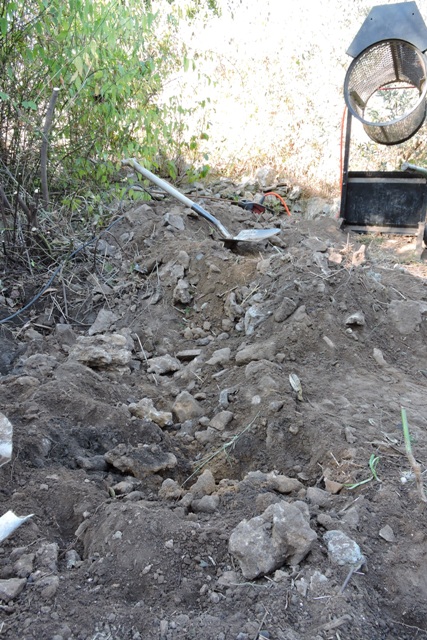
This of course means that the shallow soil heats in summer and all moisture is lost to evaporation.

The final issue is a lack of moisture.
This brings together all the three previous points. A stony, calcareous soil, with little organic matter, sitting on top of the underlying limestone and sandstone bedrock, means that if/when rain falls, it very quickly soaks away, becoming unusable.
This week when I looked at the citrus trees, after last week’s brutal heat, they are all under stress. The soil moisture gauge showed less than 20% and that is with regular irrigation.
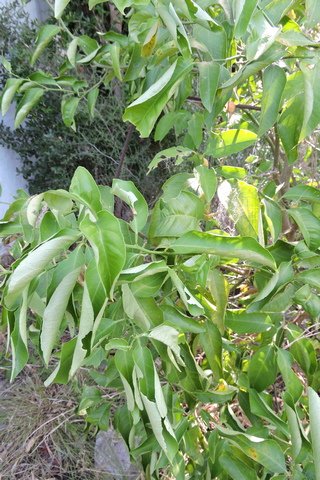
Turning the underground irrigation on, I measured the flow rate at the water metre. After 15 minutes, I had used 192 litres, so 16 litre for each tree.
The following morning, the citrus leaves were still curled up, so I used the hose pipe to drench the soil around each tree. It has kept them alive, but they are still under stress.
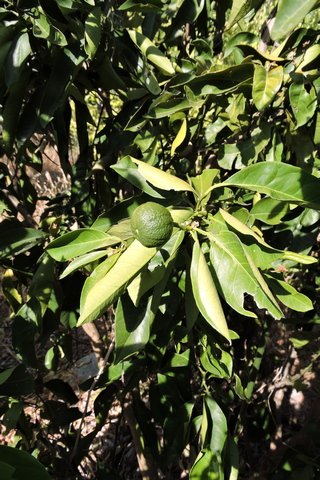
It’s lovely to be able to go out and pick fresh oranges and lemons, pears, and plums. But realistically, I can just as easily go and buy citrus from the supermarket, year round.
Soft fruits on the other hand, come from Spain, Italy and Türkiye on trucks and are seasonal.
This week I have been thinking about the ethical dilemma. Not just buying fruits and vegetables with their own “Air Miles” cards, but everything.
As the world warms, resources will become less. Water stress is already an issue and the European Environment Agency already records that there is water scarcity across southern Europe .
As my trees die, whether because of climate change and heat, the abysmal quality of my soils or lack of rainfall, or all three, I can’t in good conscience just go and replace them with a new one.
It is an ethical dilemma. I do everything I can: I recycle, repair, reuse and rehome; All kitchen waste goes on the compost heap; 100% the rain which falls on my roofs is redirected to swales and berms; Winter rain is collected in underground cisterna (now empty); but it is not enough.
The world we live on is altering before our eyes and it is our responsibility to do what we can to preserve it for future generations…
Waterproofing
As the weather has cooled slightly this week (“cooled” is a relative term!) I have continued my work on the weather barrier this week.
I completely brushed and cleared away all the debris, because the sealant will not work if there is detritus. This then meant that I could see there was also some cement which I needed to clean.
Using a small, sharp chisel I cleaned up where bits of cement had dropped and hardened and generally tried to make a sharp edge between the bridge and the concrete of the terrace.
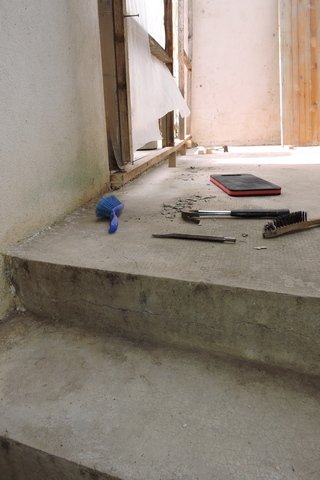
I even wondered about using a hose pipe, but decided not to, as at the moment the concrete is dry and hence good for the sealant. Whereas if I washed everything down, it would leave the whole area wet.
I’m pretty sure that multiple brushings has left the area as clean as I can get it.
The gloopy sealant can only be applied when the temperature is less than 25°C, which is difficult when the average daily temperature is 26.8°C! So I was up at 05:00 on Thursday and Friday, was applying the stuff before 05:30, while the temperature was just under 20°C.
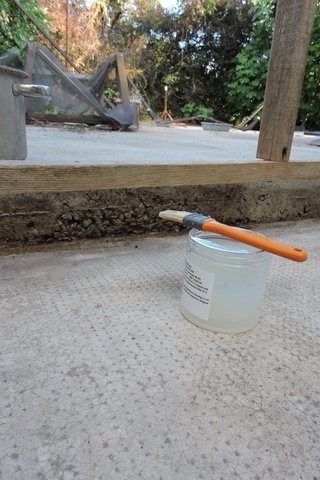
It is a really sticky “jelly” like substance, which you apply with a brush. It went on very easily and in total took less than 40 minutes.
The next job was to cut the replacement support timbers. However I also realised that I should apply a second coat of waterproofing.
By 10am, it has been too hot to comfortably work outside, so my working days have only been five hours, from 05:30 to 10:30. This has delayed completion of the project.
With rain forecast for Sunday morning, I have raced against the impending weather to finish the project. The new beams were installed on Friday morning and on Saturday I was fixing the final polythene sheeting, just before sunset.
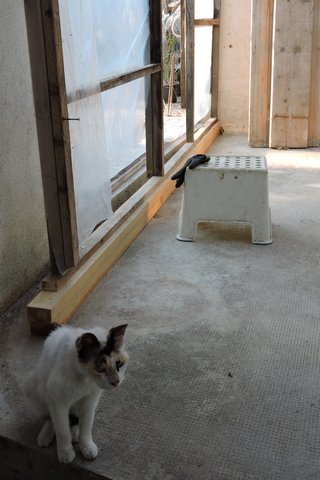
I have added some wooden barriers on the edge of the terrace, to stop winter winds driving water onto the bridge. These had to be sealed as well. I really want it to rain, so I can see if there any leaks which will need stopping with silicone.
I did find a date, etched into the concrete, 1973, so that was when the buildings were joined together at 1st floor level.
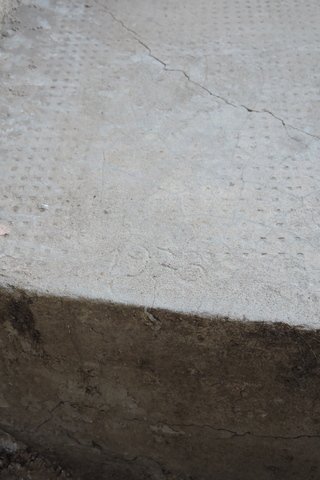
At the end of the week, I have gone as far as I can. I need some weather now, to check the weather proofing! NCG