Open gates
This week: Open gates; Cyclone Harry; Starting a new project;
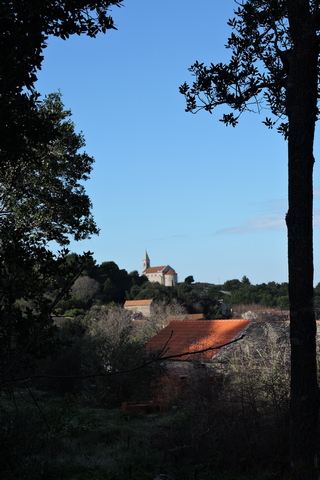
I have an extremely damp feline on my knee as I write this.
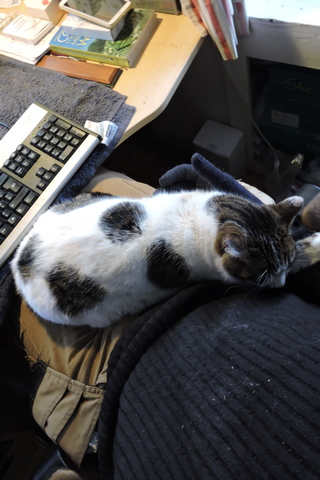
This week has been wet and miserable, all apart from one day. It is just a continuation of the cold, damp weather we have experienced since November. Today is no exception.
I keep a towel by the side of my desk, so that as damps cats come in, I can get rid of moist of the moisture.
Perhaps I should say that there are only a couple of my felines who really don’t care about rain. All the others avoid all but the most essential exposure to precipitation. Pongo doesn’t seem to mind being wet though, but then he is a Dalmatian…
So with miserable weather outside, once again, most of my week has been spent inside.
The felines were extremely happy when a parcel arrived for them from Germany, with treats, but also because it is a cardboard box, of just the right dimensions. Boxes mean endless fun…
Open gates
My yard gates have been almost unusable since November.
I built them ten years ago in February/March 2016 using timber from the local builders merchant, so while it was dry, it was at best, ‘B’ grade.
All the timber was treated, painted twice, before I built the gates using wood glue, nails and screws.
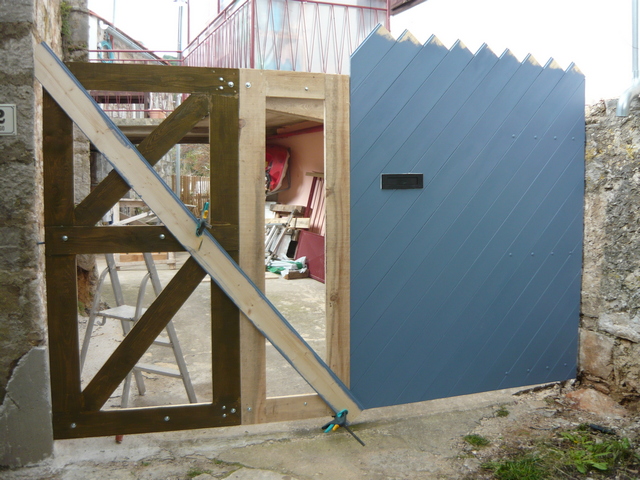
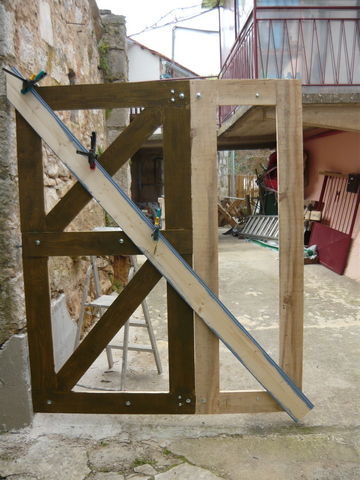
However, the wet weather and almost constant high humidity over the past three months, has meant the timber has swelled as it absorbed moisture.
The gates are a windbreak, protecting my courtyard from our cold winter north east winds. They also keep wandering dogs at bay, but with escape hatches for felines.
As the gates swelled, it became impossible to close them. Both the weather and my recent incapacitation precluded me from solving the problem.
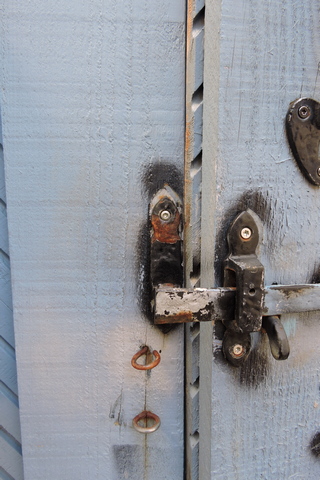
As the weather is (hopefully) improving, on our only fine day this week, I decided to make the gates close again.
Using my electric power plane, I gently planed away one edge of the central door, so it would fit into the reveal on the right hand gate.
The expansion of the wood panels has not been uniform, hence the amount of wood I had to remove varies. It was only the top of the door which needed adjustment. For some reason the bottom half does not seem to have expanded at all.
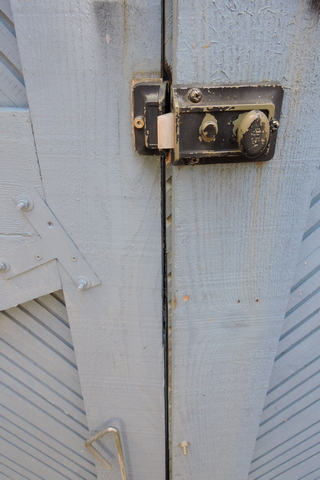
In one place I needed to remove 8mm of wood.
At the end of my efforts, I could close and lock the gates again. And at that point the rain started once more!
This meant that I have not painted the edge of the door. This may mean that I get more swollen wood. However, I need to wait for some sustained good weather before I get my paint and brushes out.
Cyclone Harry
Naming storms is a modern way to focus the public’s attention on approaching dangerous weather events, so risks can be communicated more clearly to the public.
Each national weather forecasting organisations have responsibility for identifying and naming a storm. This means that once a met office has given a storm system a name, then the other national meteorological organisations use the same name.
In this case, the name was given by the EU weather forecasting organisation.
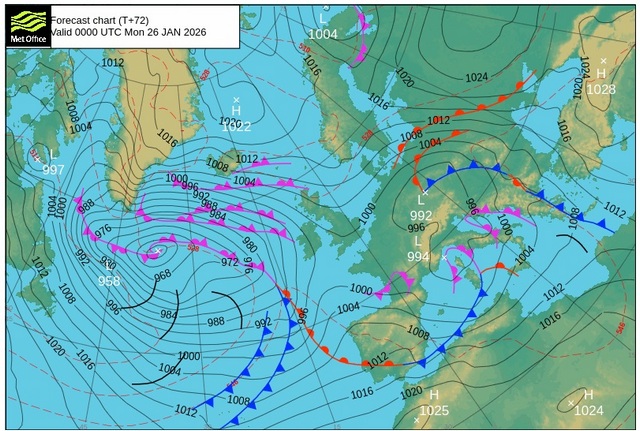
A strong high-pressure system over north-eastern Europe has acted like a giant roadblock, disrupting the usual west-to-east flow of weather systems. With nowhere else to go, a low-pressure system moving in from the Atlantic was pushed southwards, straight into the western Mediterranean, where sea temperatures are still relatively warm.
Once over the Mediterranean, the storm found the perfect conditions to intensify quickly, namely cold air high up in the atmosphere, coupled with warm, moisture-rich sea surfaces and strong pressure differences caused by the nearby high-pressure system. Together, these factors supercharged the low-pressure system, turning it into what was named Storm Harry.
The sharp pressure differences generated very strong winds and high waves, while persistent onshore winds dragged in heavy rain, leading to severe weather across parts of southern Europe and the central Mediterranean, especially Sardinia, Italy, Tunisia and Malta.
With coastal towns receiving nine metre waves as part of the storm surge, tremendous damage has been done all across the central Mediterranean.
We are on the northern edge of the low pressure system, so although we have had rain, a lot of cloud and some wind, it has been nothing like as bad as it has been further south.
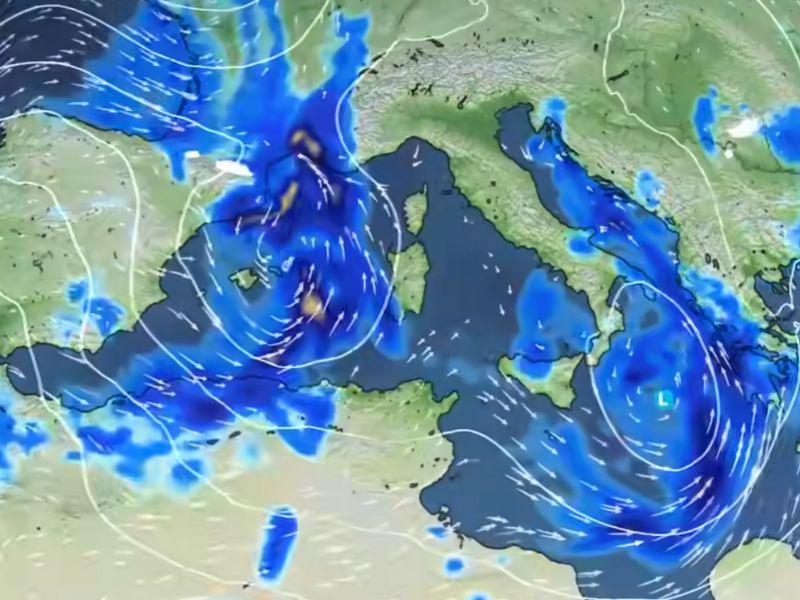
The only good news is that although we have received 31mm, or 31 litres of rain per square metre this week, the rain has been light but constant, so it has soaked into the ground.
My soil moisture gauge currently indicates that there is 71% moisture in my soils.
The situation across the Mediterranean remains very complex, so this pattern of weather is going to be with us for another 10 days!
Starting a new project
Being wet outside, I’ve taken the opportunity this week to do some woodworking.
A project I have had in mind for a while, is to build a seat outside my kitchen window. This is one of those small spaces, which really had no use but gets filled up with “things”.
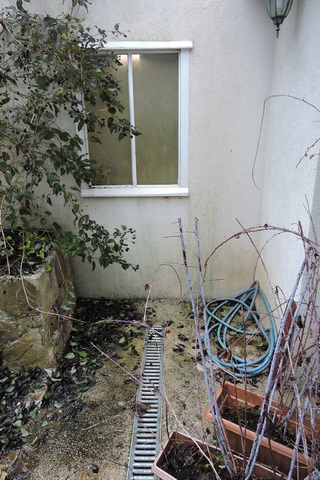
It also gets morning sunshine until mid day and is in a sheltered corner. So what better place for a morning coffee, or even an alfresco breakfast?
With walls on three sides, I have designed a seat that is both easy to build and easy to install.
I needed to cut three ledges to bear the weight of the actual seat rails. However so the seat is comfortable, I have cut a concave rebait into each ledge.
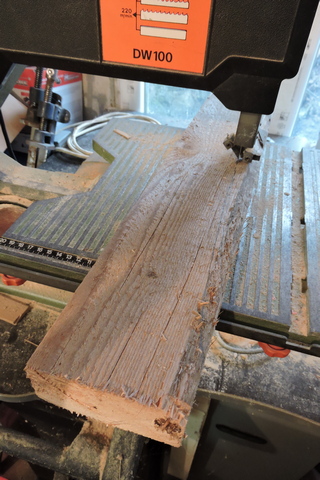
Thinking about that statement now, I wonder whether I am making the seat too comfortable and whether this will lead to too much time being spent sitting down?…
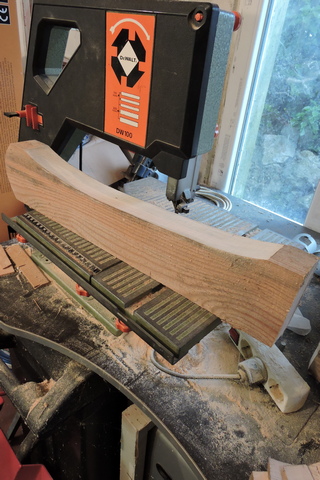
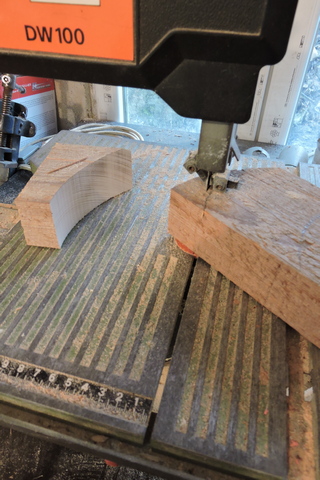
After carefully measuring the dimensions, I have cut the ledges from seasoned 4 x 6 timber using my band saw.
I’ve also cut decorative curved ends on each outer end of the ledges.
The next job is going to have to wait until the weather improves though, and that is treating the timber with Sadolin wood preservative.
This corner bakes in summer sunshine, whereas in winter it is permanently damp. So I need to protect all the timber I use from the elements, both sun an rain, but to do that, I need to be able to work outside to paint all the surfaces with wood preservative.
At the moment, that is just not possible. So in the meantime, I have done the first part and just need to wait for the sun to shine once more. NCG