Building Owl boxes
This week: Somewhere to sit; Building Owl boxes;
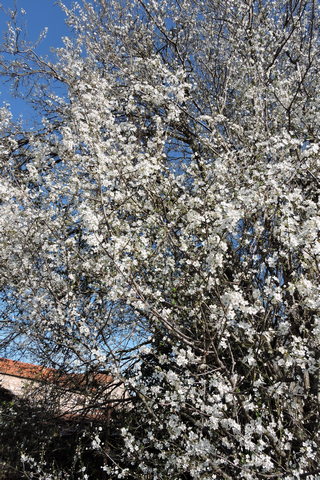
For the first time in four months, we have had a completely dry and sunny week.
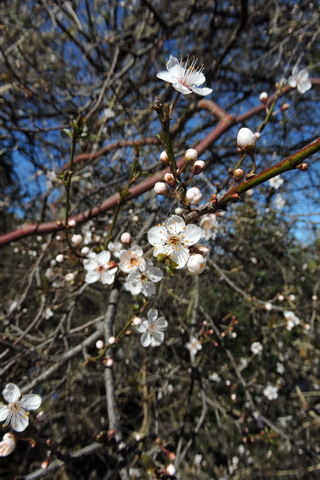
The changes around the gardens and orchards have been dramatic. Suddenly in a week my plum trees have burst into full blossom. As you walk up to the trees, the buzzing of thousands of honey bees fills the air.
The Cleopatra butterfly’s, Gonepteryx cleopatra, have come out of their winter hibernation. On one sunny lunchtime, I counted seven feeding on nectar from Hyacinth flowers.
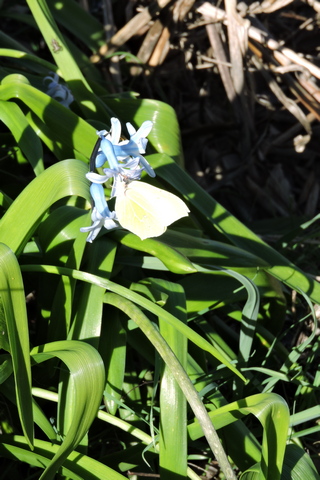
We have our own sub species, Gonepteryx cleopatra dalmatica here in the Adriatic.
This subspecies is characterised by significant sexual dimorphism. Females are a pale lemon yellow, with the males a much deeper yellow and having orange patches on the upper-side of their forewings.
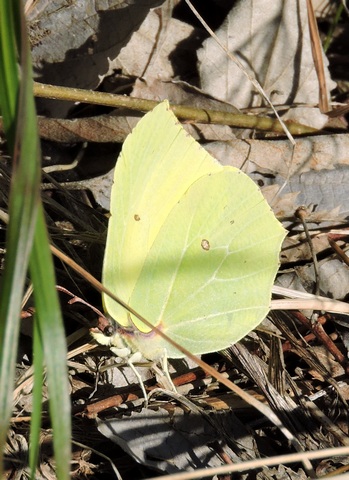
They are an especially long lived butterfly, with females living 10 to 13 months and males up to 15 months.
Females lay single eggs on Mediterranean Buckthorn, which abound in the Maquis around my home. Then as the heat of summer arrives, they move out of the Maquis, going up-slope to cooler, higher elevations.
After the eggs hatch, the caterpillars feast on the Buckthorn, going through the usual stages of development, before joining the adults in the forests on the island.
In the autumn, they migrate down hill to hibernate in evergreen forests, emerging as the days warm in late February, before mating and starting the next generation.
This year, their emergence is at the late end of when I usually see them, presumably because of the rain and cool weather we experienced up to the middle of February.
I have picked the first wild Asparagus this week.
There really is nothing nicer than wandering round the orchard, snipping the heads off emerging Asparagus spears, then cooking them for lunch within an hour of picking them. You cannot get much fresher than that…
The weather has been warm enough to have lunch outside on most days of this week too, with our first 18°C day of the year.
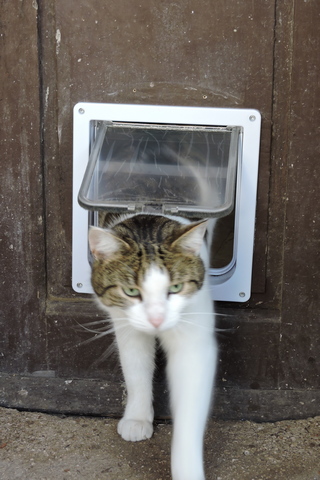
I have several “cat flaps” to allow my felines to come and go from the different buildings as they please. One boy in particular emulates an Exocet missile, launching himself at the flap, which gives way, allowing him through. There is no finesse, just purr force. I should add that Gizmo weighs in at 8 kg.
After ten years of constant use, I discovered that the plastic frame had broken. A quick fix with some screws got the flap working again, however I ordered a new one from Temu. It arrived this week.
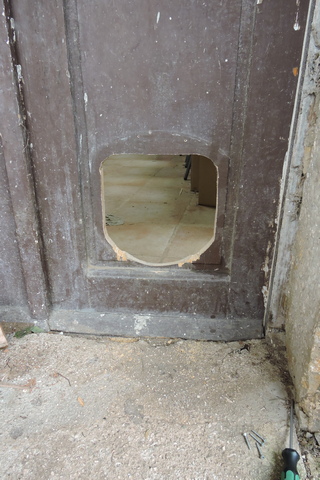
I deliberately ordered the same size, but had to remove a little of the wooden door to get the new frame to fit snuggly.
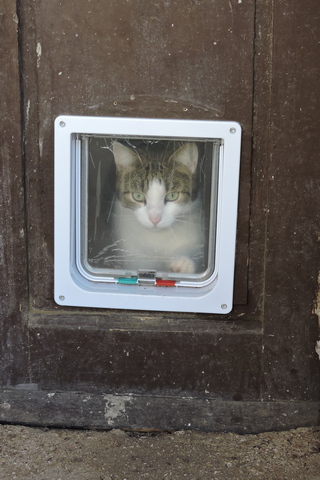
The task was completed quickly and the felines have been using the flap to get to their dining room.
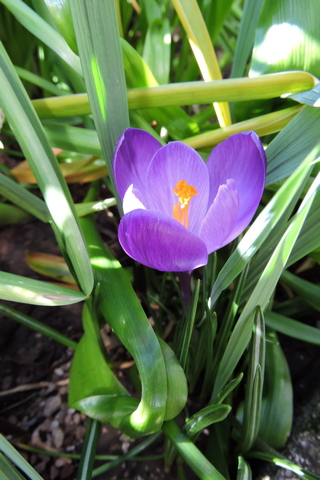
The warmth of the sun this week has brought the natural world to life. The torrential rain of early February destroyed my yellow Crocus flowers. This week, the later flowering purple Crocus have burst into flower.
My Myrobalan plum trees have also developed from just a few flowers to peak blossom in a week. They are covered in honey bees and although the blossom is omnipresent, the bronze leaves are also there and growing.
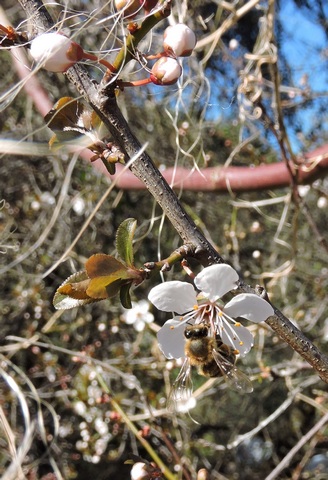
These old plums are unusual because their stones grow into fruiting trees, the same as the parent.
Most fruit pits will grow, in the right conditions, but as trees do not always fruit or produce the same fruit as the parent. This is because most fruit trees these days are grafted onto root stock.
In a few weeks I will be going round pulling up the seedlings which are growing from last year’s fallen fruit. If I left them, I would have a forest…
Somewhere to sit
The fine weather this week has meant that I have been able to comfortably work outside.
I have been planning a new seat outside the kitchen window. With the materials to hand, I ran the softwood through the thicknesser, to get everything to the right size and “planed straight edge“, or PSE.
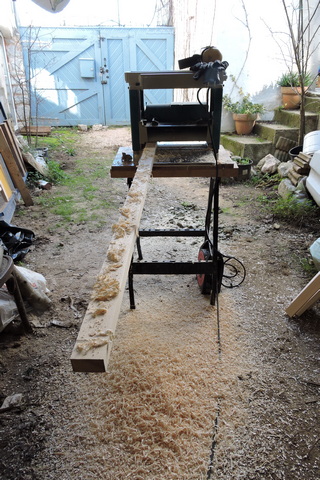
Here, timber from the builders merchant is just as it comes from the sawmill!
With this done, I started treating the timber with Sadolin timber protection. This is an easy to apply, viscous stain which penetrated deeply into untreated timber.
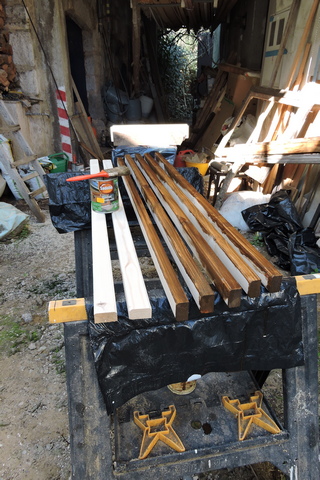
The seat will be fixed to the wall, so will be out come rain or shine.
I tried to give two coats in a day, but although the temperature is rising, it has not been enough to dry the first coat of the day.
Then I ran out of Sadolin. I thought I had a new tin, but it was the wrong shade.
After a trip into town to get another tin – the last one they had in the colour I needed – I treated the rest of the timber with its first coat and left it all to dry.
The supports for the seat rails will be bolted to the wall, so I need to make sure that everything has been well treated before I start to construct the seat.
The various parts received their second coat on Saturday morning. So by next week they will be dry and I can start the building process.
Building Owl boxes
I’ve been to the Vets this week.
A week ago Argent, my “Simon’s Cat”, came in holding his front left paw. He was obviously in some pain, but feeling the bones, nothing was broken.
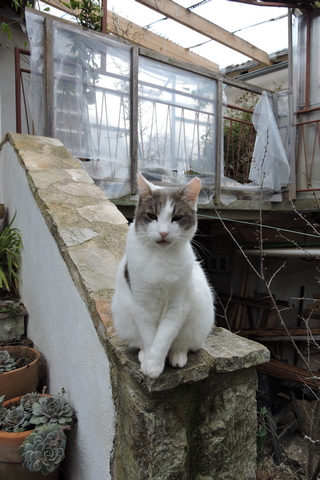
My felines live wonderful lives, the best food, five meals a day, at least two beds each, warm radiators and a wood stove to cat-nap on/next to.
In the orchards there are trees to climb and endless “things” to chase and play with.
However running, jumping and playing, just as with humans, leads to injuries. Usually after a few days, the sprain or strain resolves itself.
Felines have been around for Millenia. They are experts at hiding injury and illness, and also at self repairs.
Afterall, veterinary science only began when Claude Bourgelat opened the world’s first veterinary school in Lyon, in 1761.
Feeling Argent’s Scapula and Humerus bone, that was where he was most sore, there was no displacement. The treatment was heat pads and rest – but try telling that to any active feline! He did like spending his nights on a heated pad though.
Although there has been improvement, this week, he was still limping so I took him to our Veterinarska ambulanta Lota in Stari Grad. A thorough examination confirmed my assessment, that it was a soft tissue injury, which wouldn’t show up on an X-Ray. I came home with an oral analgesic and some ear drops (NOT for me!).
Whilst there I was talking about making some owl boxes. Our vet has owl boxes at her home in Dol.
In around three weeks the first of our summer visitors will arrive, the Scops owl, Otus scops. Readers may remember little Floof from two years ago?
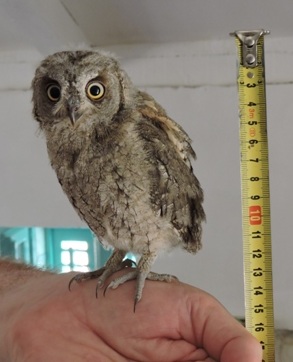
They are already migrating north from their winter grounds in Africa. Around the 24th March I will hear their “ping” calls and I would like to have somewhere for them to nest.
I would also like a nest box for Little Owls.
The Little Owl, Athene noctua, is a year round resident, although I only see and hear them during the summer. Their squeaking call, diminutive size, and bobbing up and down on the electric wires when hunting, make them easy to identify.
I’m sure I have them nesting somewhere in my old buildings, but have not identified where.
Robert Fuller has extensively filmed Little Owls around his home in Givendale, East Yorkshire:
I don’t have the kind of trees needed to build a natural nest space, so have planned a “man made” box for a Little Owl family. One of the design facilities I need to incorporate is a “corridor” leading into the nesting space, something Little Owls like.
This week I have cut the first pieces for the nesting boxes. This is urgent because they will start breeding by the end of March
The design for the Scops owl box is different, with the entrance hole in a different place and no corridor space.
This is another project which will continue into the coming weeks. NCG