Discussions over coffee
This week: Discussions over coffee; Project finished;
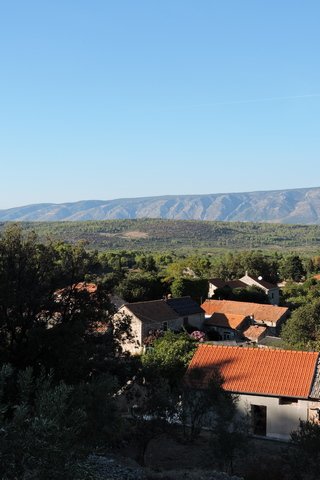
Dol still basks in the Autumn sunshine
I feel this week has been somewhat wasted.
The weather is still hot and sunny, but the nights are now really noticeably longer. But then we are now in October! Nine months of 2026 have gone by in a flash and as we head towards November and December, the winter approaches. This is the 40th Blog of 2026 – only twelve more to go!
But for now the temperatures are a pleasant 27°C during the day and around 16°C overnight. So it makes for pleasant working conditions.
The cold nights seem to have killed off most of the mosquitoes too, so you can work outside without the need for any sprays or roll-on applications to prevent bites.
I had to go over to Split on Wednesday, which meant getting up at 04:00, catching the early ferry, then back on the 14:30 from Split to Stari Grad.
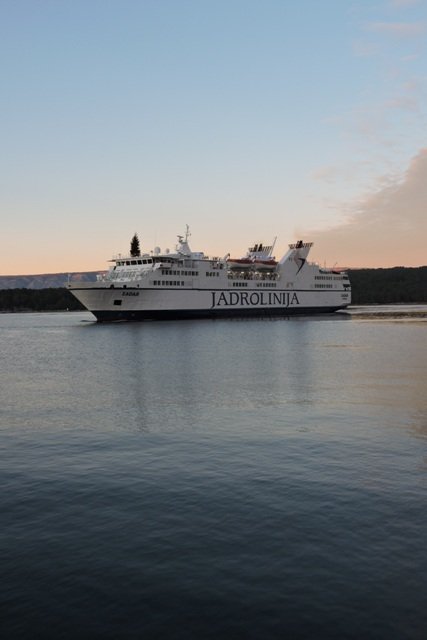
Our regular ferry the Zadar is back on the route. This is a larger and faster vessel, so instead the usual two hours, the return journey was just an hour and thirty five minutes and I was back home at 16:20
Much of Tuesday was spent checking for things I needed to get when I was on the mainland.
In particular this week, I have been doing maintenance work on the Arbour which runs from my buildings up to the old donkey track. It is home made from “rustic” pine poles, but over the past 12 months has developed a significant list and several of the horizontal poles have rotted away.
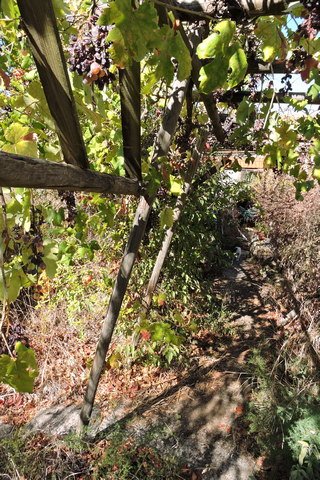
I carefully measured the sizes of poles which I needed, then I added additional wire stays to bring the vertical poles back into a near vertical position.
I have anchor bolts embedded in the stone wall at the back of my property and use turnbuckles to link the wire stays to the anchor bolts.
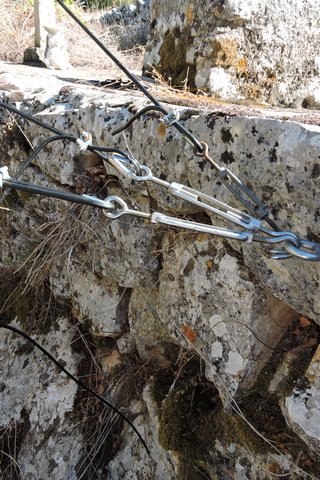
The wires go around “thimbles” and are held by clamps, so once fitted and tightened, it makes the Arbour quite rigid. I did have to use a prop to get things vertical before tightening.
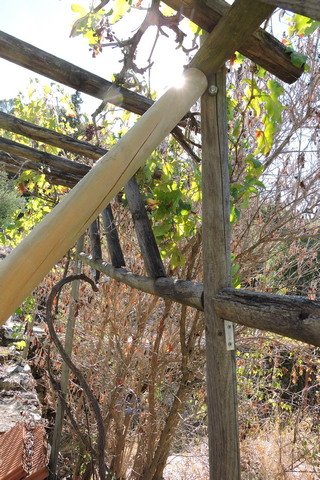
Going to Bauhaus, where I bought the rustic poles from, I took one of the pole labels with me. Checking in the timber area, there were none so I went to the information desk.
A helpful guy checked the computer using the bar code I had and said that there were none in stock. I asked about ordering online for delivery but when he went into the main system, they are a discontinued line, so are not available.
I need to try and find somewhere else that I can get some poles from, because my Arbour will not last forever…
What they did have at Bauhaus was a large selection of spring bulbs.
For me, nothing says “Spring” like the appearance of Crocus, Tulips, Narcissi and Daffodil. So I came home with several bags of bulbs.
I already had three ceramic “planters”, so on a sunny afternoon used potting compost to bed the bulbs on. There is a planter of Tulips, a second with Narcissi and the third with Crocus.
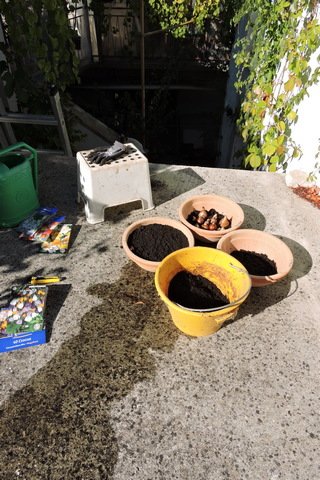
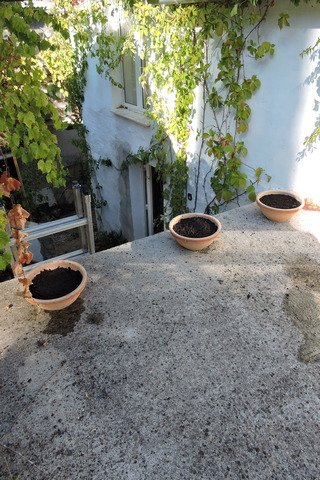
After burying the bulbs in compost, I watered them in well and positioned them on the patio, where I can see them from the dining room and kitchen.
The Narcissi had already started sprouting.
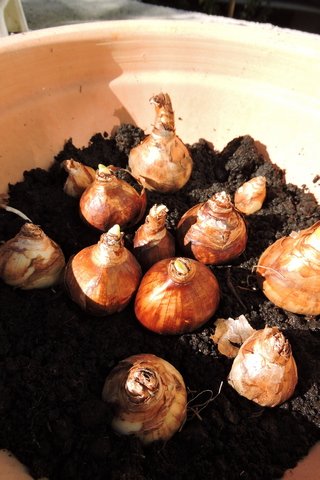
There should be a lovely colourful display on the terrace next spring, which in Dol is early February.
Your weekly dose of cats
The felines are aware that another year is moving towards its conclusion.
Their thin summer coat’s are being shed and their thick winter coats are growing. Instead of looking svelte and athletic, they are beginning to take on their more rounded winter appearance. No it’s not fat, underneath they are the same, it is just a warm layer so they can still play outside, whatever the weather.
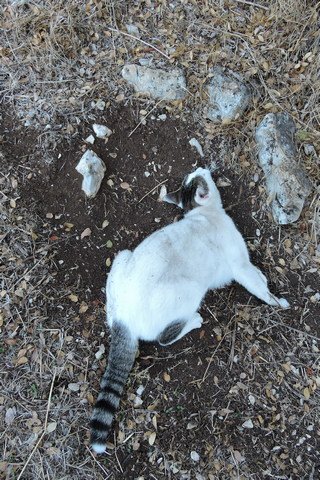
Walking through the Maquis this week, I had three of the felines with me. Bljsac (means blaze or flash in Croatian) rolled on every bare patch of earth she could find. And of course all that dry sand will be shed on the floor the moment she steps foot back inside…
The two boys, Yoda and Tigger enjoyed running along the walls which line the pathways through the forest and divide up the terraces.
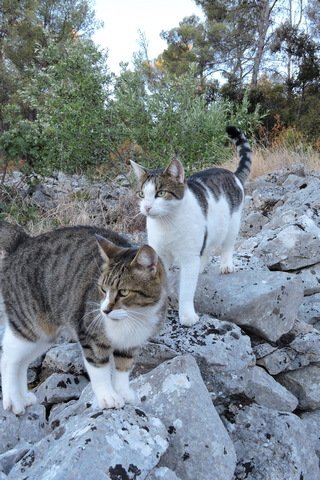
Whenever I am out with the felines, I realise that they are living their best lives, happy, fit, healthy and fulfilled.
I have my Autumn Daffodil, Sternbergia Lutea, in flower in the Top Orchard. These are wild flowers, and I was looking to see if I could see any on the edges of the Maquis. There were none.
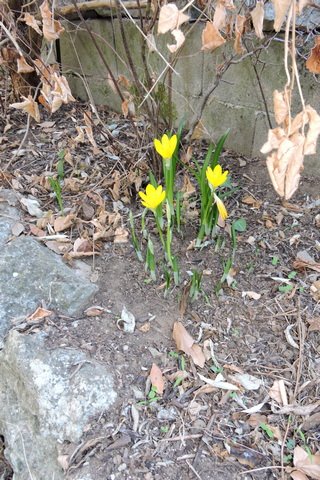
Because I have been irrigating the Top Orchard, I suspect my flowers are early, or because of the lack of rainfall, the true wild bulbs are late this year.
Discussions over coffee
What do you talk about when meeting friends for coffee?
The weather, I’ll guarantee, perhaps the forecast for the next week. A discussion about how crops are faring in our precipitation famine. But what about a discussion around the difference between a wasp and a hornet? No? well you are missing out…
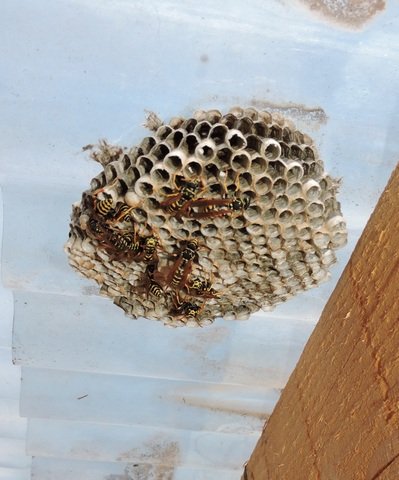
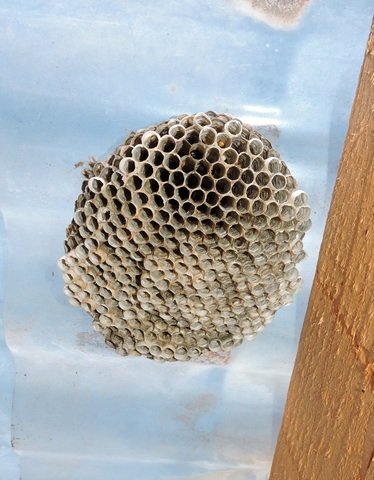
So I was describing nests of the Paper Wasp, Polistes gallicus, which I have all around my home. Lots of them. I also estimated the number of cells in the nests. However, it was only when I started looking at my now empty nests, and counting the cells in one, that I realised just how many larvae these wasps raise each year.
In this one nest there are 153 cells. This one is the smallest of my nests.
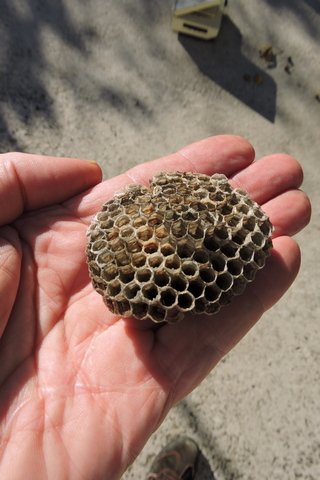
I have mentioned a number of times that I practice “live and let live” with all insects. These wasps are not aggressive and providing I don’t threaten their nest, they fly around me when I am working. They are gardeners friends because of the number of caterpillars and other small insects that they bring to feed their young.
I identify Hornets because their longer rear legs hang down when they are flying and they tend to be bigger than wasps. They look as though their landing gear retraction system has failed.
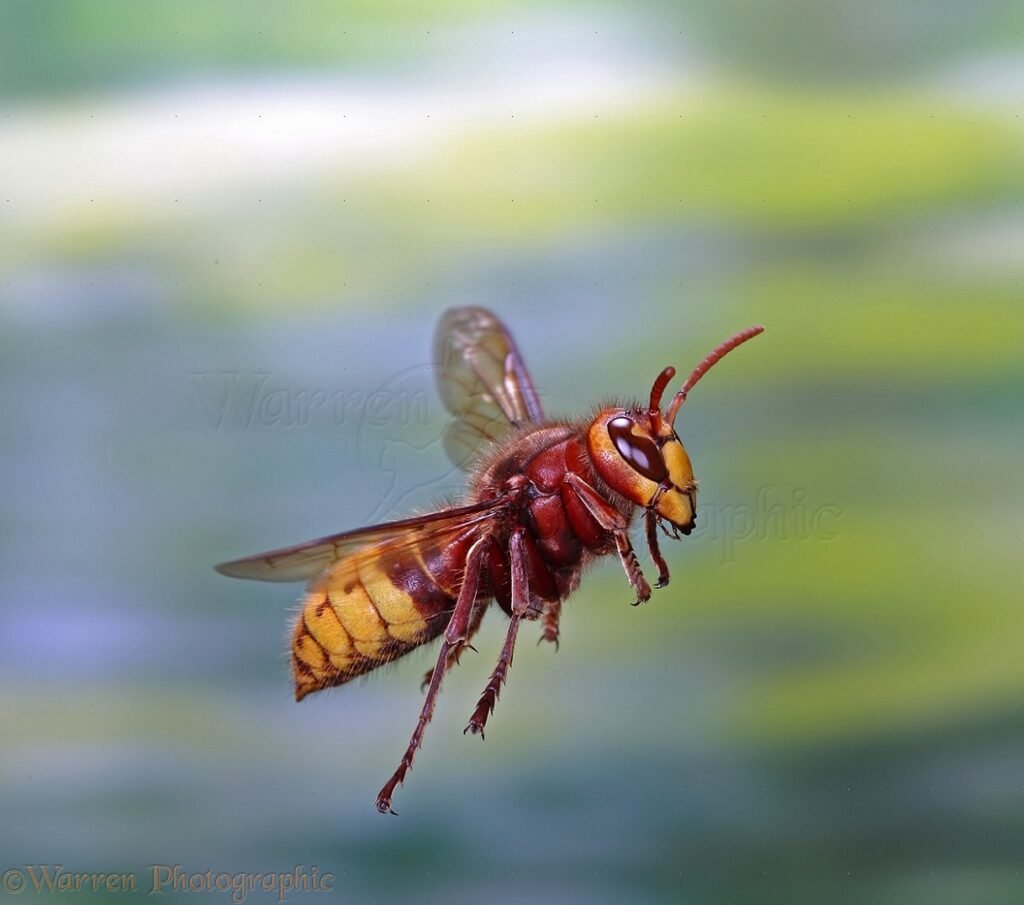
But here the system fails, because the Paper Wasps, which build the underslung “mushroom” nests, also fly with a “tail down – legs down” attitude too.
Scientifically, all Hornets are “Wasps”, but not all “wasps” are hornets. Both can sting multiple times and the strength of hornet venom is stronger than wasp venom.
Hornets are always social whereas quite a few wasp species are solitary. Wasps are slender and streamlined and fly in a level attitude. Hornets have fatter bodies, broader heads and fly with a prominent tail down attitude. Their colours are often darker and less vibrant.
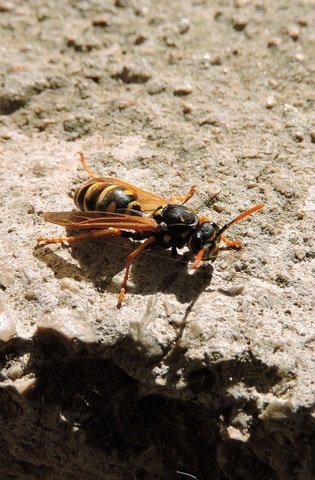
Wasps crave sugar and sweet treats, so will be active around your Coke and Sprite drinks at a picnic. Hornets are seldom attracted to human food.
I leave them to get on with their nest building and raising of young, because of the good work they do in the gardens and orchards…
Project finished
I removed the glass from the last of the eight old window frames this week.
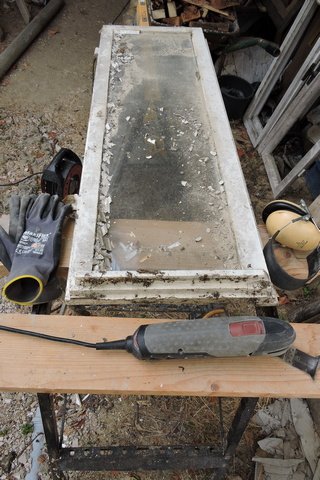
I had to change the cutting head that I had fitted to the oscillating cutter though.
The first head was one designed for metal and alloys. I had reasoned that because the putty is made of Calcium Carbonate, white lead and linseed oil, its characteristics, especially when hardened over the decades, was more like an alloy than a wood.
There are also small steel pins driven into the wooden from the hold the glass in place. But what I found was the cutter blade only made very slow progress cutting through the putty.
Changing the blade to one made for cutting wood, an old one which had a couple of teeth missing, immediately improved the cutting and removal of the old putty.
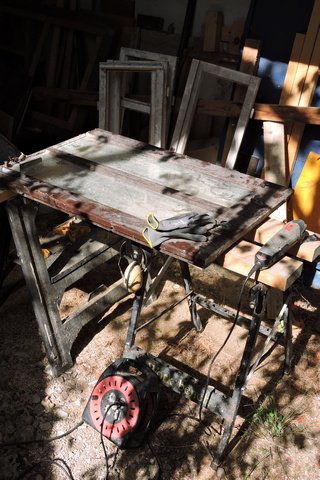
Once all the debris had been cleared, I used needle nose pilers to remove the pins and then very gently lifted the glass, until I could ease it out of the old frame.
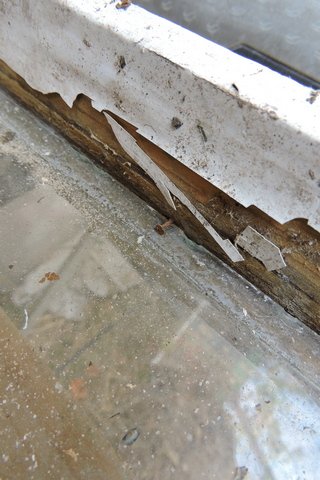
I only had one pane break, which considering it is old 2 mm thick glass and has been in place for donkey’s years, was a considerable success.
The pane which broke was damaged where the securing pin had been knocked into place. Removing the pin cracked the pane across the corner, so only a small amount of the glass has been lost.
The old dining room door will be replaced when I eventually get my building permission, but at the moment has two thick, opaque paned of glass.
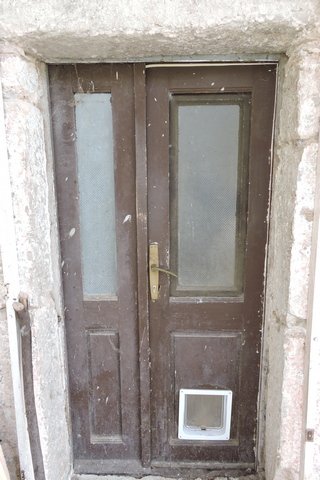
I realised this week just how much light these panes reflect away.
As the sun shines directly onto this door in the spring and autumn, as I opened the door, sunlight flooded into the dining room, lighting the inside of the room. With the door closes, it is always a little dim inside.
Measuring the glass in the two windows, it is exactly the width of two of the glass paned I have removed. I will need to cut the height down to size, but I will only need one cut to make the glass fit.
So already I have a use for the glass I have recovered as architectural salvage. The wooden frames are beyond anything more than firewood for the wood stove this winter. NCG