Fireside woes
This week: Fireside woes; Winter wood; Water problems;
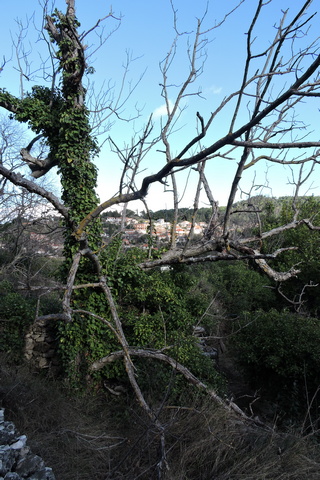
We are well into early spring, although the weather has not been particularly spring like.
Still, this week there have been three sunny days. This is a significant improvement on previous weeks where one has been the most we have had. The average daily temperature is also starting to rise and the days are getting noticeably longer.
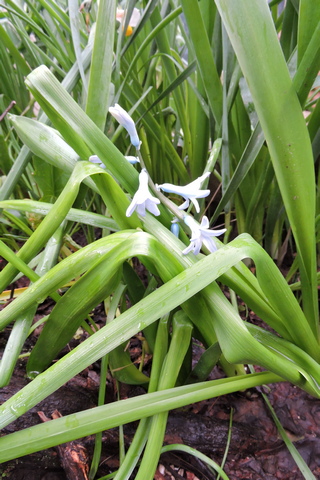
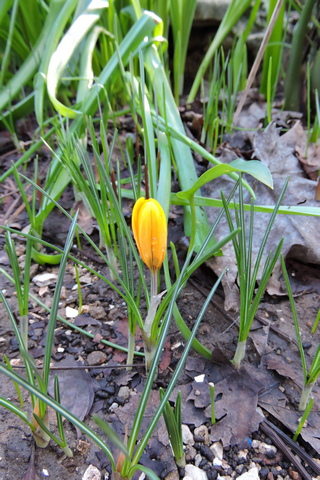
In the gardens and orchards the first Hyacinth are in flower and also the first Crocus flower has popped up.
Going to Jelsa this week, I saw the first Almond trees in full blossom. On mine the buds are still closed, but I know from previous years that it blossoms slightly later than some other local trees.
There was also a Mimosa, Acacia dealbata, in full flower opposite the Vrbanj Post Office.
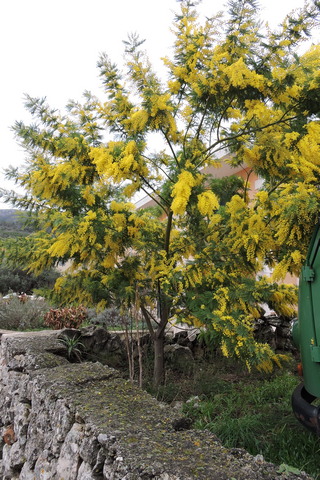
This is the first of our flowering shrubs. I had one for several years until it died from unknown causes. I have tried to find another to replace it, but last year none of the garden centres had any.
On fine and sunny days, I have been working outside. I draw the line when it is cold and wet.
Yes, I have wellies and waterproofs, however I no longer enjoy working outside when it is cold, wet, windy and miserable…
When the sun shines, and it is rapidly warming sunshine, wildlife is waking up. This week I have seen several of my lizards breaking their winter hibernation to come out and sunbathe on the stones.
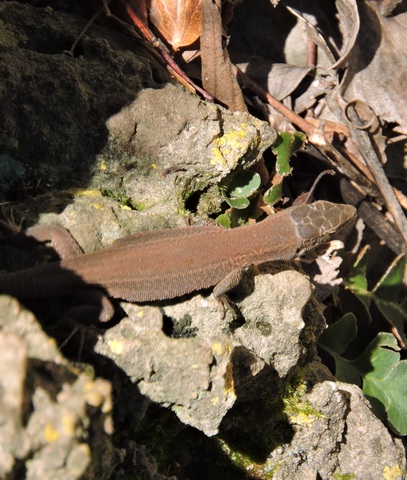
I have also seen the first of our Toads, presumably out in a search for a mate. The birds are getting twitterpated and spring is in the air…
Fireside woes
My wood stove has been playing up this week. On several evenings it has not been getting the water up to temperature and has just about gone out.
Using the chimney fan encouraged the wood to burn, but also sucked the hot air out of the chimney (adding to global warming!), so I was no better off.
I decided that based on previous years experience, I probably had some chimney blockage, caused by creosote residue from the pine wood I burn.
On Friday morning, I was up my stepladder and dismantled the fan, to get at the top of the chimney.
Once I had the fan out of the way, I could see there was a lot of creosote residue that had become attached to the stainless steel grille which surrounds the fan blades.
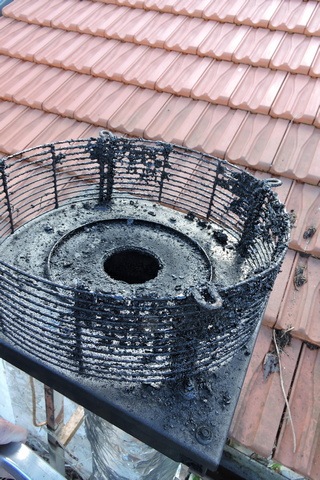
However, when I shone a powerful light down the flue pipe, I was surprised to see that it was completely clear of residue and soot.
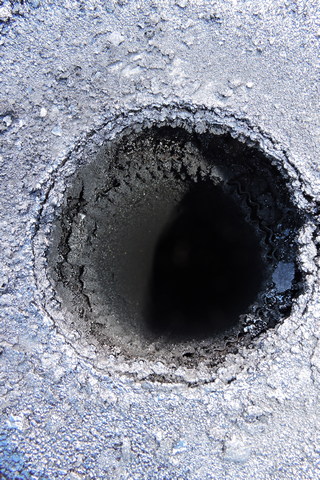
So the insulation I applied last autumn, to keep the pipe warm and reduce fowling has done its job.
I did try to remove the inspection cover in the 90° elbow joint, however the butterfly nut which holds it in place has corroded and try as I might, I could not get it to budge.
I thought I had greased the threads, just for this reason. However if I did, it didn’t work. I applied a healthy amount of WD40 penetrating oil and left it for another day.
Lighting the fire on Friday night, the water was quickly hot and the fire burnt well all evening.
Quite why I don’t know, because I didn’t do anything!
I am now leaning towards general outside atmospheric conditions being the cause of the poor burn rate, rather than a flue constriction.
This does make me more determined than ever to get my extension built this year, so next winter I have a straight flue, rather than one with two 90° angles in it, as I have at the moment.
Winter wood
Wood needs to be completely dry to burn well. I suspect that the logs I had delivered a couple of weeks ago are damp, which has compounded the wood stove problem.
I tend to burn mixed woods, with parts of old pallets along with logs. This is so there is a balance of rapid, high heat softwood burning alongside slower burning logs.
Usually by the start of March, I no longer need central heating, so this week my thoughts turned to removing the Nettle tree in the east orchard, ready for next winter.
There is a local saying that the best winter firewood is cut at the February full moon. That is tomorrow. Then it is left to dry for the summer.
There is more than superstition to this folk law saying.
It is about cutting the wood before sap starts to rise in the trees. Even though today is only the 31st January, in this part of the Mediterranean, a number of the trees are already starting to show signs of their spring growth, which means that sap is already flowing inside the bark.
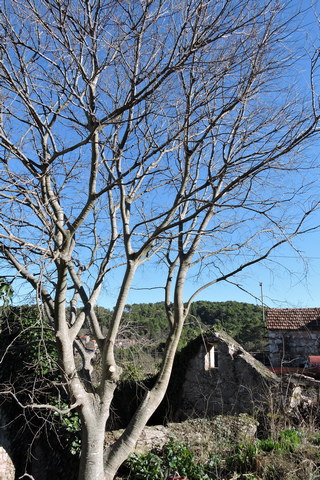
Not so on the Nettle Tree, so on another fine day this week, I brought my chain saw out and started to cut back the smaller branches to make it easy to get to the main limbs of the tree.
I really had not appreciated just how big the tree is. I estimate that it is probably 10 meters tall at a minimum and it has a significant girth.
After removing several branches, even with a step ladder, I couldn’t reach especially high. There is also the problem of access.
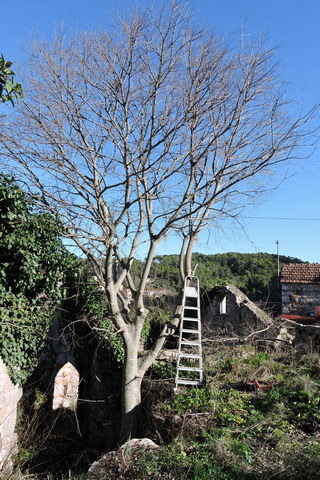
The tree is growing out of a stone wall in a courtyard and the orchard above is extremely uneven. All this makes it a very poor surface to work on because the orchard ground is uneven and the courtyard is constrained.
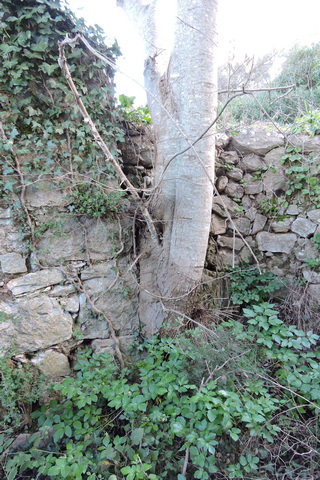
Of course, the tree is leaning over an old building, just to add to the difficulty. So if I were to drop the tree in the direction it is leaning, it would damage old walls and a gable end.
So after doing my initial cuts and removing a number of the small branches, I decided that the best way to safely bring the rest of the tree down would be to use a stay rope, so the tree falls in the direction I want.
It was at this point that I decided this was going to be job for another day!
However I did use the chain saw to prune some thick branches on my pomegranate trees, so even though I didn’t finish the job I started, it was a successful days work.
Water problems
When it is cold and wet outside, I can do inside jobs without feeling guilty.
About a fortnight ago, I noticed that the ball joint on my concealed in-wall toilet cistern was starting to leak.
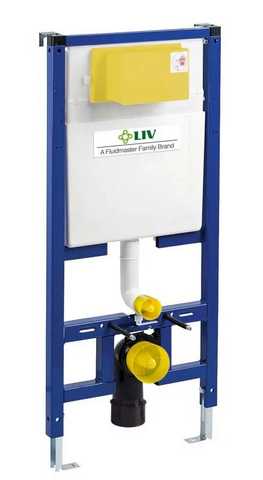
I installed it just over 10 years ago and it was the first of this type of built-in-wall systems I have ever had experience of. I couldn’t find the installation instructions, so used some YouTube videos to see how I changed the valve.
It wasn’t difficult.
I dismantled everything using the large opening. It was a little fiddly, but the three elements came out without too much difficulty.
There was one problem though, as I tried to undo the incoming water feed, the plastic broke. Fortunately, that was the part where the valve was leaking, so it was a quick trip down to the plumbers merchants in Jelsa.
My past experience meant that I took the broken unit with me, but was pleasantly surprised when they had several of the right model, by the same manufacturer, on the display stand. And at €15, it was not expensive, or at least not as expensive as I thought it might have been.
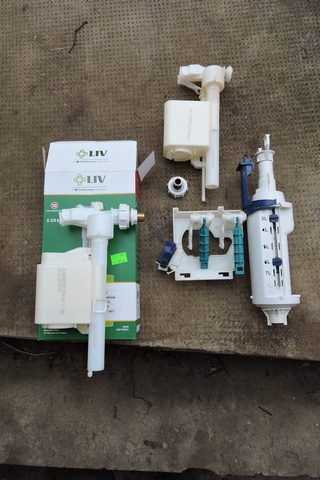
Back at home, it was less than an hour’s job, to fit everything back into the tank and connect the water supply pipe again.
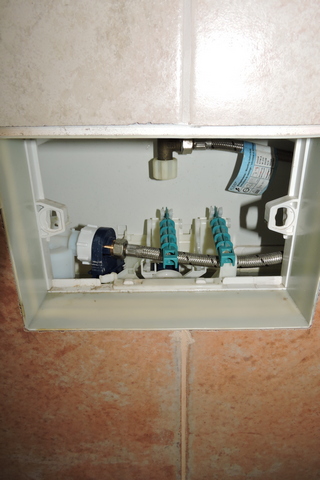
Turning the water on, nothing was leaking so that was a successful repair.
The YouTube videos were very helpful and made the job go very smoothly.
It actually took far longer to undo and remove everything, than it took to put the system back together.
And for once, I didn’t have any parts left over when I finished! NCG