Then the rain came…
This week: Then the rain came…; Colours of Autumn;
I just do not know where time goes! But here we are again, on a Saturday evening and I am trying to think of what I have achieved this week.
No, sorry, nothing much is coming to mind…
I know I went to the Supermarket on Monday morning, and again on Friday, between which, I’m sure I have been busy…
Having just been through to the dining room, where the wood stove is humming away in the corner, I was suddenly aware of just how good the logs from the Nettle Tree, which I cut down in the spring, actually are.

I cut it down before the sap started to rise, so there was less moisture to dry in the summer.
I have said several times that it is a “weed” tree, self seeding everywhere and growing to a substantial hight, when allowed. The wood is dense and heavy, but I am surprised how much calorific value there is in the wood. The logs burn hot and long, so are just what you want for a wood stove.
However, I think it is the fact that I have let them air dry for the whole of the summer, which is making them easy to burn this winter.
Coming back through to my study, the outside air temperature is hovering just above 10°C, but inside the thermometer is reading a comfortable 21°C and that is without the fire being put under any pressure. The air valve is half closed, so it is barely ticking over.
With several wet days, I have recorded a very useful 20mm of rain this week, but then we are in the “winter cool and wet” season, so rain is to be expected.
When the sun shined earlier in the week, it was really warm out side for November, at over 20°C. Then we had a cold front move through on Friday, the end of a North Atlantic storm, and temperatures on Saturday have plummeted.
I have been up the donkey track behind my home, looking for winter wild flowers. There was a veritable carpet of Common Daisies, Bellis perennis, in flower. They are easy to identify because of the pink tinged ends of their petals.
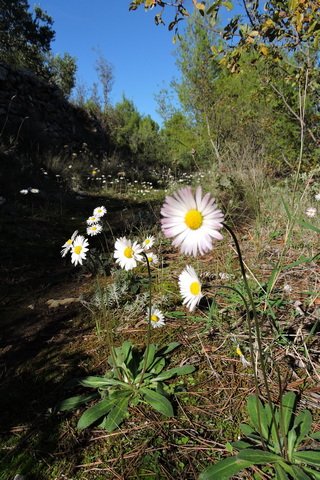
In the low winter sunshine, they looked lovely.
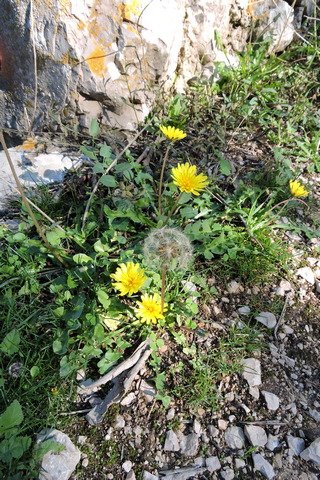
In amongst them were bright yellow Hawkbits, Leontodon .
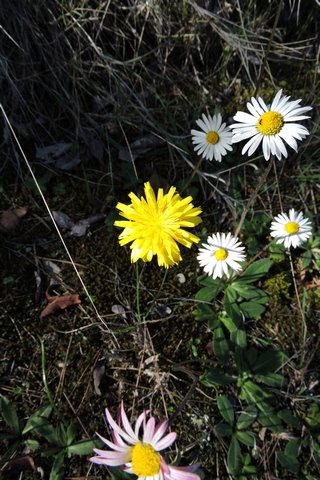
These are often confused with Dandelion, but they are a completely different species. They share similarities, for example the round seed head produced after flowering, but they are actually considered to be a non-weed perennial.
The colour of leaves changes through out the year, from the bright, verdant green of the new leaves in spring, to the darker shades on summer, and then the change to red, yellow and orange in the autumn.
The Carotenoids which cause the autumn colours are always there, it is just that they are masked when chlorophyll is very active.
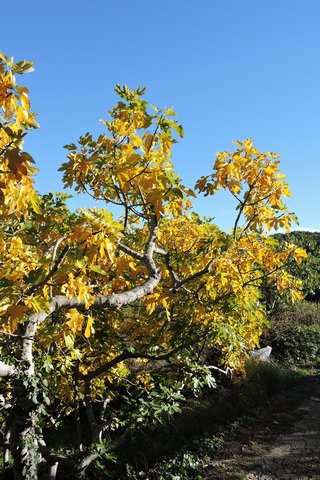
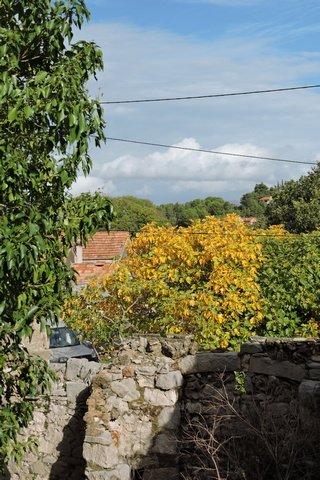
Today, the fig trees are at their most brilliant, but at the same time, I have Bougainvillea in flower, an archetypical summer Mediterranean plant. So although I am not a fan of Autumn, even cold blue skies and brilliant colours can lift the spirits…
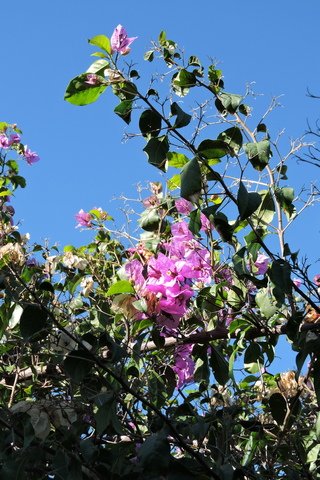
Then the rain came…
Back on the 17th October I planted winter Broad Bean seeds in my vegetable plot on the edge of the east orchard.
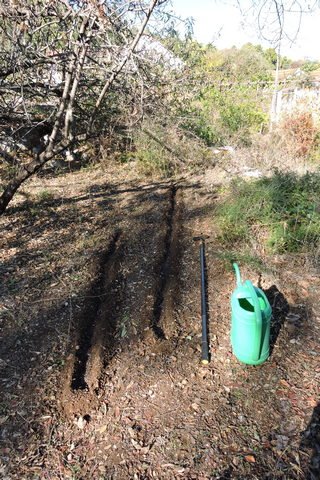
I had soaked them overnight before planting and have watched for the first sign of shoots.
None have appeared. Not a single one. Then when I looked at the box, they were 2021 seeds. I would still have expected some to grow, however every one has failed.
Around the plot, weeds have sprouted together with a few onions which are left over from the spring, so it is not a lack of moisture.
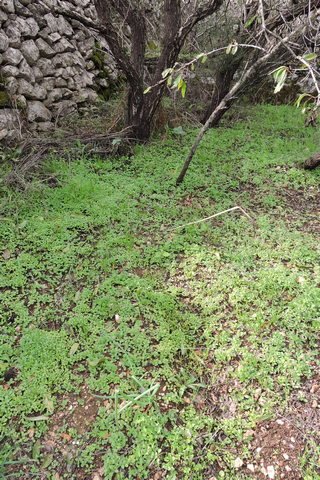
Watching the weather, rain was expected on Thursday and the weather is still mild, so I decided to completely replant the crop.
I had the remains of a box of seeds from last year, so once again, soaked the seeds overnight in luke warm water.
Watching the rain approaching on the radar, I was out early on Thursday morning. I considered getting my small rotavator out to chop all the weeds down, but decided to just plant two rows of seeds. I can run the rotavator over the plot later if need be.
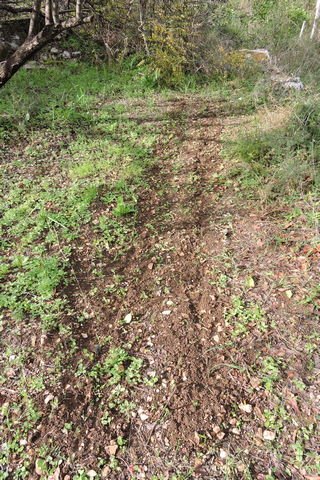
Broad beans, Vicia faba, are a multi function crop. You can harvest the top shoots throughout the winter, then new shoots appear. They are ideal in stir-frys or blanched as fresh greens.

The young seed pods can be harvested and eaten, then later when the seed pods mature, the buttery, nutty beans inside can be used a a vegetable, as the key component of Ful Medames , the Arabic dish known as “Ful” فول مدمّس.
The origins of Broad Beans are unknown, however they were being grown in ancient Galilee 3,000 years ago, so they are a well known Mediterranean vegetable.
In the ground the plant is a legume and fixes nitrogen in the soil, so is a useful garden plant.
I had just got the seeds into the rows when the rain started – a little earlier than I had anticipated, so using that immortal phrase of Brian Johnston, “Rain stopped play”, I quickly covered the seeds, tamped the rows and retreated inside.
There were a few seeds left over, which I will plant in the Polytunnel.
Colours of Autumn
I don’t like Autumn, that time of year when the days grow ever shorter, leaves fall leaving bare stems, cold nights and the winter routines kick in.
I hate it when you close the curtains and need lights on by 16:30.
There are some bright spots though, for example the flowering of the Button Chrysanthemums, the funeral flowers of Autumn.
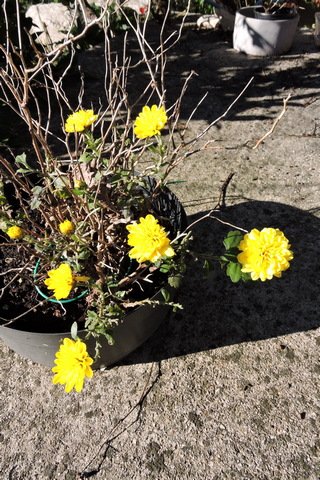
But also there are displays of leaf colour. The problem this year has been the heat waves of the summer and lack of rain, which caused many plants to go into a self preservation state and close down photosynthesis, shedding leaves.
We then had an almost rainless September, so when the first rains came in October, it was too late for many established plants and trees to recover.
Many Mediterranean biome plants are evergreen. The glossy hard leaves prevent moisture loss, so it is an evolutionary mechanism for their protection.
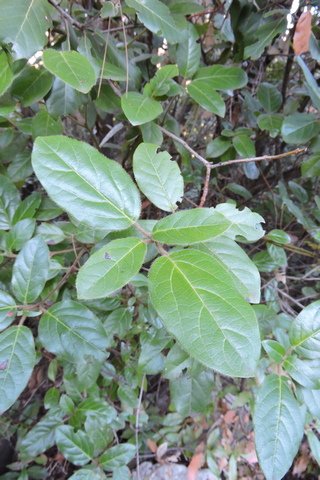
Some trees have adapted to the heat, but remained as deciduous species, for example the Pomegranate, whilst others like the Linden (Lime), Tilia , being found across the Mediterranean.
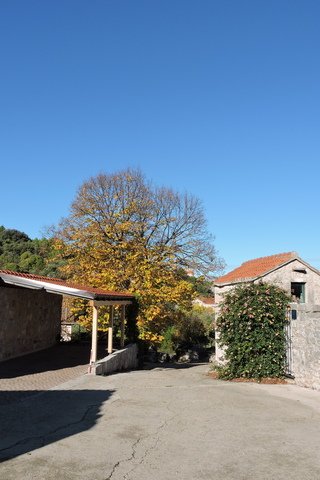
On the lane to my home, there is a 25 metre Linden tree, which looks beautiful in the sunshine, this Saturday morning.
The trees and plants in my garden change colour and lose their leaves at different times. The grape vines always begin losing leaves in August.
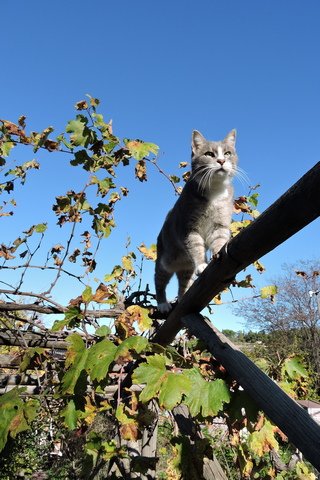
All the while that nature is closing down for the winter, there are plants which are just starting to come to life, now that the heat of summer is over.
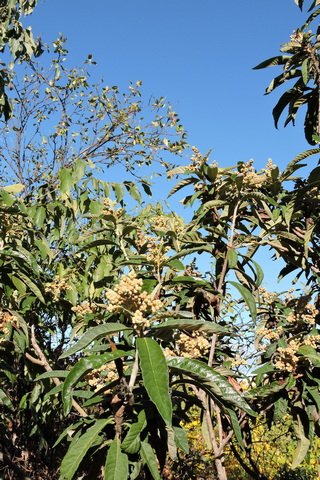
In the top orchard, my Loquat is covered in flower candles. The flowers have not opened yet, but when they do, they will provide food for winter flying insects and butterflies.
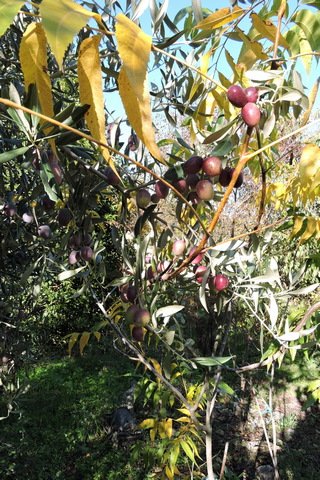
I was a little surprised to see I have quite a few olives on my table-olive tree. When I last looked, the fruits were small and shrivelled, but clearly the rain we have had in the past few weeks has allowed some fruit to swell. They are not quite ready for harvesting though, just yet.
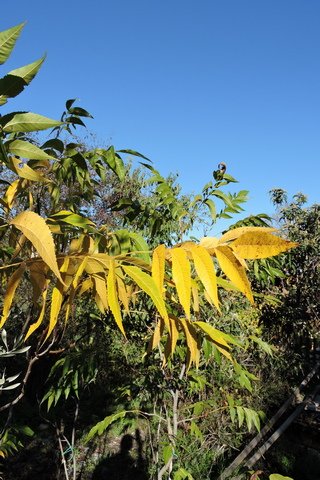
In another corner, the leaves on the Pecan trees have turned, but at the other end of the orchard, my plum and cherry trees have not even begun to turn yet.
Whilst on the ground, the flower buds are showing in my outdoor Narcissi.
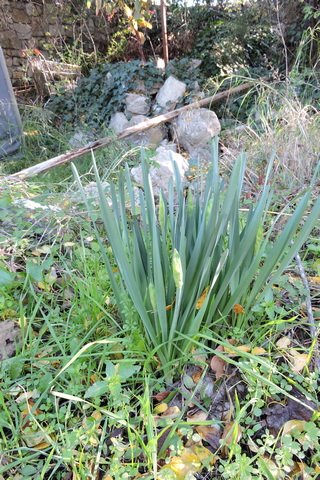
These will be in flower around Christmas. NCG