Crumbling into a cobbler
This week: This week: Crumbling into a cobbler; Winter beans;
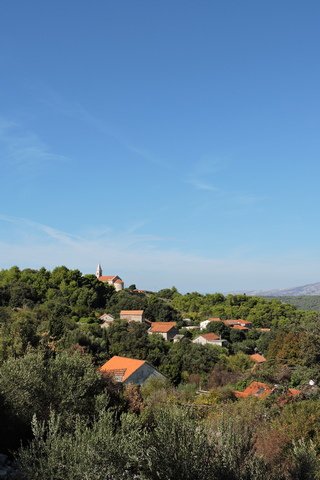
Saturday has rolled around again. As the days shorten, so the weeks seem to pass more quickly as we head towards our winter. It is only ten weeks to New Year!
The rain of a week ago has really changed things. In the citrus orchard, several of my trees which had looked as though they were at death’s door, have begun to sprout new green leaves.
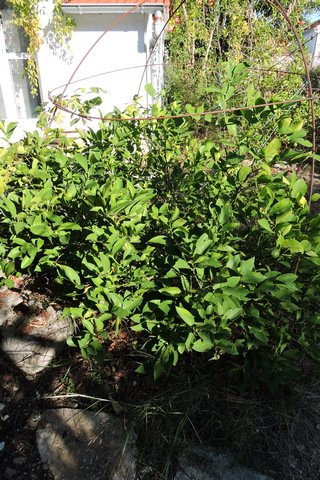
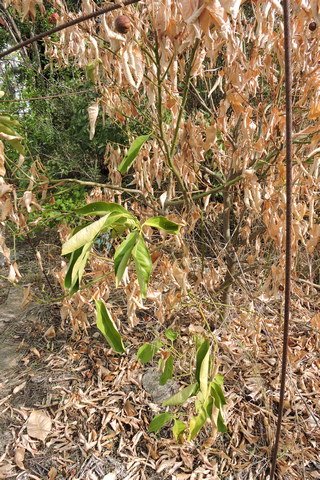
There are still three trees which I think I may have lost in the summer heat, but it is not the seven or eight which I had feared when I stopped irrigating in August.
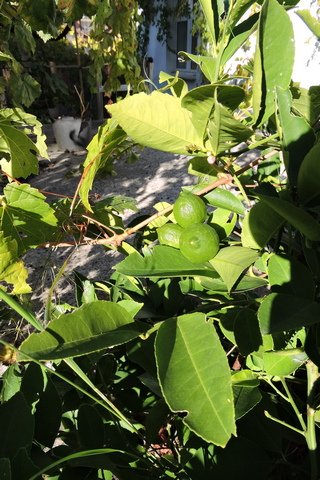
My Meyer Lemon even has swelling fruit, which is a good sign.
It is amazing how even a small amount of rain has broken the summer dormancy of plants.
I have a large patch of Madonna Lily, Lilium candidum. These produce large white trumpet flowers in May and then quickly die back to ground level.
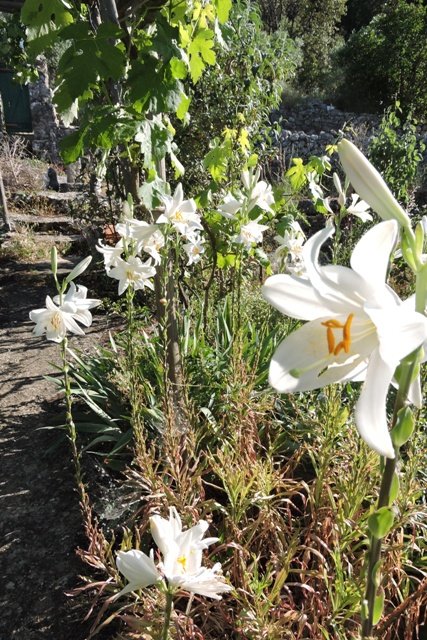
This week their new leaves have sprouted.
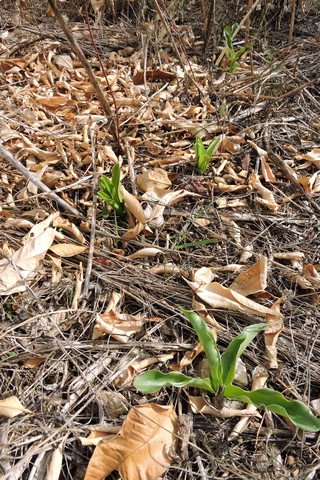
They will grow slowly in our cool, wet winter until the early spring, when with lengthening and warming days, there is a growth spurt before flowering and dying back once again.
Also the spring bulbs I planted just two weeks ago have broken through.
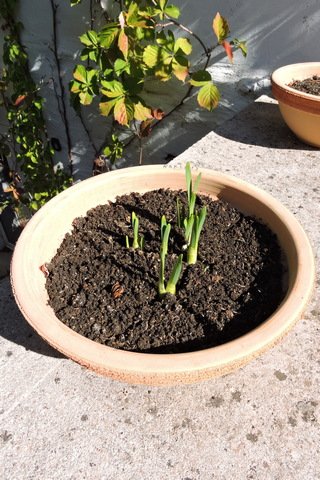
Narcissi are early flowering here, with several patches which are in the ground coming into flower at or before Christmas. So I am unsurprised that this bowl of Narcissi, placed on a sunny terrace and planted in perfect conditions, is already well advanced.
At the other end of the scale, the Gazanias which I planted in the kitchen bed on the 23rd May, continue to flower.
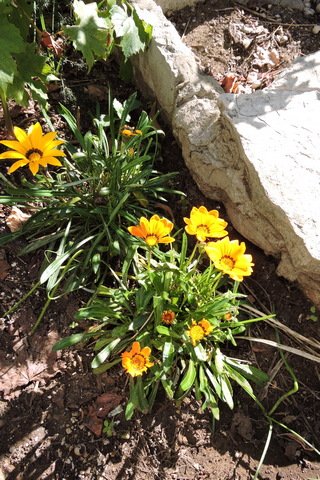
They have produced seed, which I have kept, so if as I suspect, they do not survive our winter, I should still be able to have some ready to plant out next year.
In the storm porch, my Hydroponics units seem to be working. Although the lettuce leaves are not quite big enough to begin picking, they are not far away.
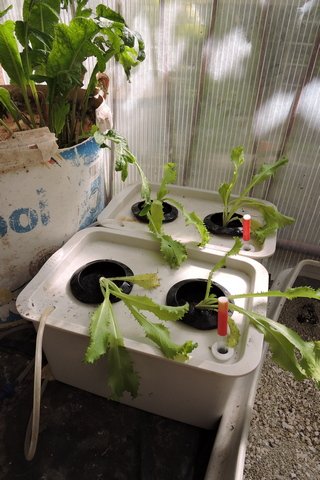
I have even wondered about buying another couple of tubs, to grow some winter herbs in. I even went so far as to buy some seeds this week when I was at the garden centre in Jelsa, for Basilicum and Cilantro.
Wandering into the olive groves this week, the rain has also brought the wild Autumn Daffodil, Sternbergia lutea, into flower.
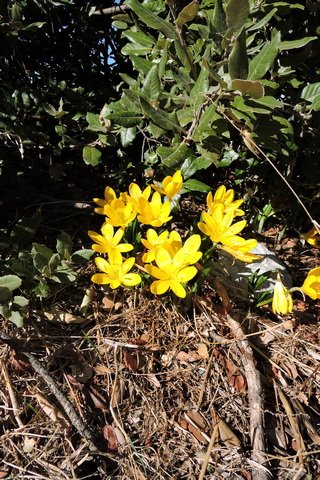
There are patches of their golden yellow flowers everywhere.
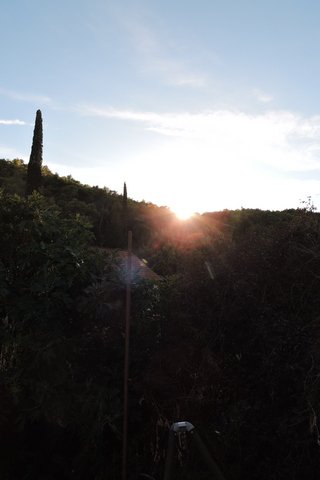
The week has been warm and sunny, albeit temperatures are starting to drop now. The sun is still heating my solar water tubes, but now drops behind the hills around 16:15. This will increase until mid winter when I only see the sun from 8:45 to 12:45.
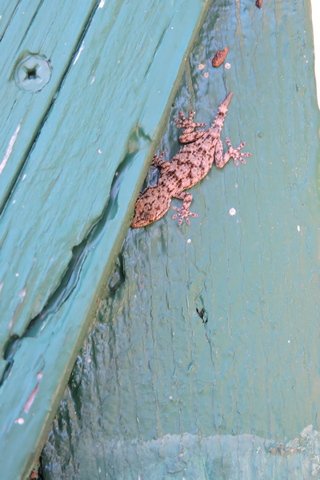
I still see lizards and butterflies everywhere and even saw a Preying Mantis this week, the first adult I have seen all year.
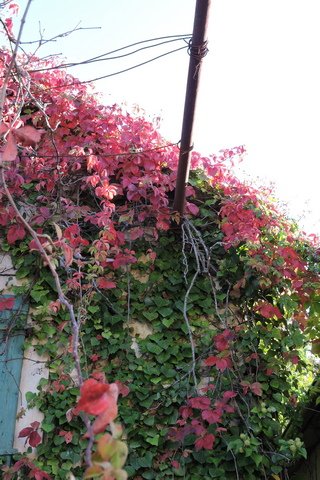
So while the Parthenocissus has taken on its fiery autumn colours, the natural world around Dol is still very much alive.
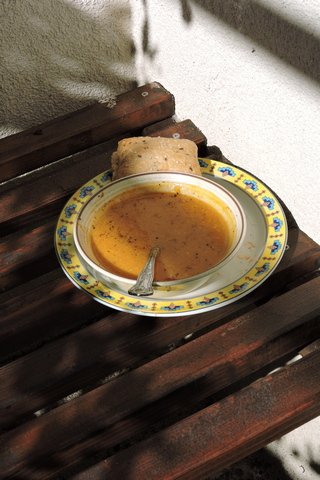
But for now at least, the sun is still warm enough to enjoy and I can still eat my lunch outside…
Crumbling into a cobbler
I saw that one or two plums had started to fall on the last fruiting plum tree in the Top Orchard, so picked the remaining fruit off the tree.

This is a young tree and it is the first year that I have had a useable crop.
I came in with just over a kilogram of fruit, so decided to make some desserts because there was not really enough to consider bottling them for the winter.
One of my favourite winter dishes is a fruit crumble, however as I was looking for a quick crumble recipe on-line, I came across an easy Plum Cobbler recipe.
When you look at the history of crumbles and cobblers, they all seem to come from 17th century recipes, although a “Cobbler” is a North American term, whereas a “Crumble” is very much an English word.
Both have a fresh fruit base, and a topping made of flour, sugar, butter and spices. The dish is then baked in a 180°C oven for around forty minutes and can be served hot or cold, with cream, custard or ice cream.
If you say “Cobbler” in British English, the trade of a person who repairs shoes comes to mind. But there may be a link, because one theory is that the American version of a cobbler comes from the rounded top appearance of the dish, looking like the “cobbles” which once provided the surface of highways. The trade of a cobbler was to repair the damage to shoes caused by road cobbles…
While I was thinking about the various recipes and had the ingredients in the mixer, I added some milk (not used in a crumble) and suddenly had a cobbler mix rather than a crumble mix.
I have to say the result was delicious.
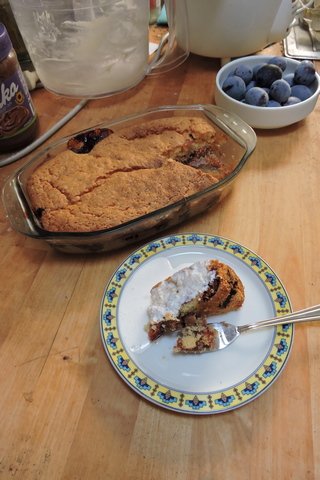
While they were still warm, I took one of the Cobbler’s to my near neighbours over the road and came home with some fresh goats cheese. So not a bad exchange!
Winter beans
The much needed rainfall last weekend has softened my soils, so I’ve been doing some work on my vegetable patch.
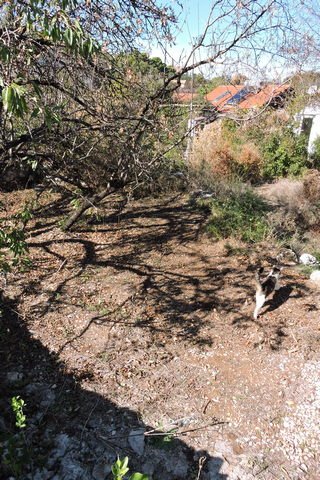
I have not planted any purchased winter vegetables this year, following a disappointing performance with plants last year.
The more I look at my soils, the more I realise I have desperately poor quality soil, full of stone, with little organic material and mineral content.
They grow weeds extremely well, but little else and when I looked at the practicalities of trying to bring in tonnes of manure or other organic material, together with the cost, it is just not practical.
So what to do? I’ve not really answered that question yet, but for this winter, I have decided to plant some Broad Beans. They seem to manage to grow despite the appalling soil conditions.

I started by pulling out the dead stalks of last year’s Broccoli. Next I used a rake to draw away the fallen dead Almond leaves.
Leaves are also a source of organic material under certain circumstances. Leaves decay, transferring material into the soil, or are pulled underground by worms. However these leaves are dead, having fallen from my almond trees early, and have been completely dried to a state of desiccation.
There are also no worms! When I dig, I celebrate when I find a worm because they are so rare. Doubtless there are soil microbes at work, but I have no information about the level of microbe activity in my soils.
Getting a load of good soil into this area is possible, but I’m not sure it is desirable.
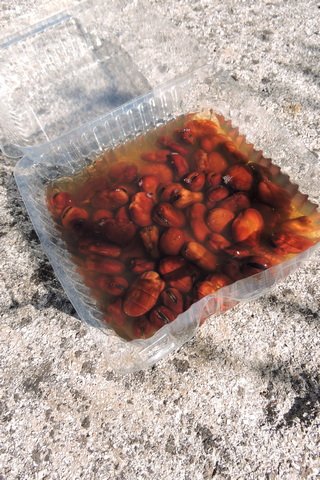
I used a scraper hoe to make a three centimetre deep channel and then wetted the soil before planting broad bean seeds which have been soaking in water for two days.
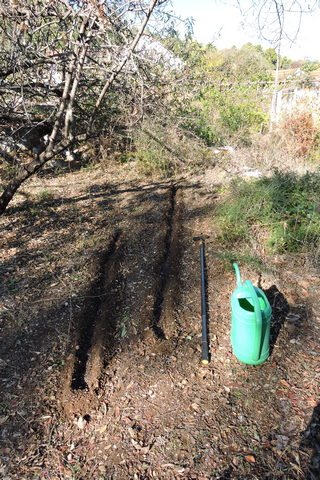
In the past I have found that germination is much faster if you soak the bean seed before planting them. Broad beans do seem to like growing in this vegetable plot and they are low maintenance and hardy.
The last job was to pull the soil back over the seeds and into the cut channel and tamp the soil down so there is good contact between the soil and the seeds.
Now I just have to sit back and wait for the seeds to sprout, knowing that there should be some rain this week to help them germinate. NCG